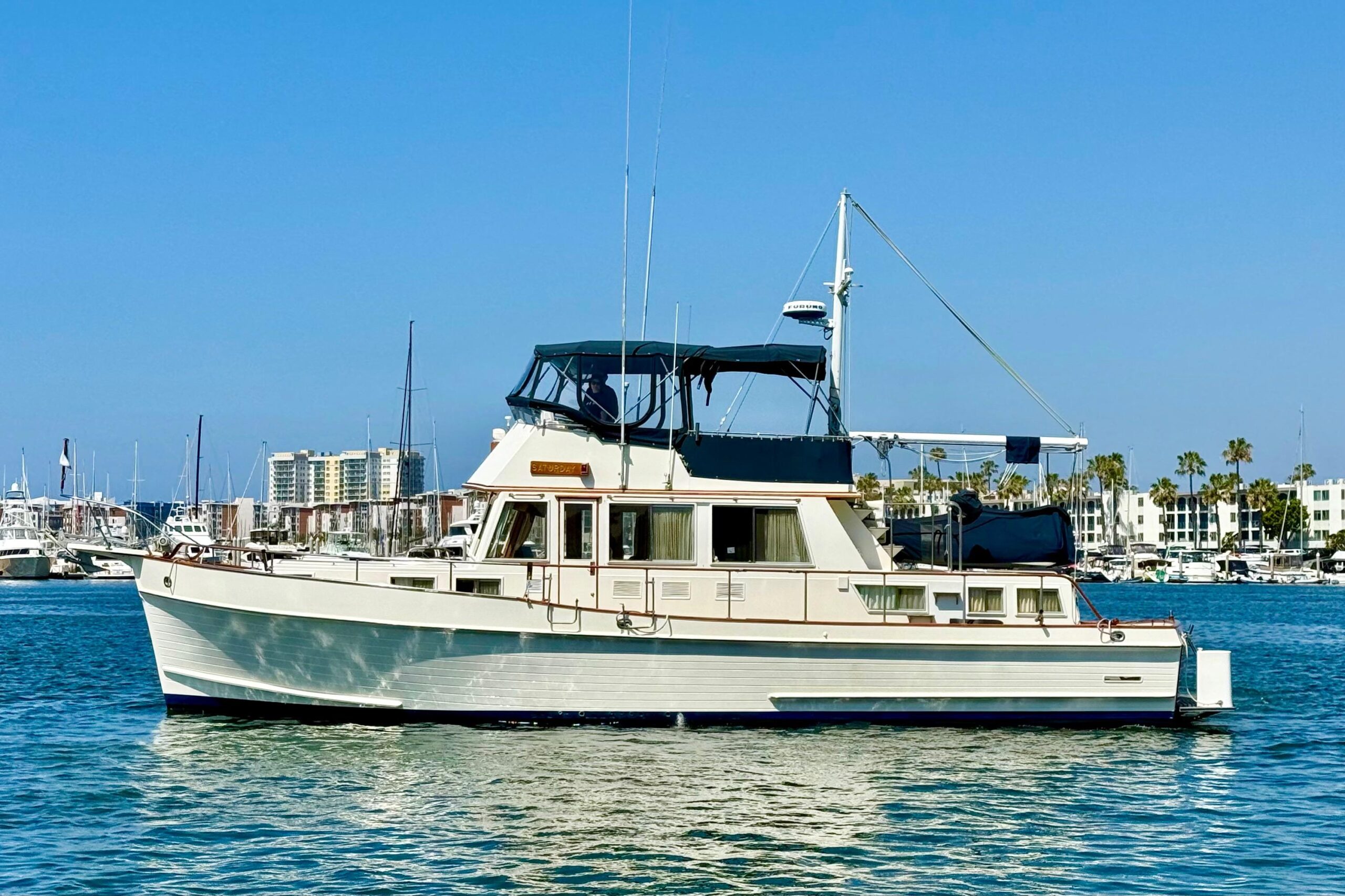
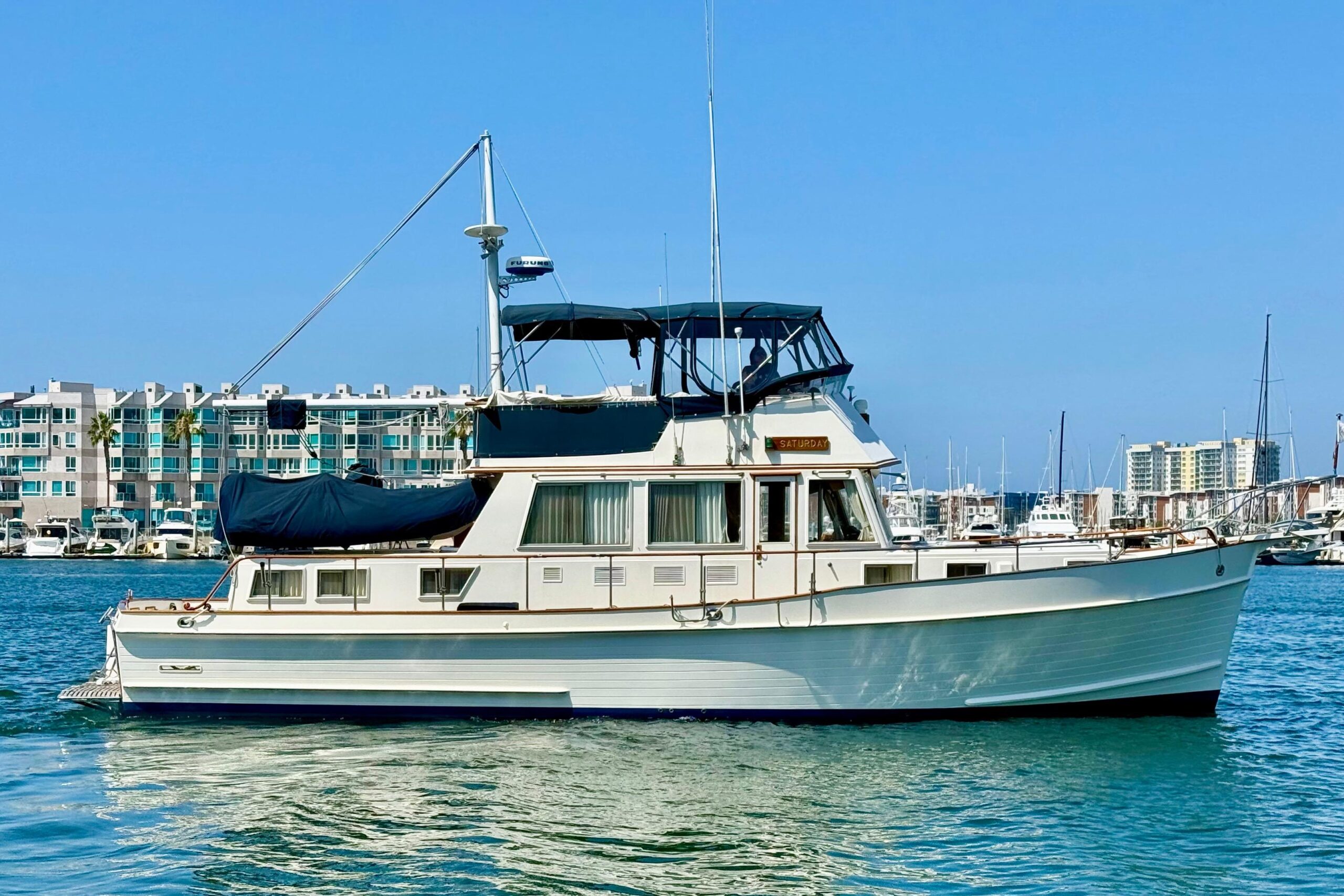
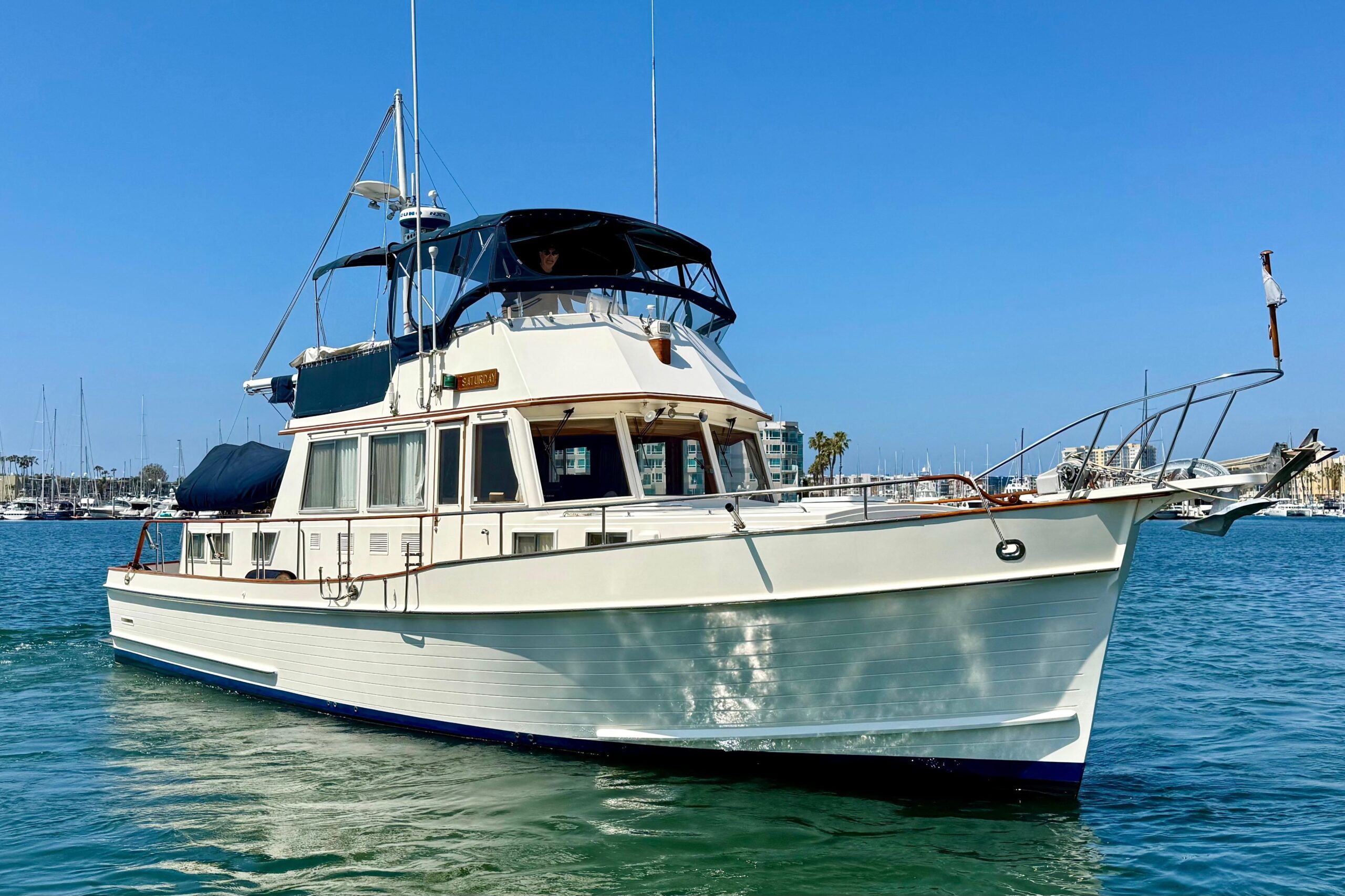
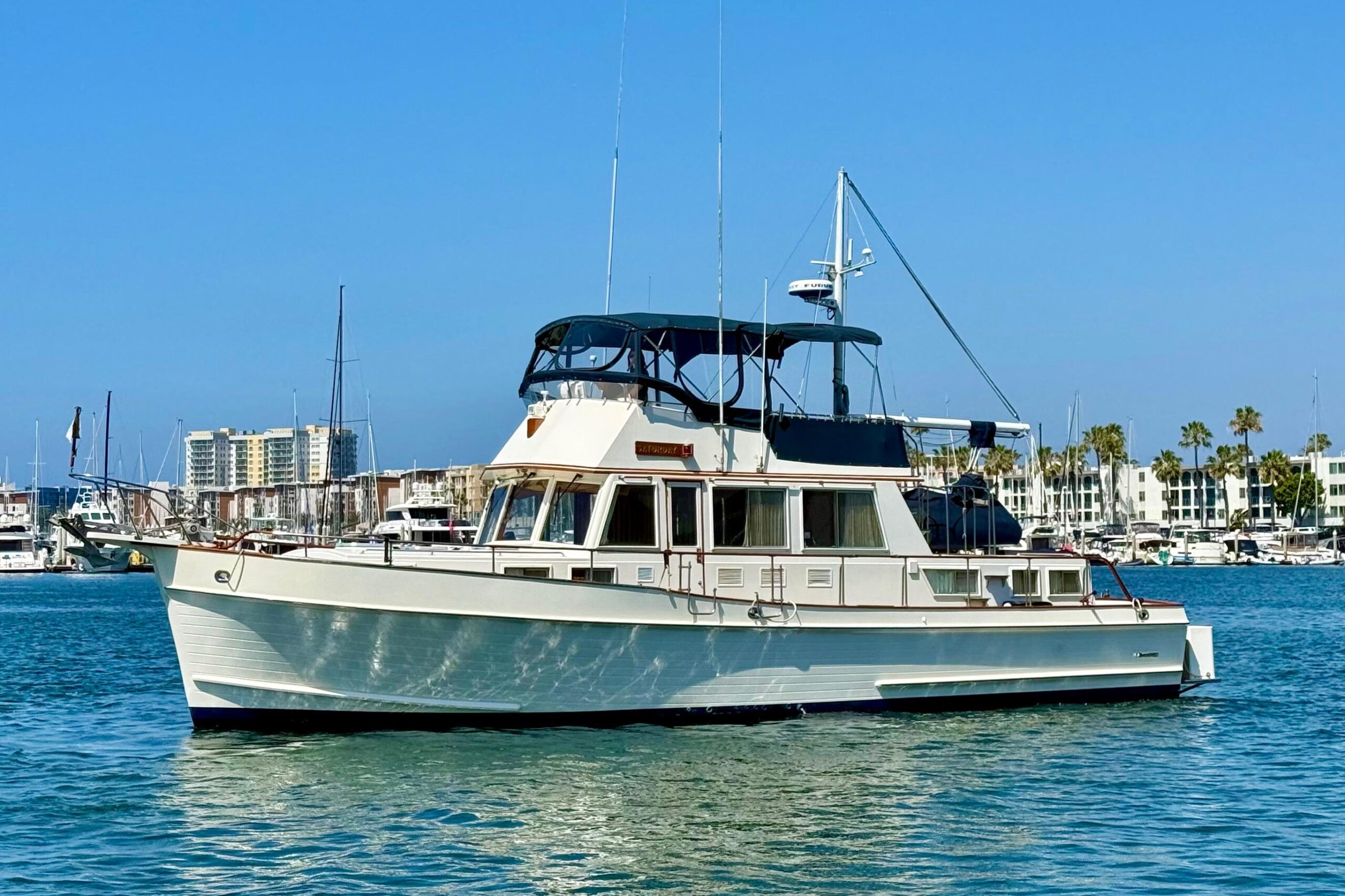
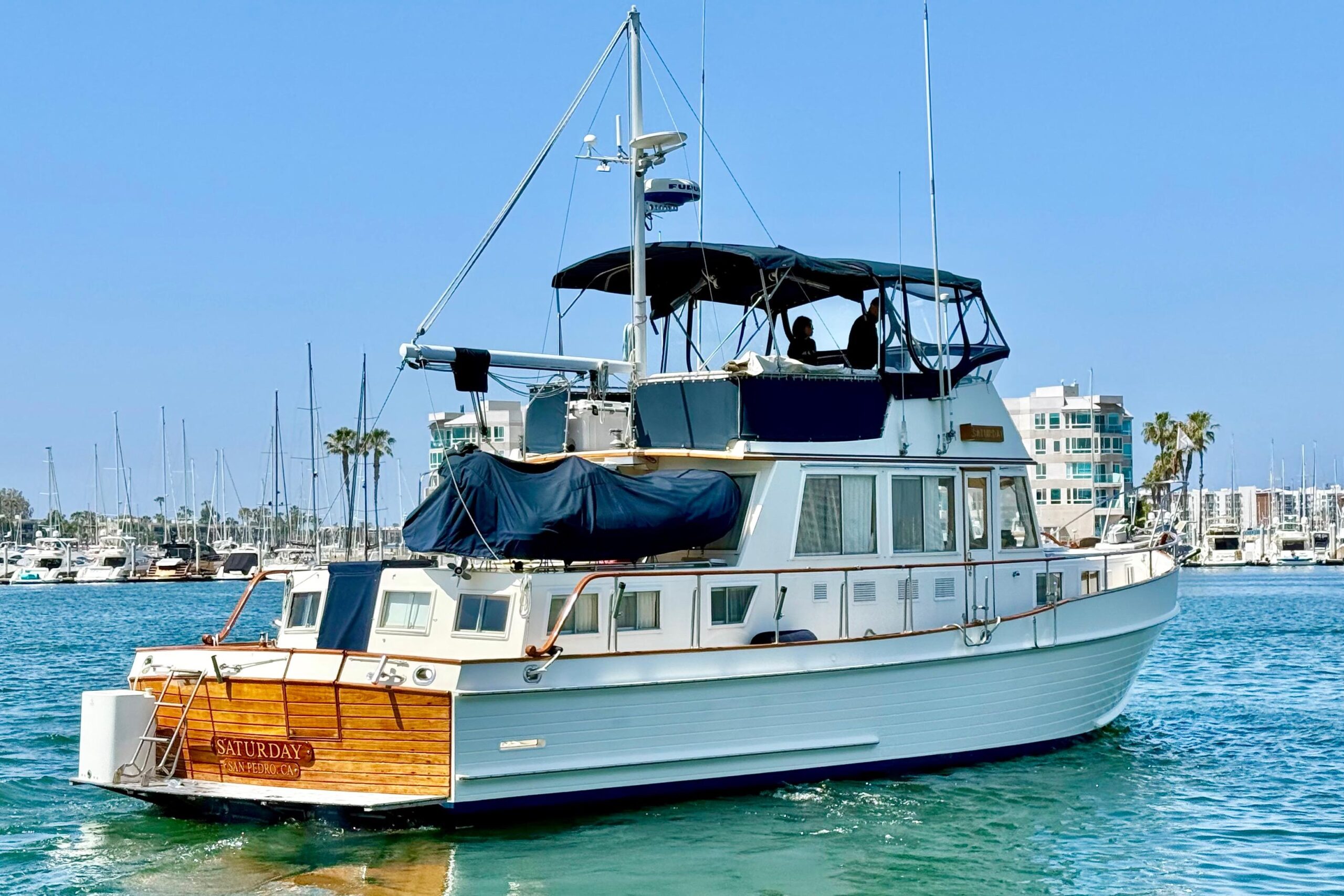
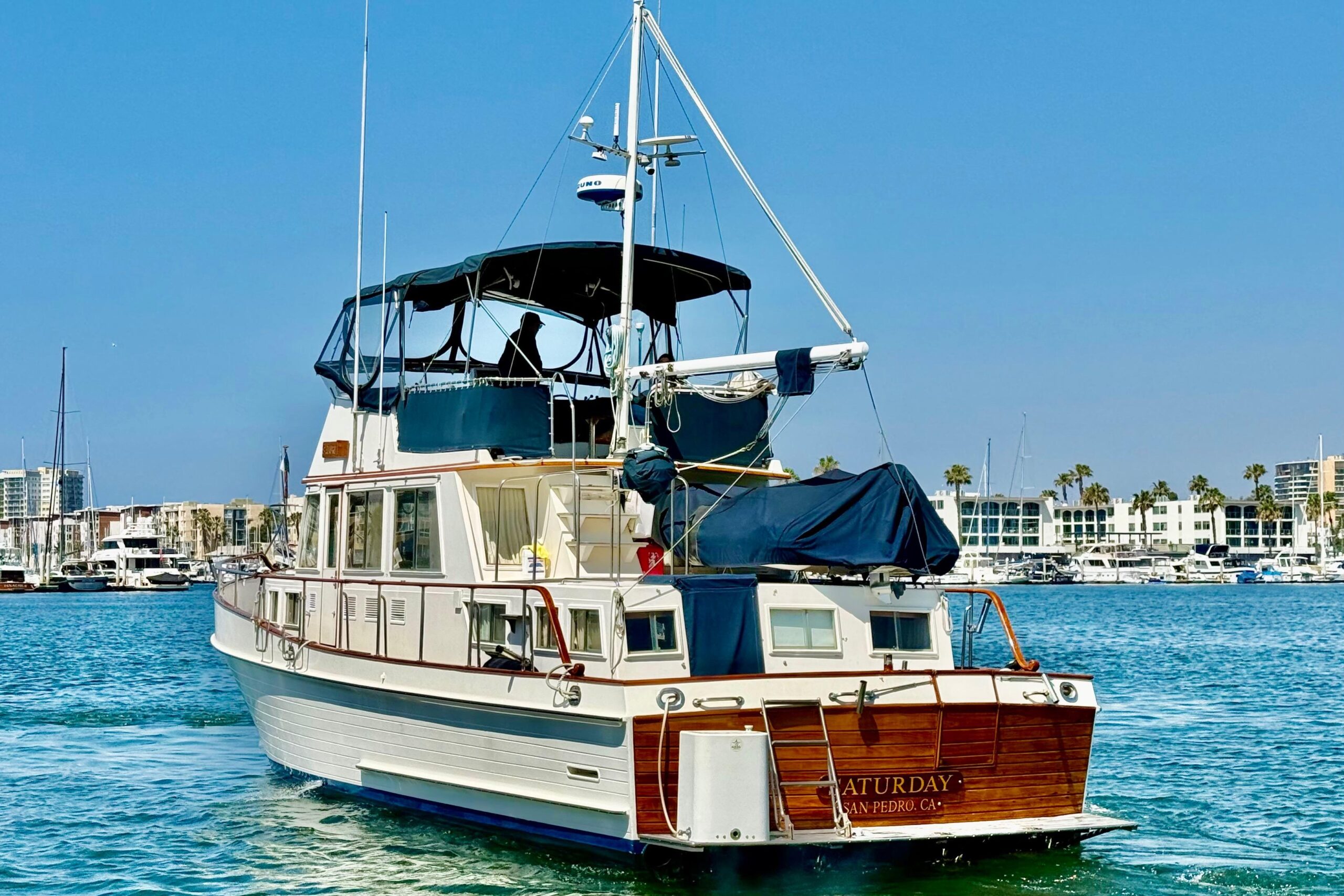
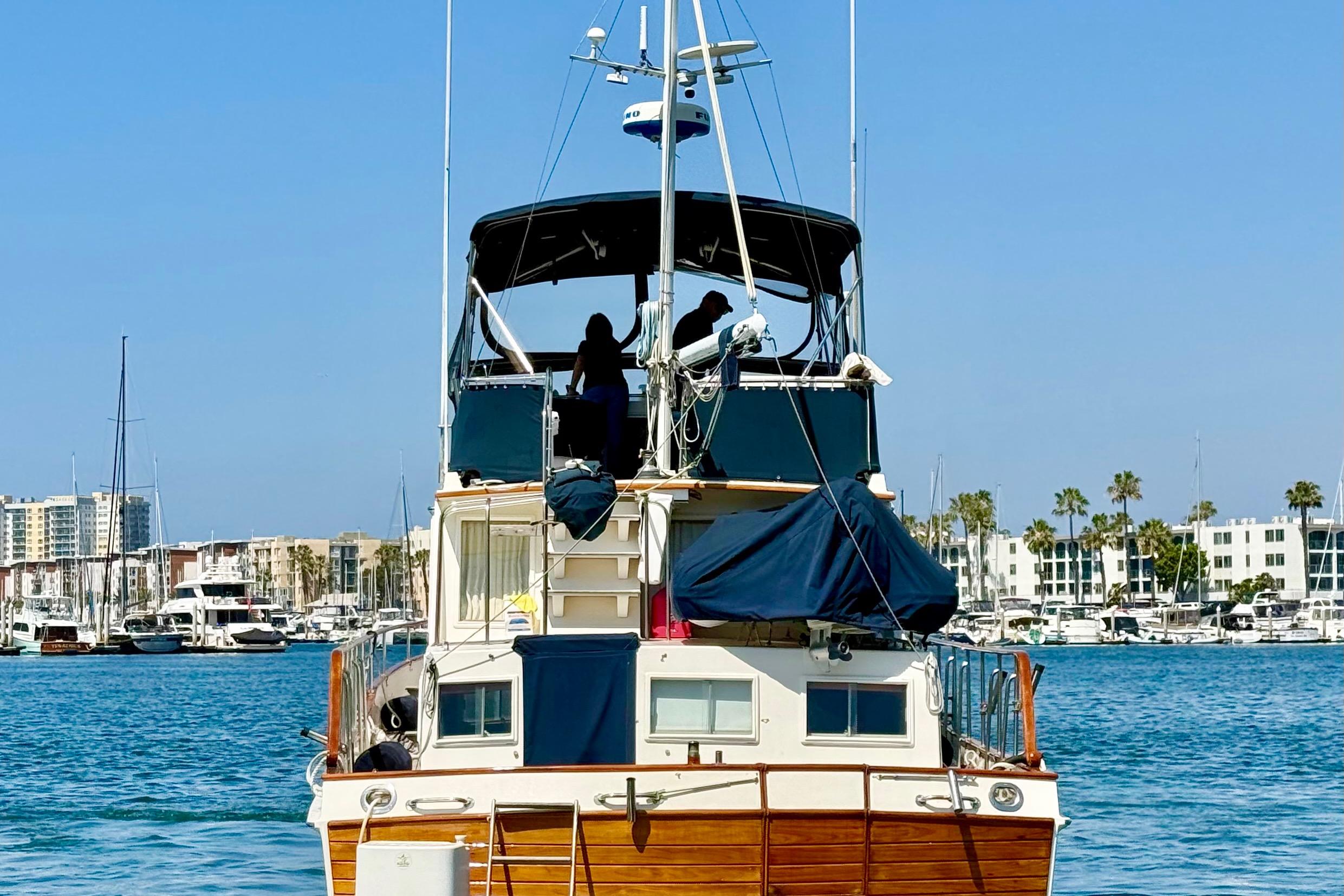
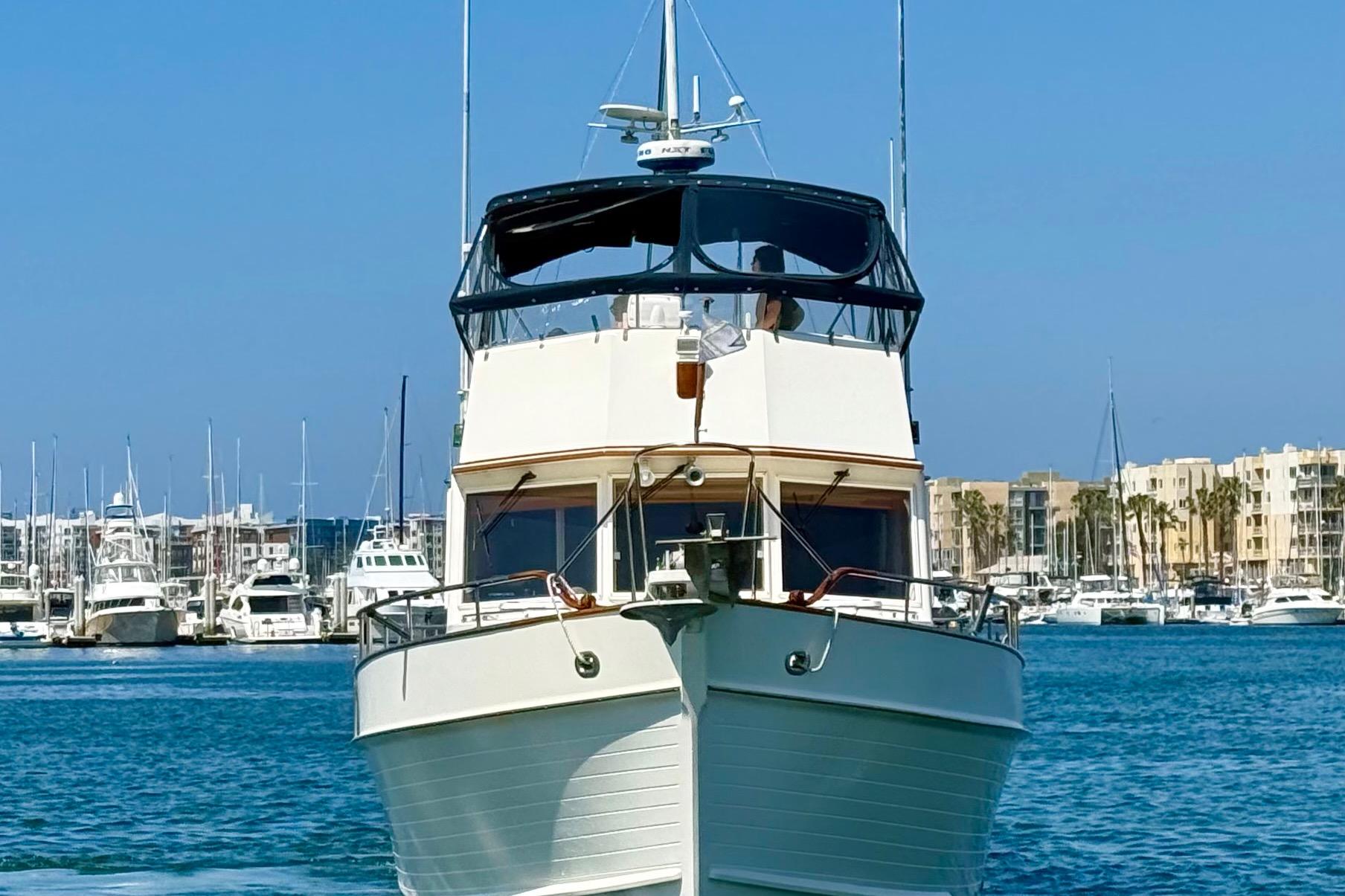
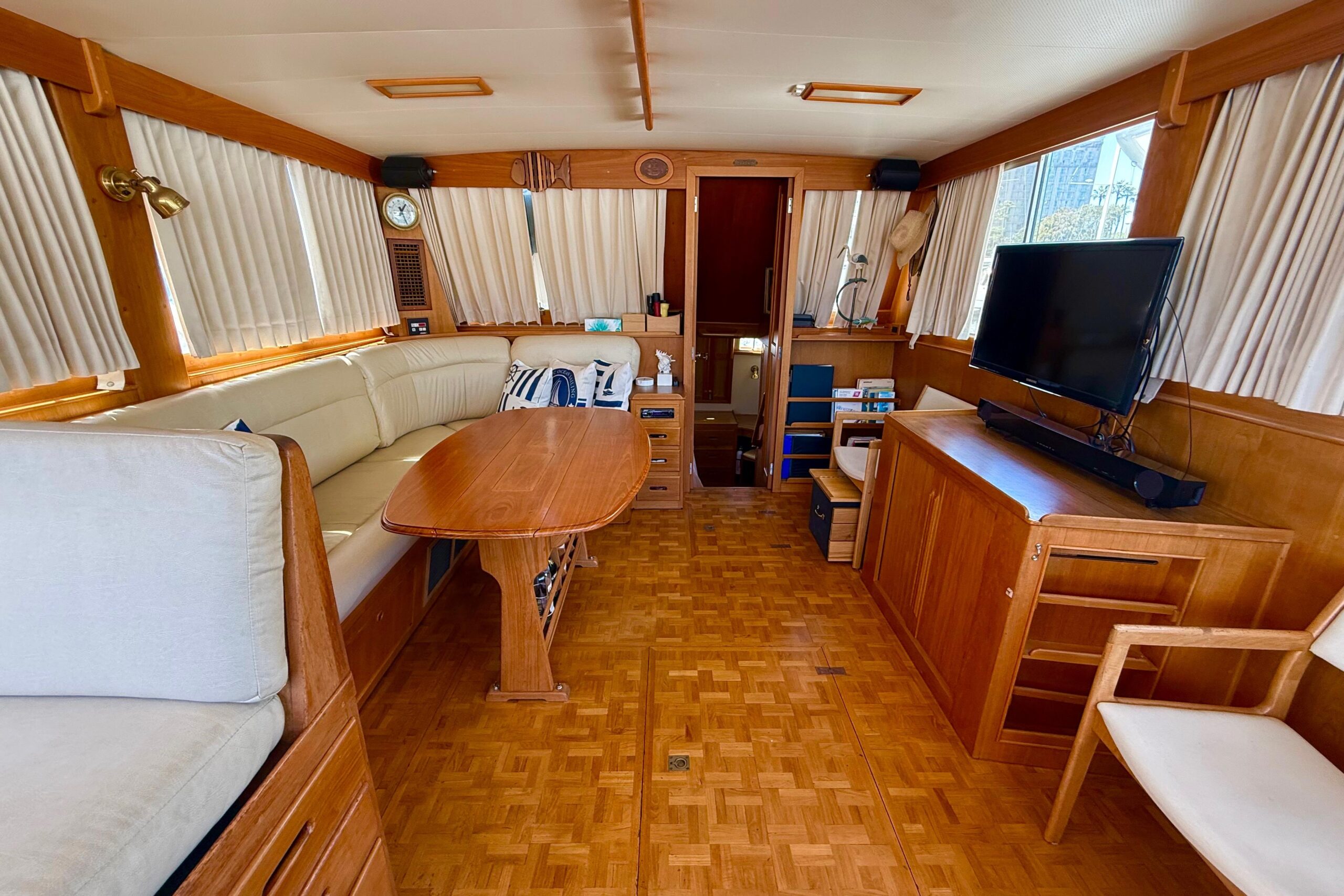
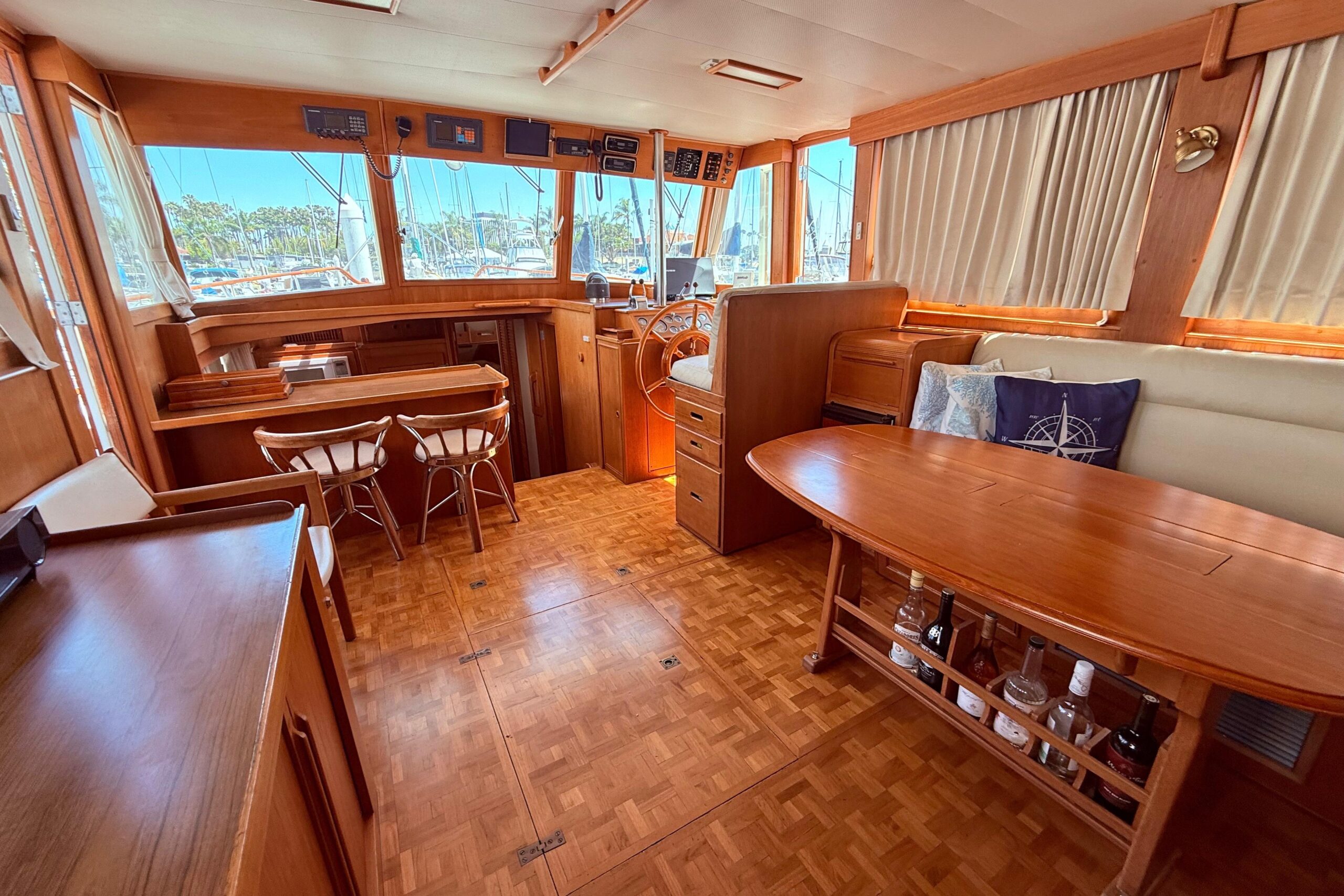
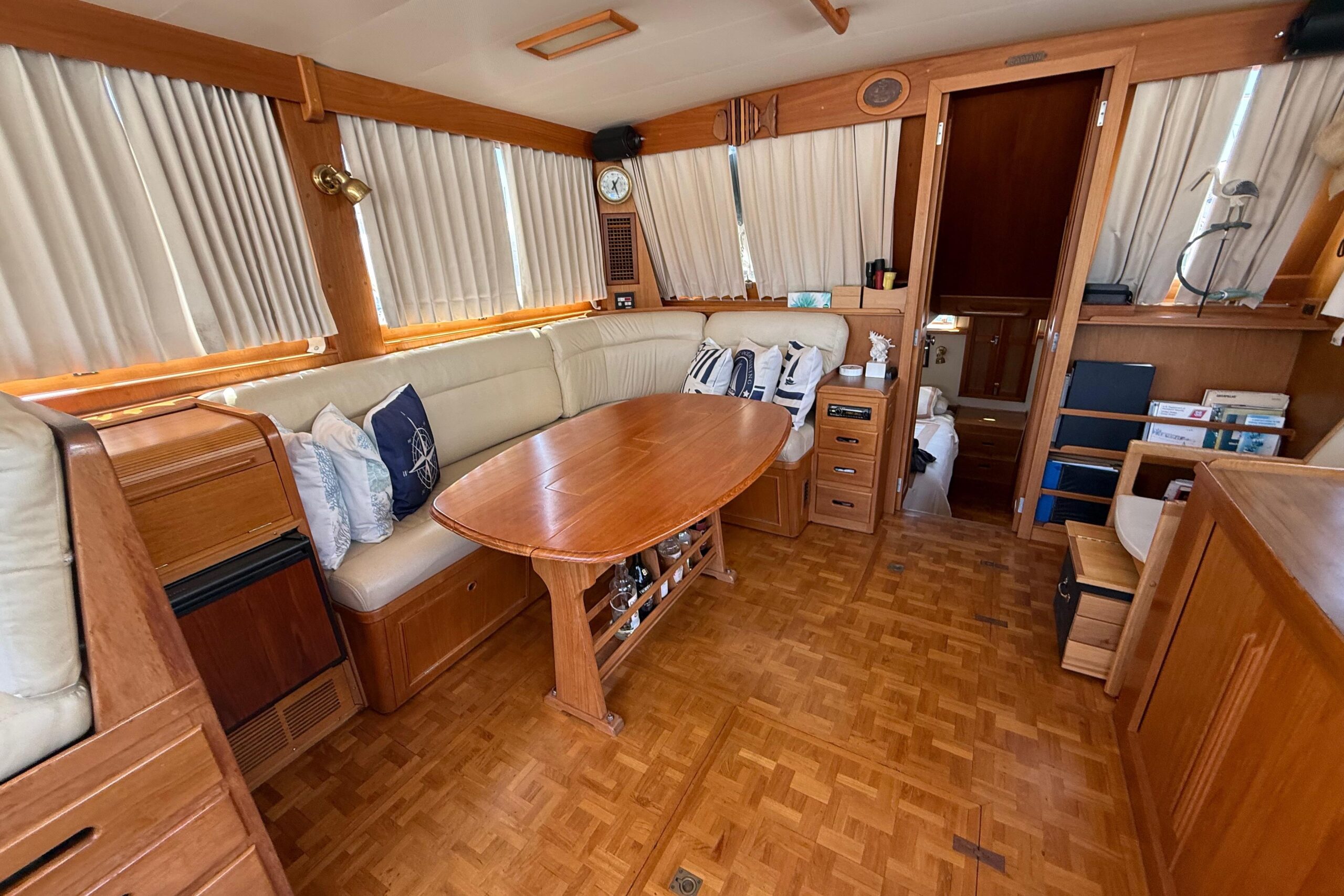
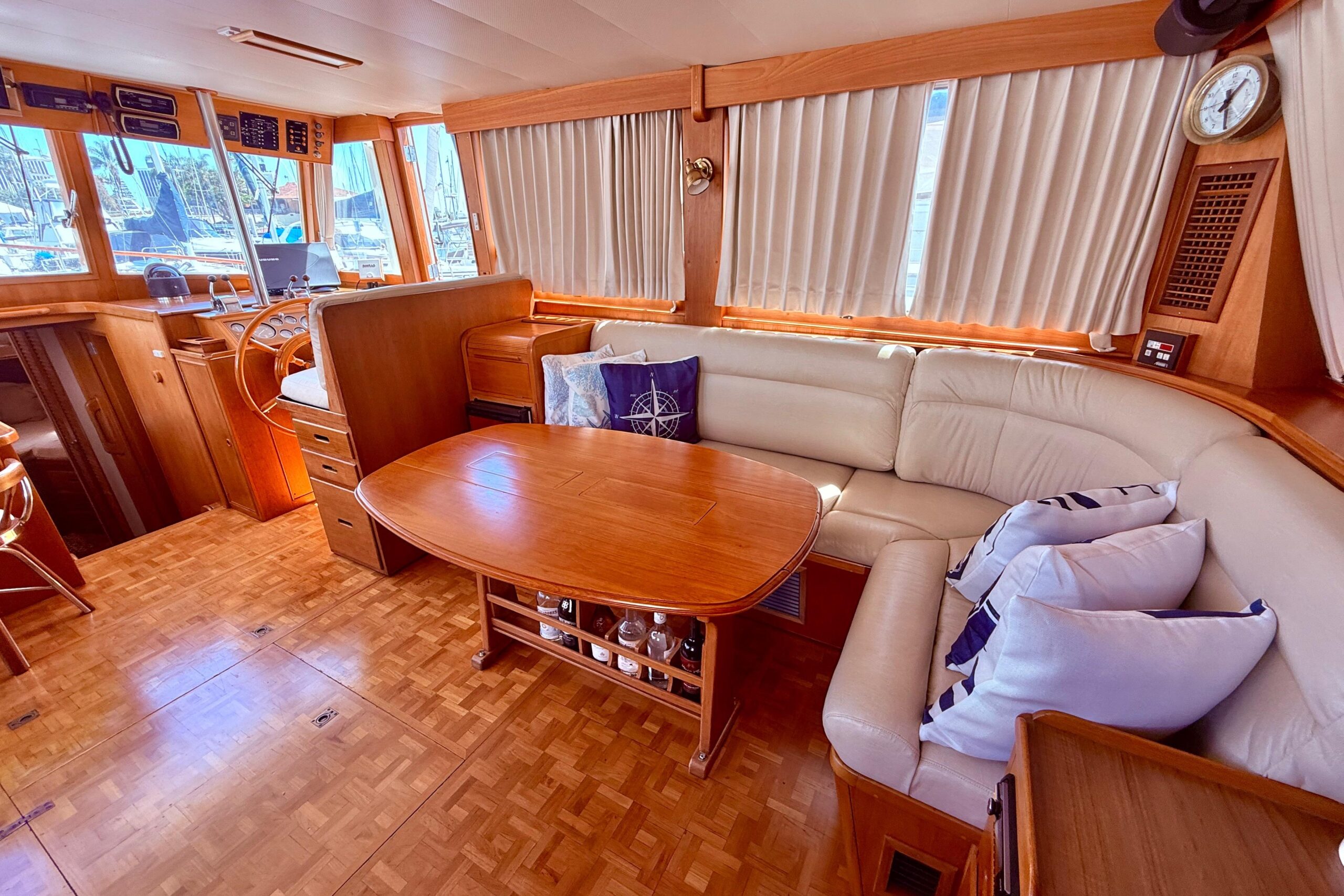
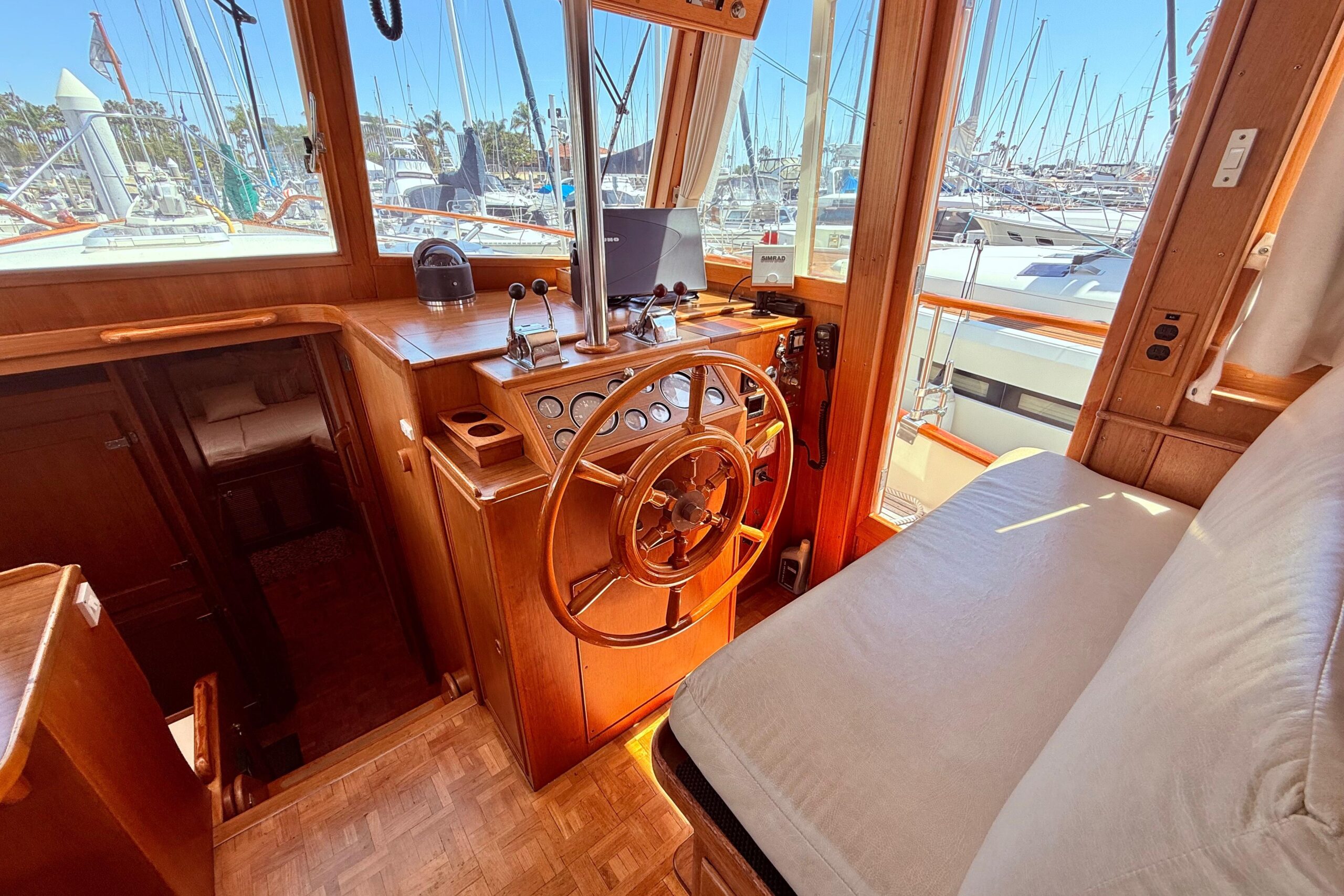
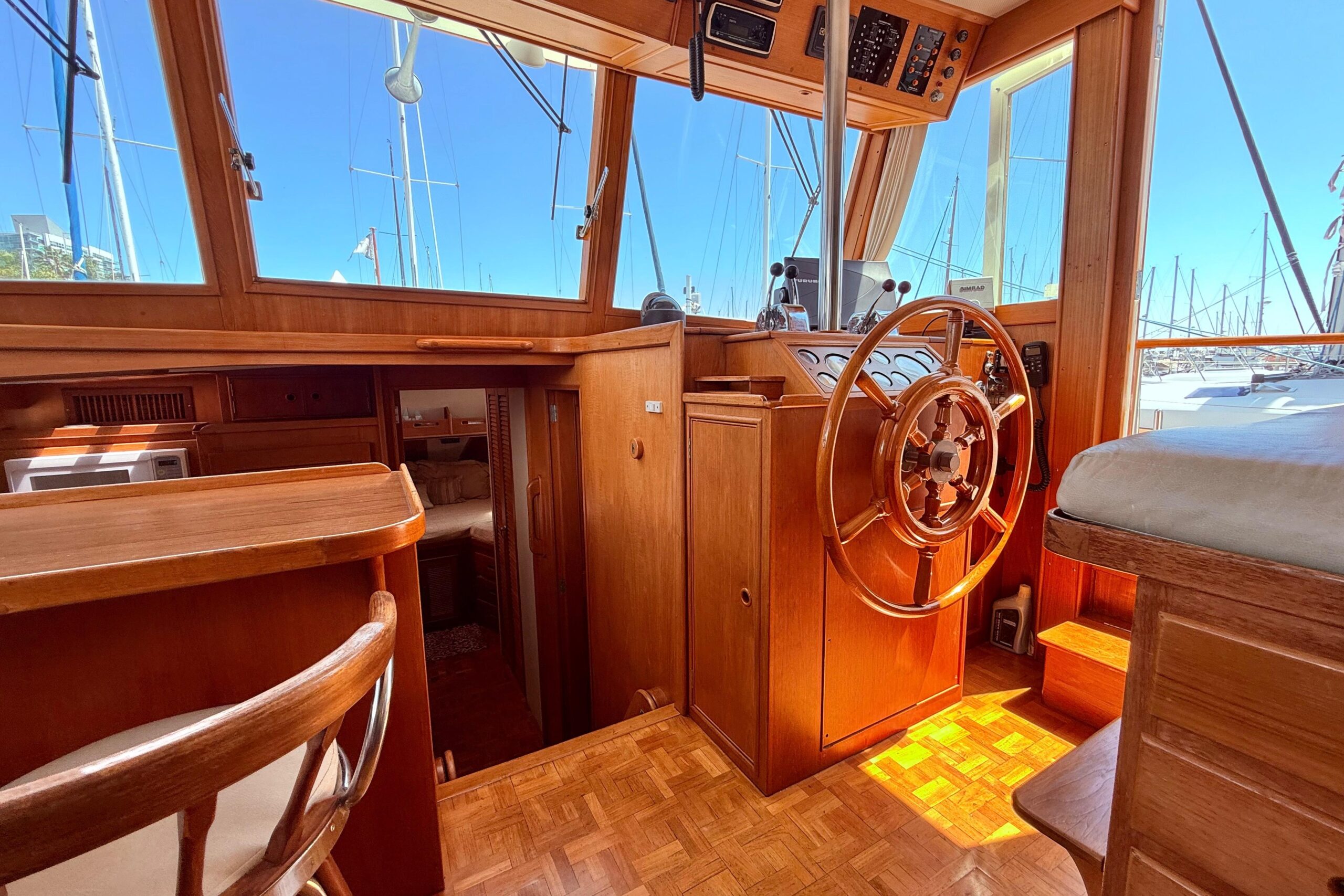
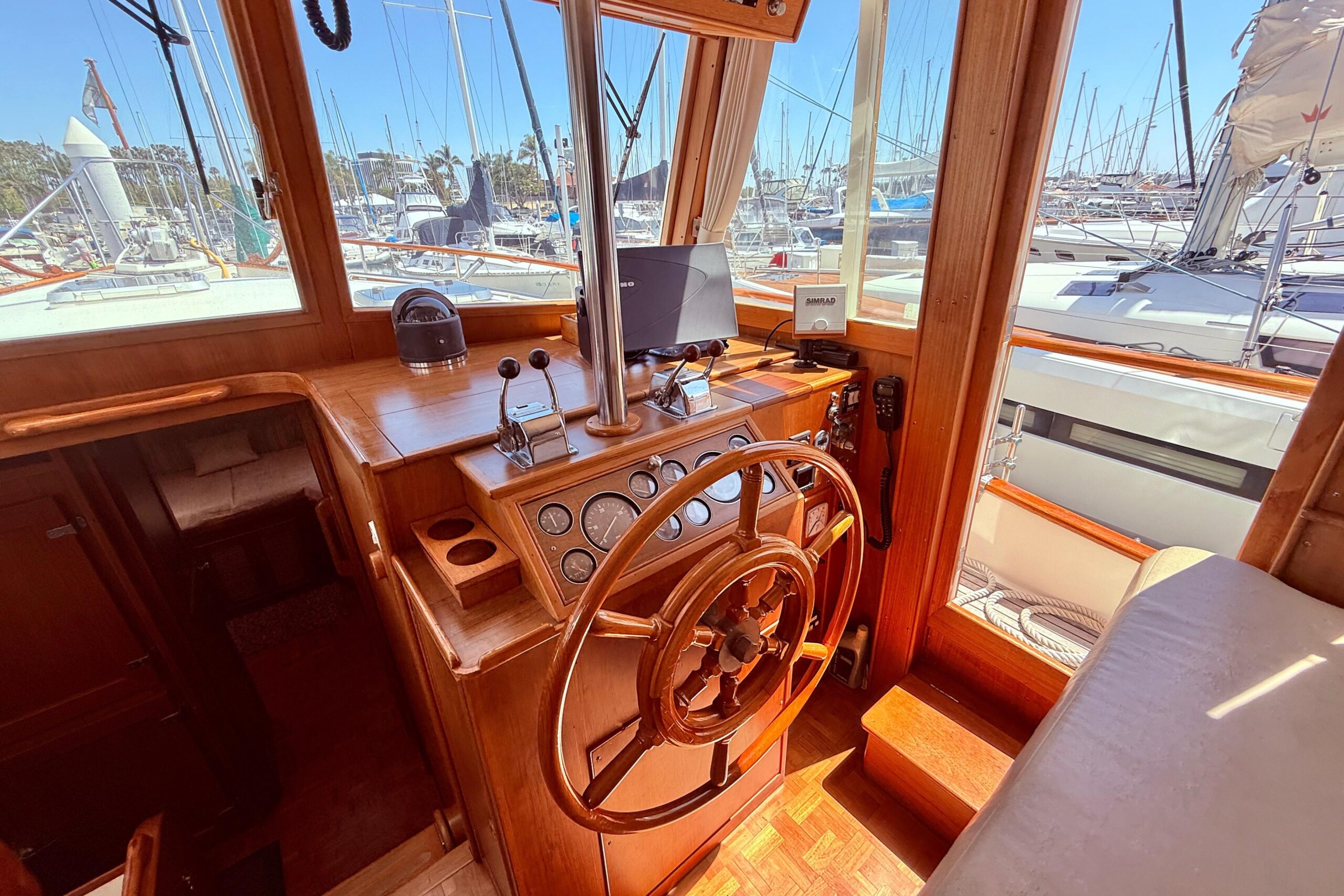
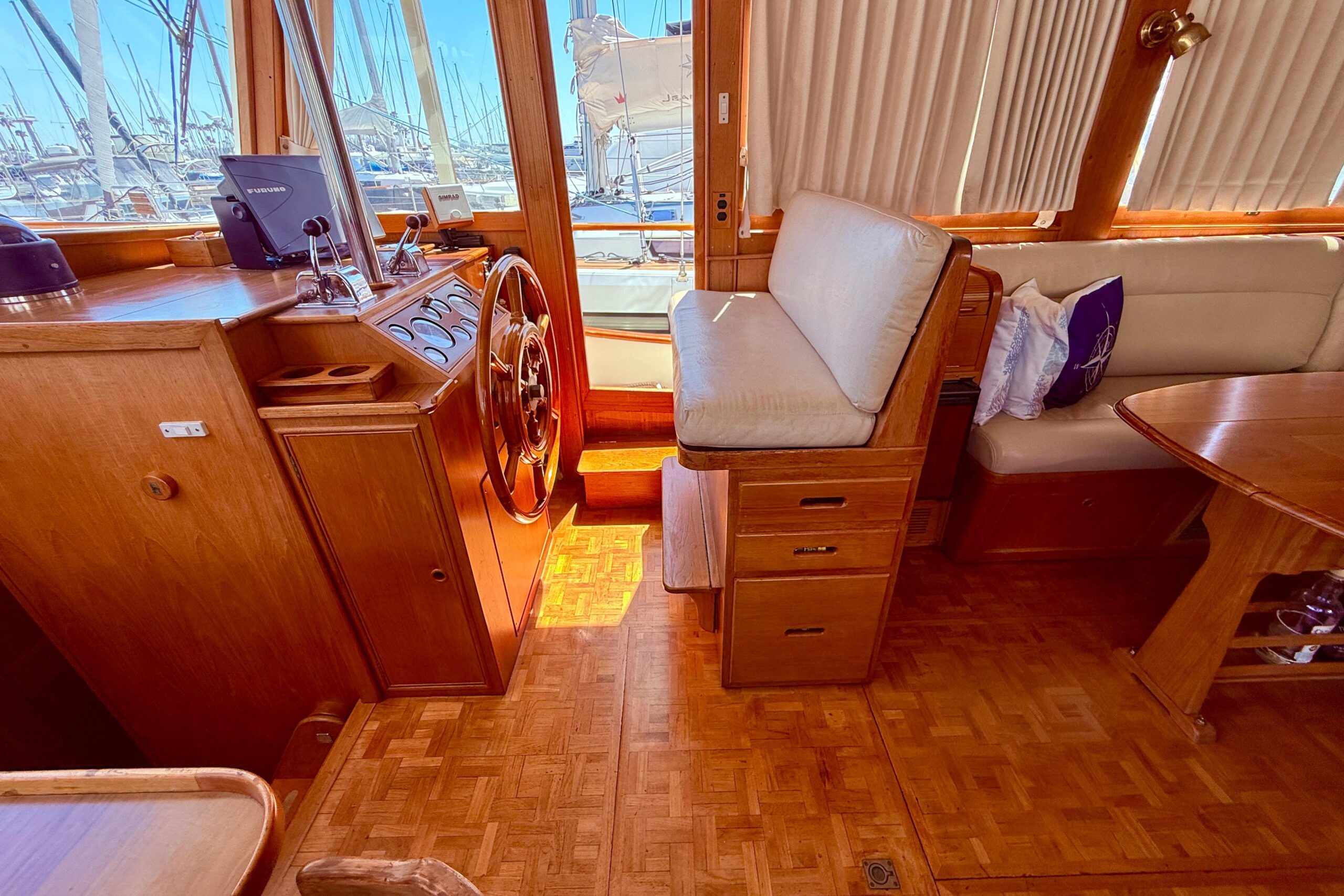
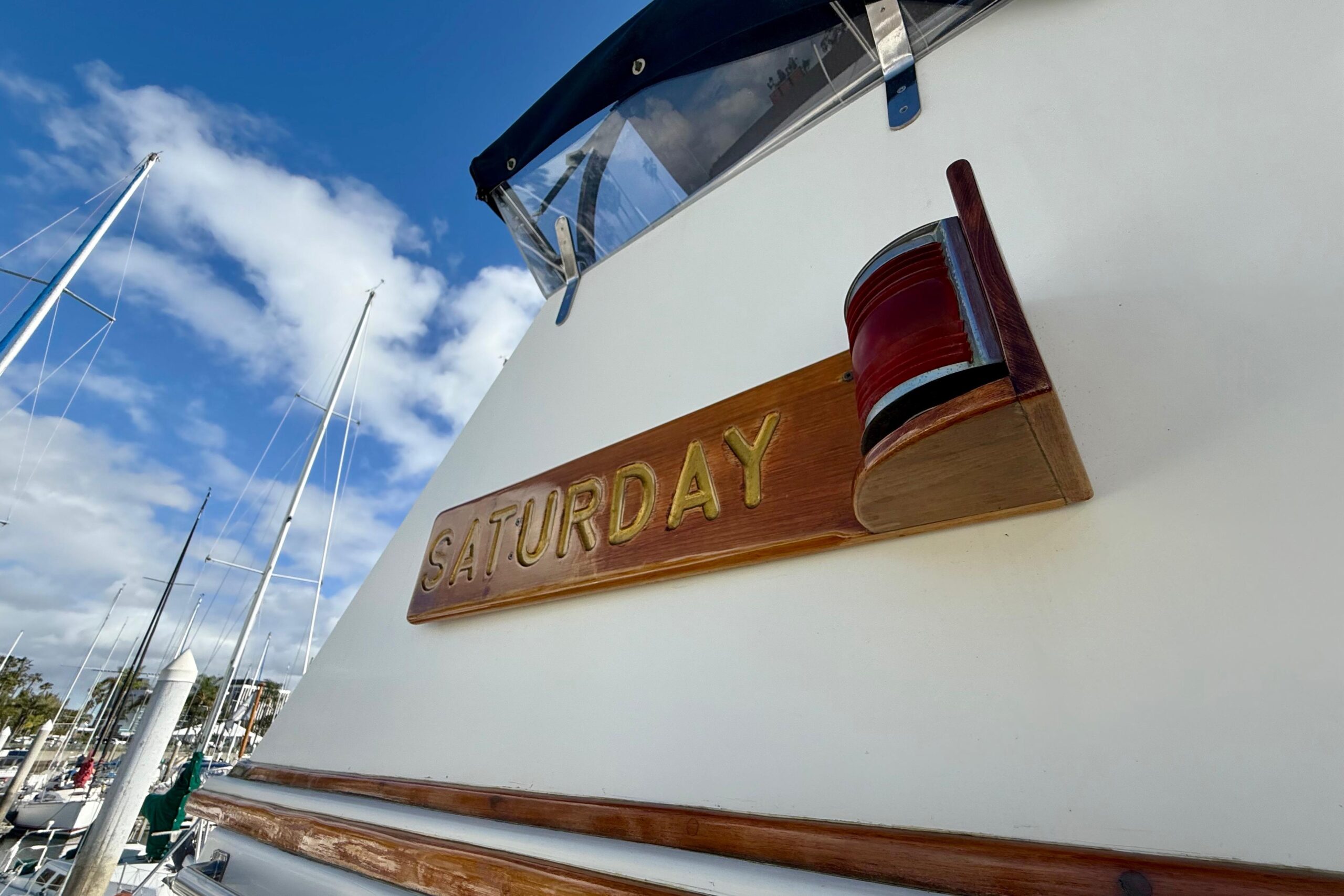
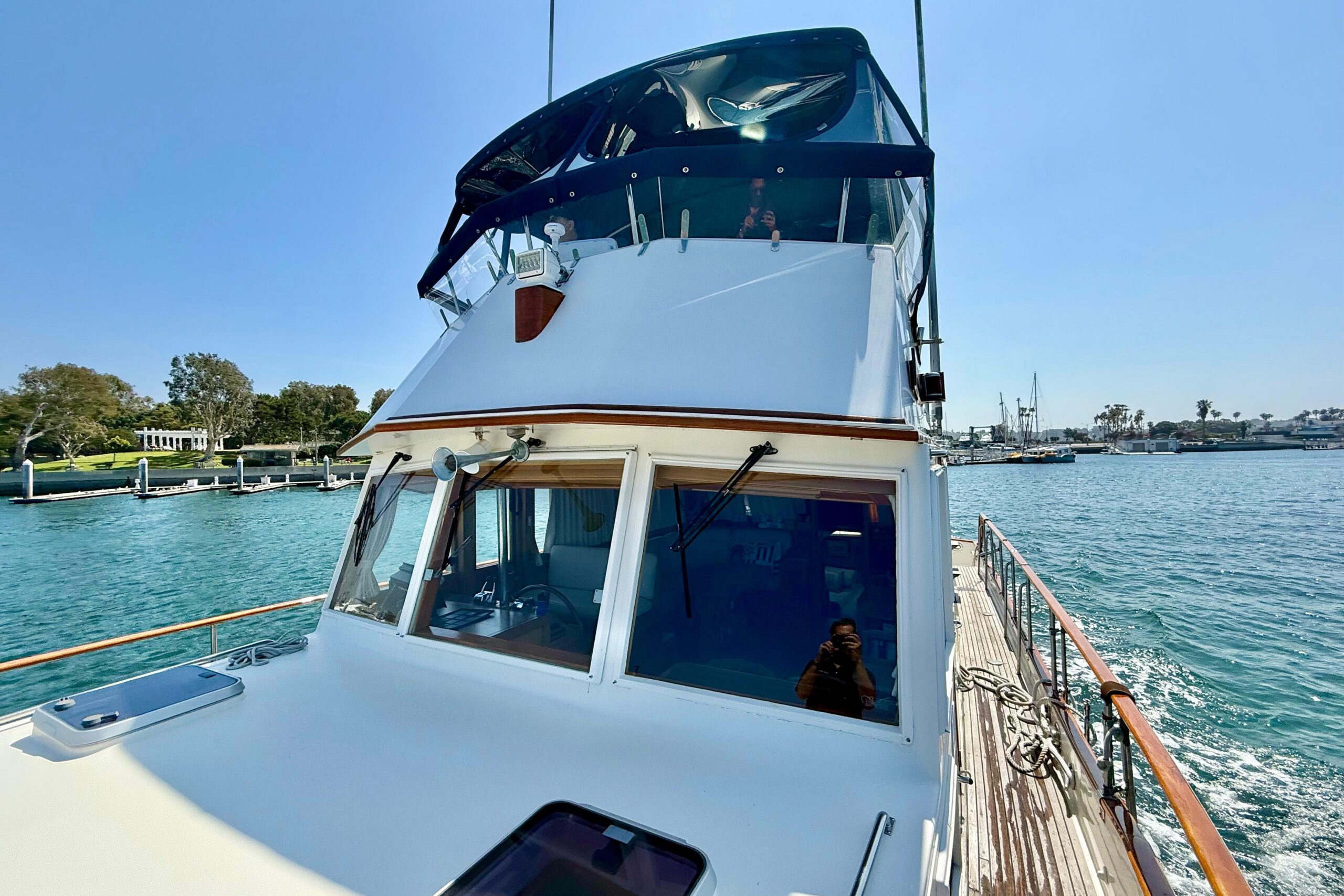
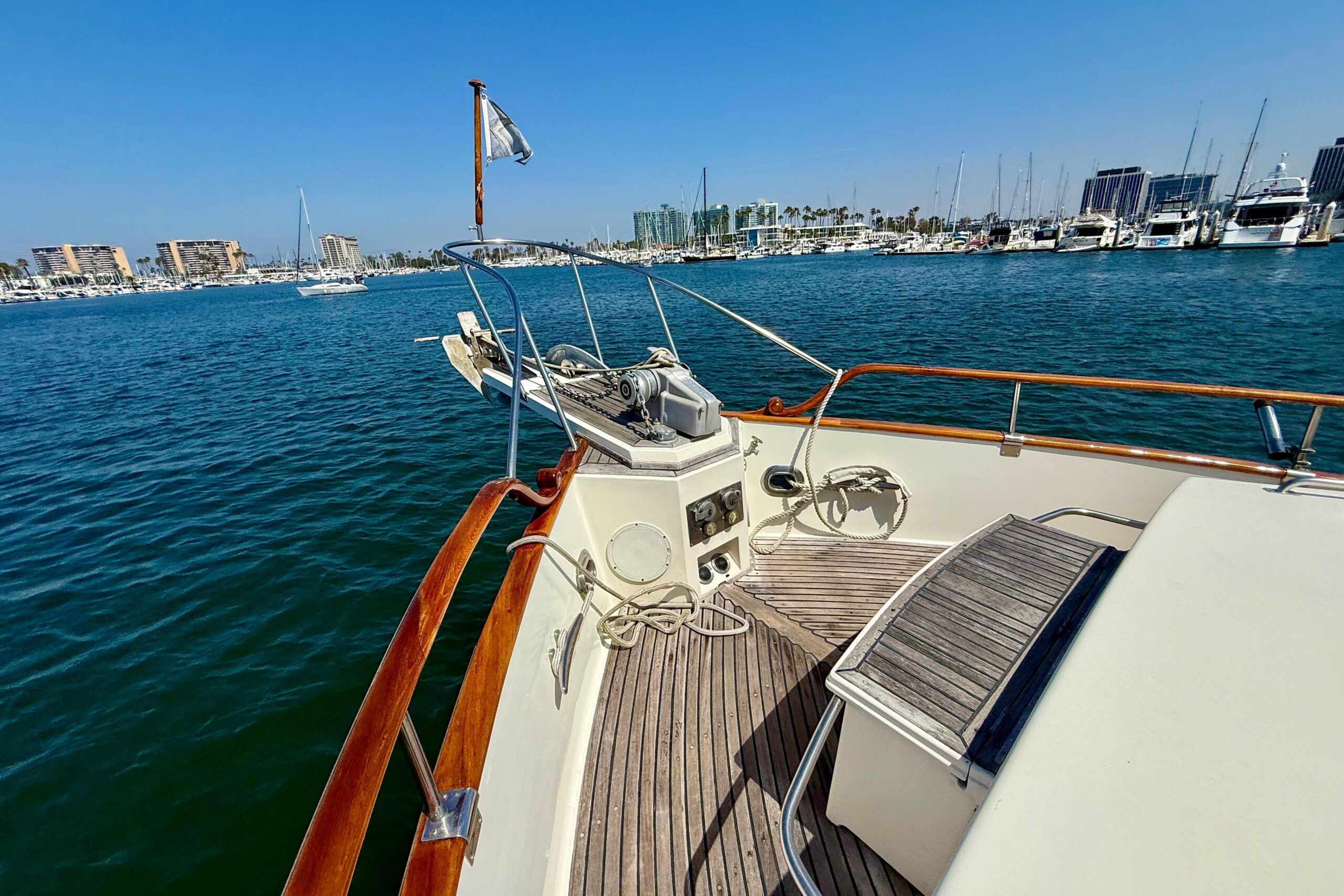
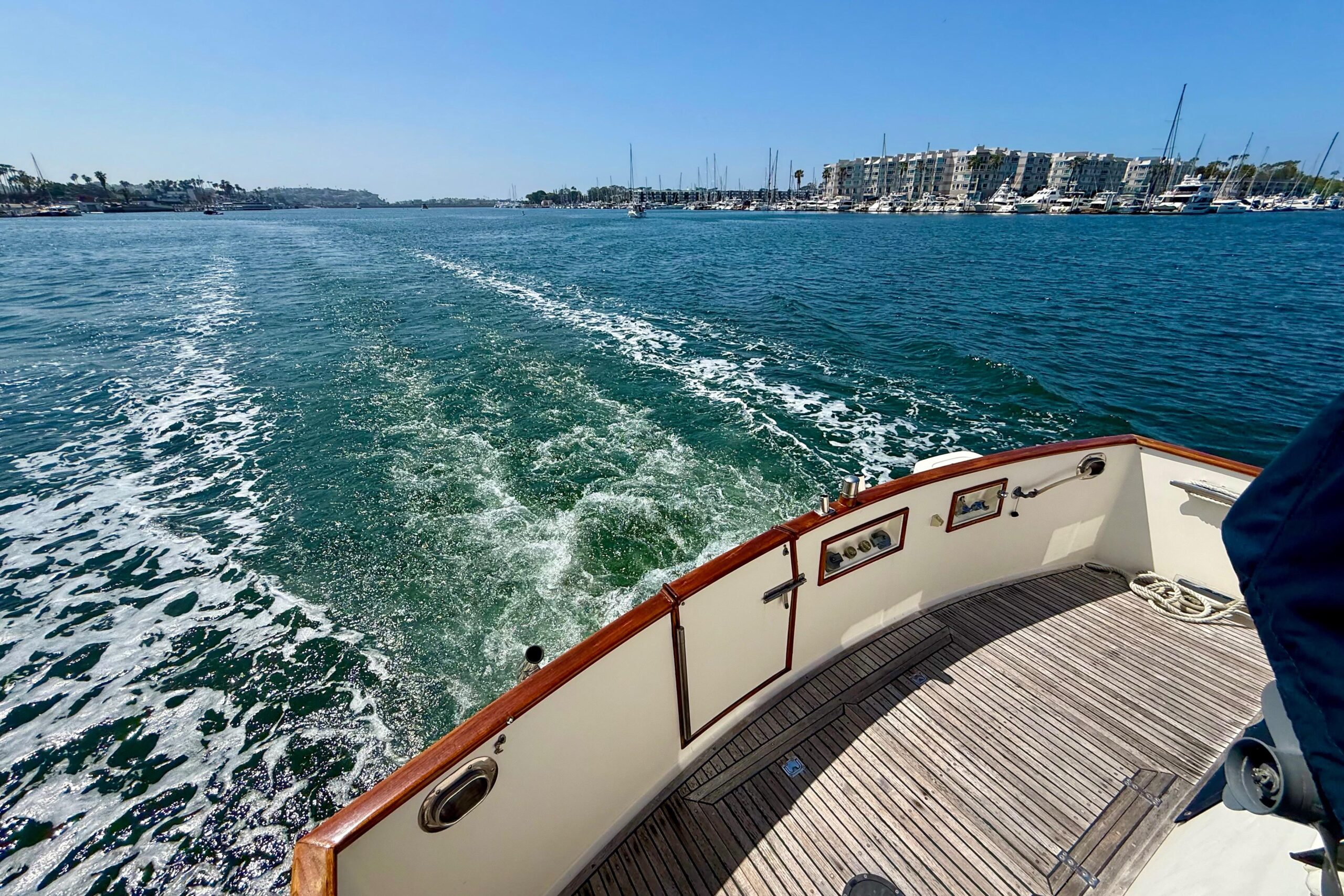
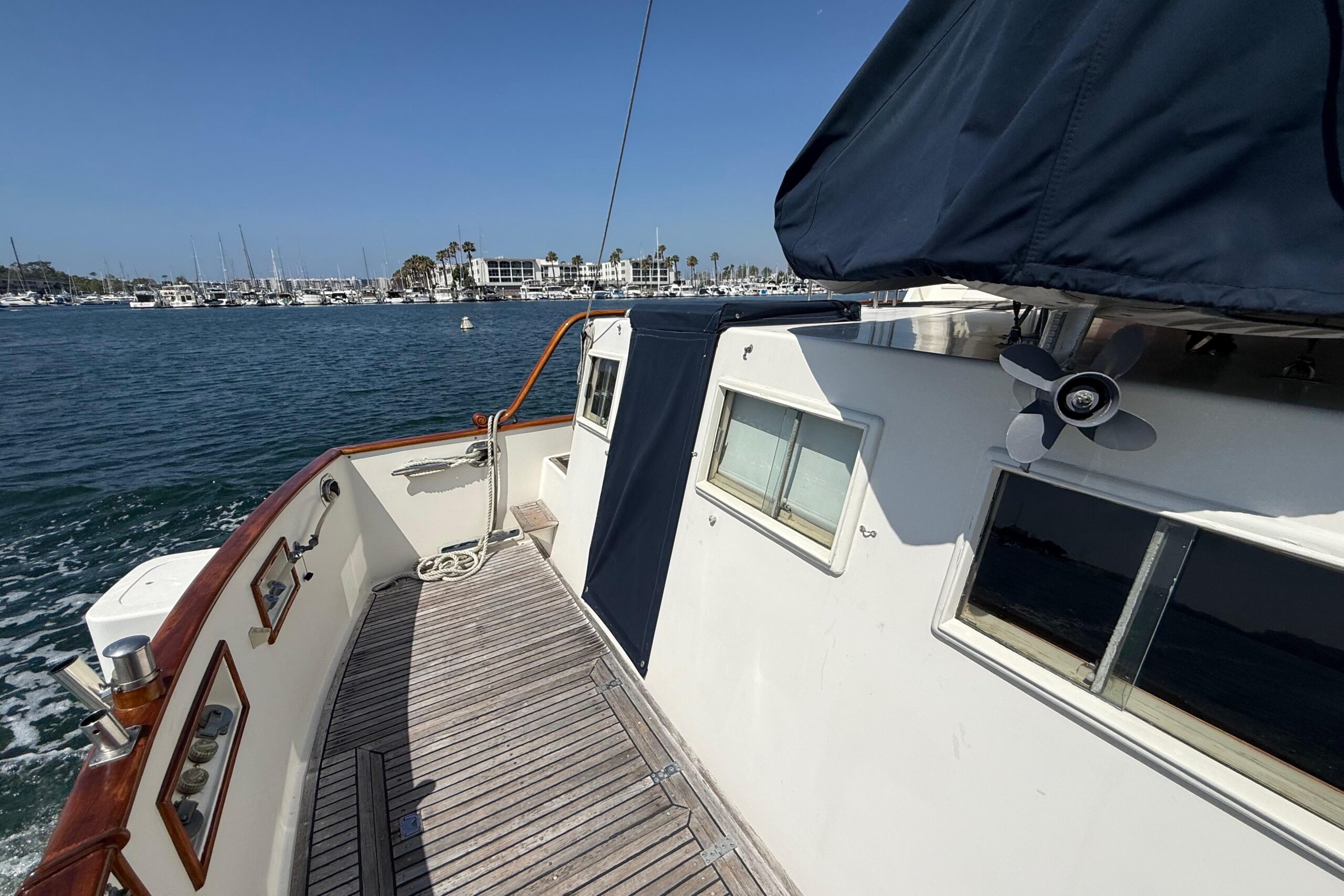
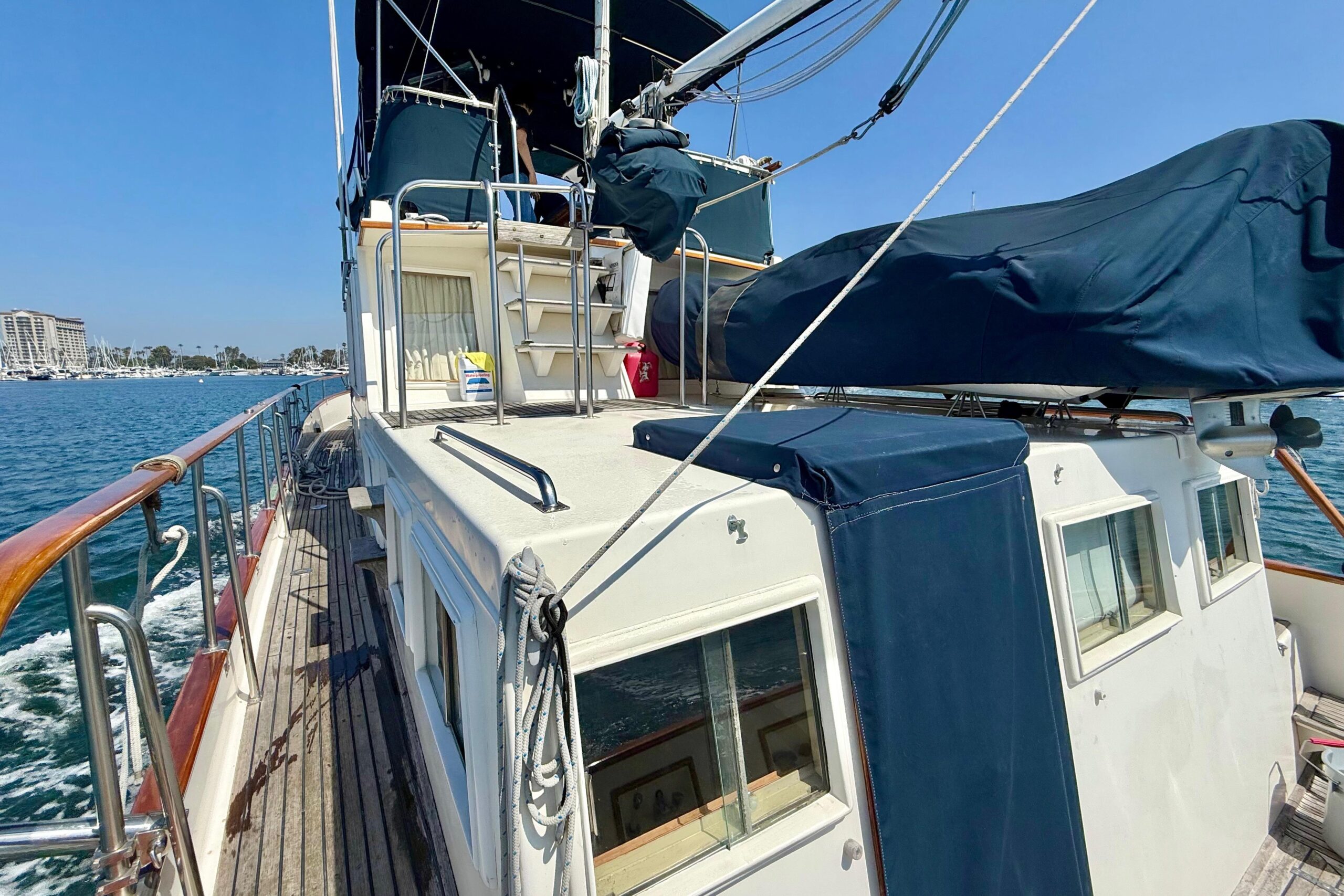
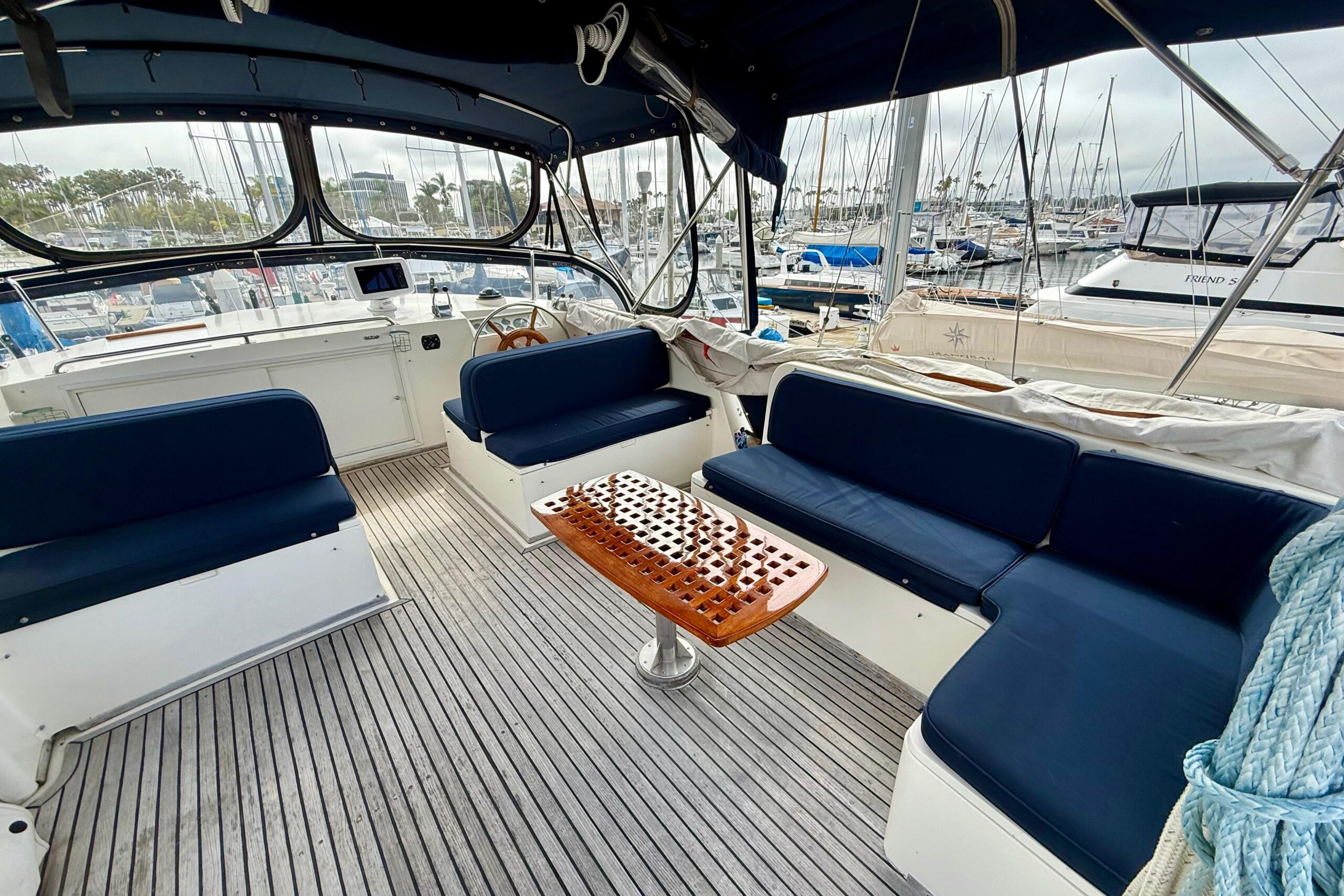
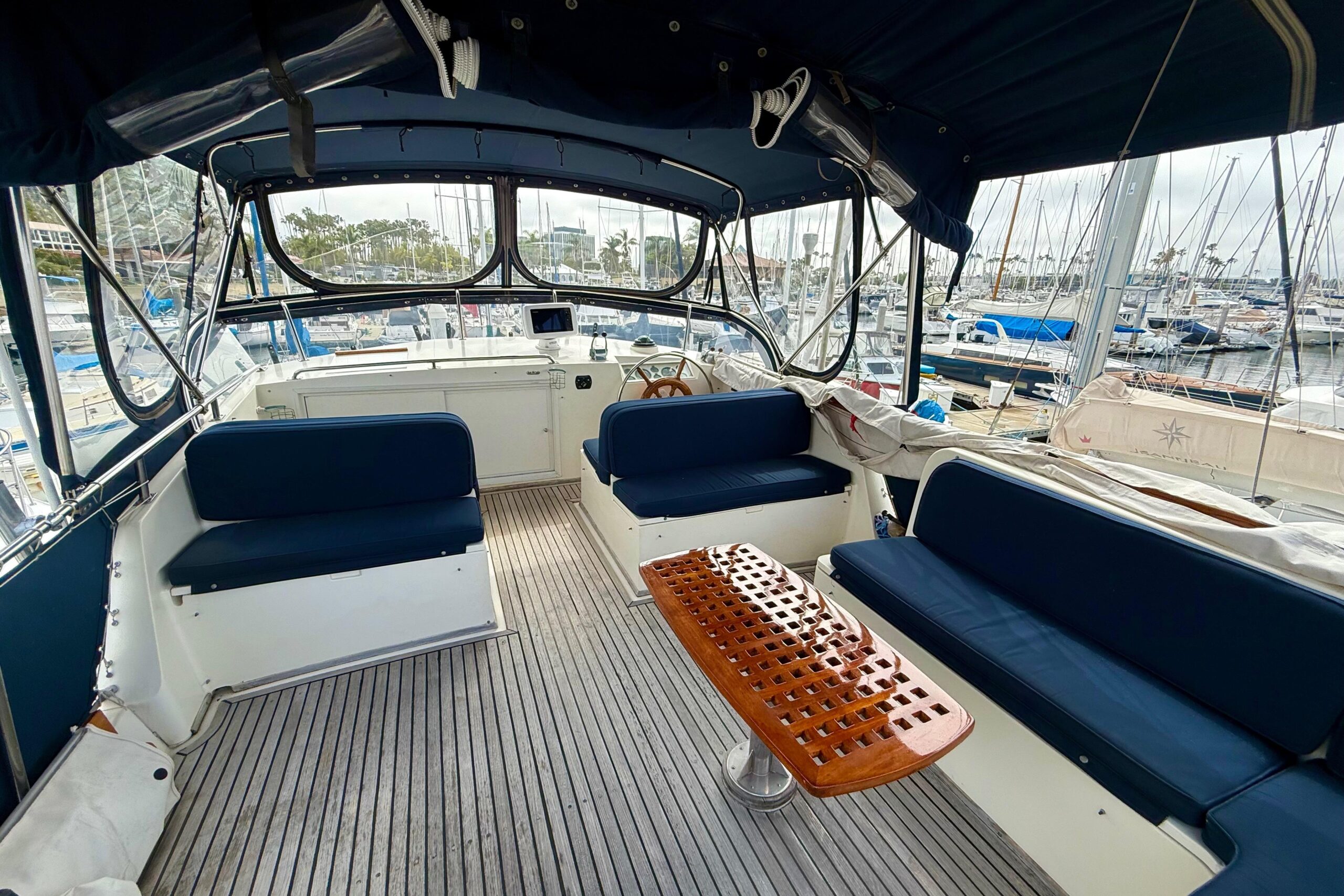
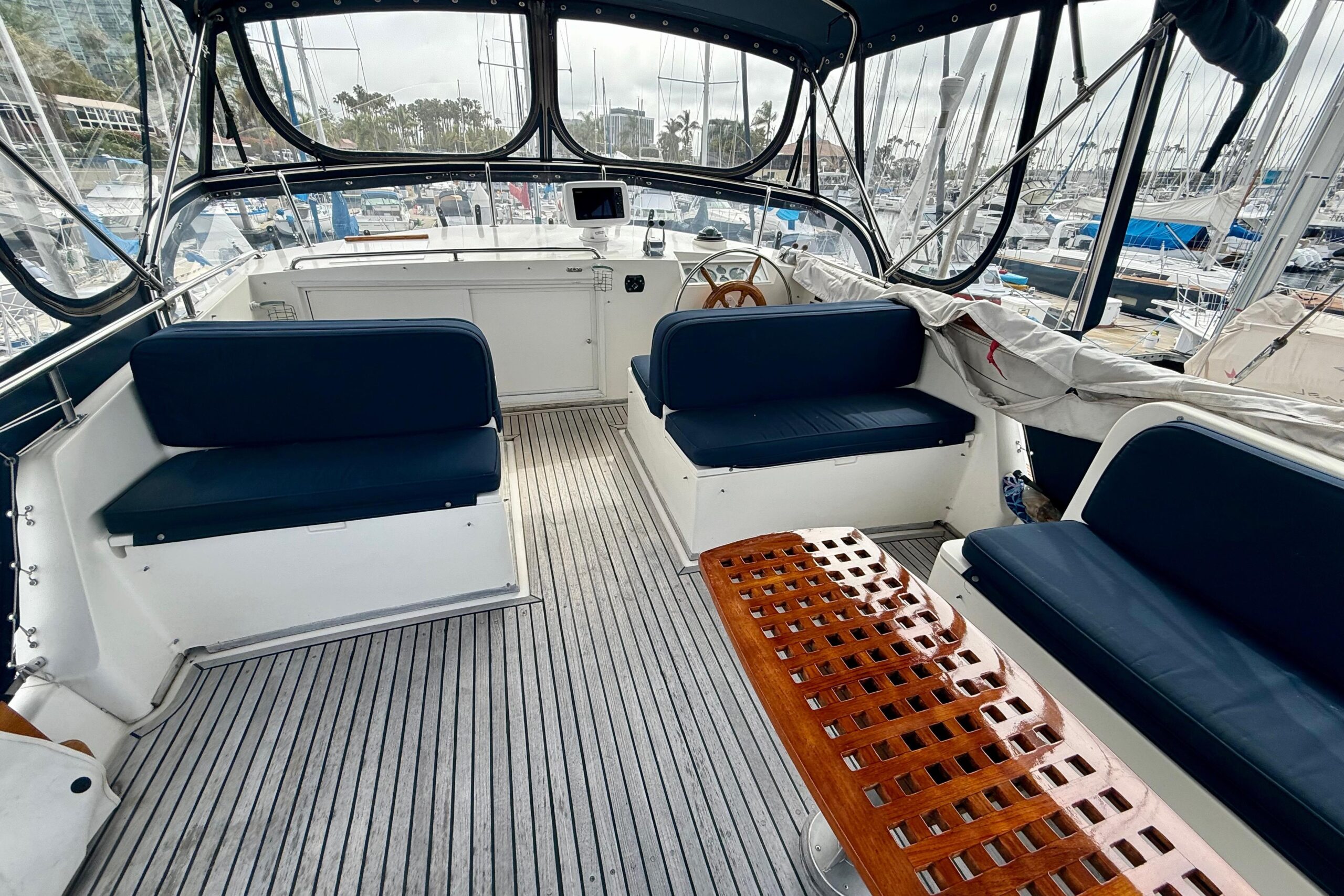
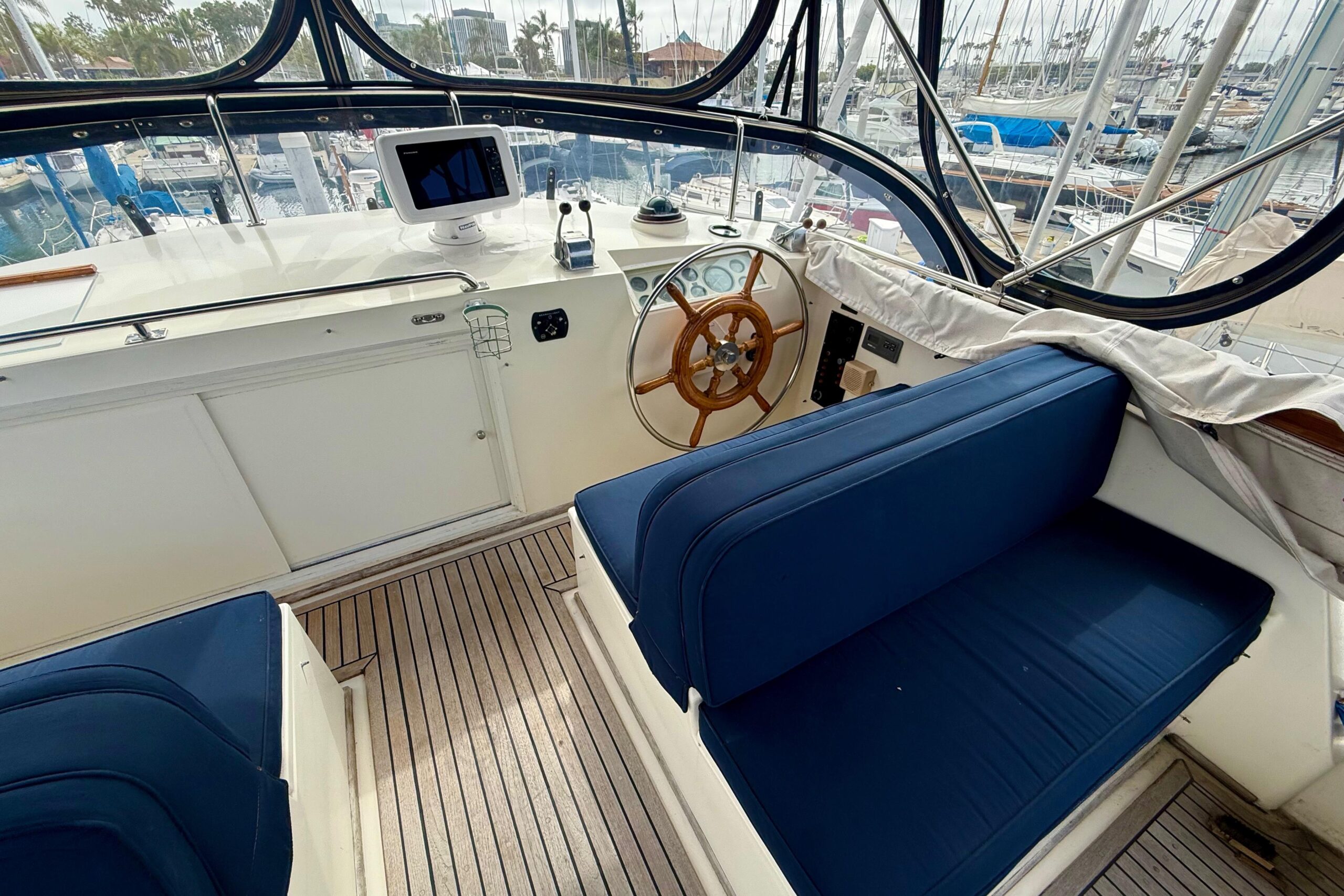
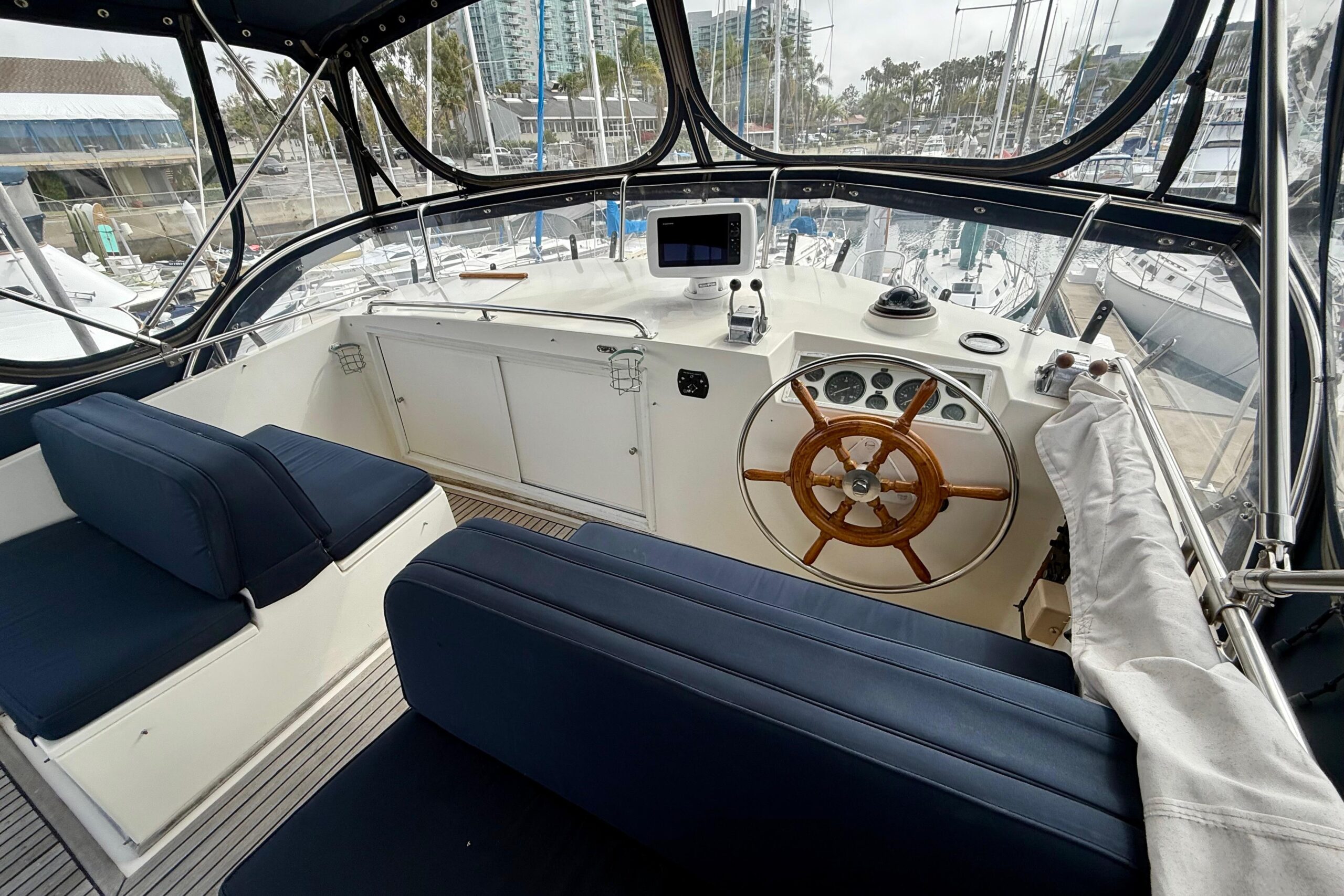
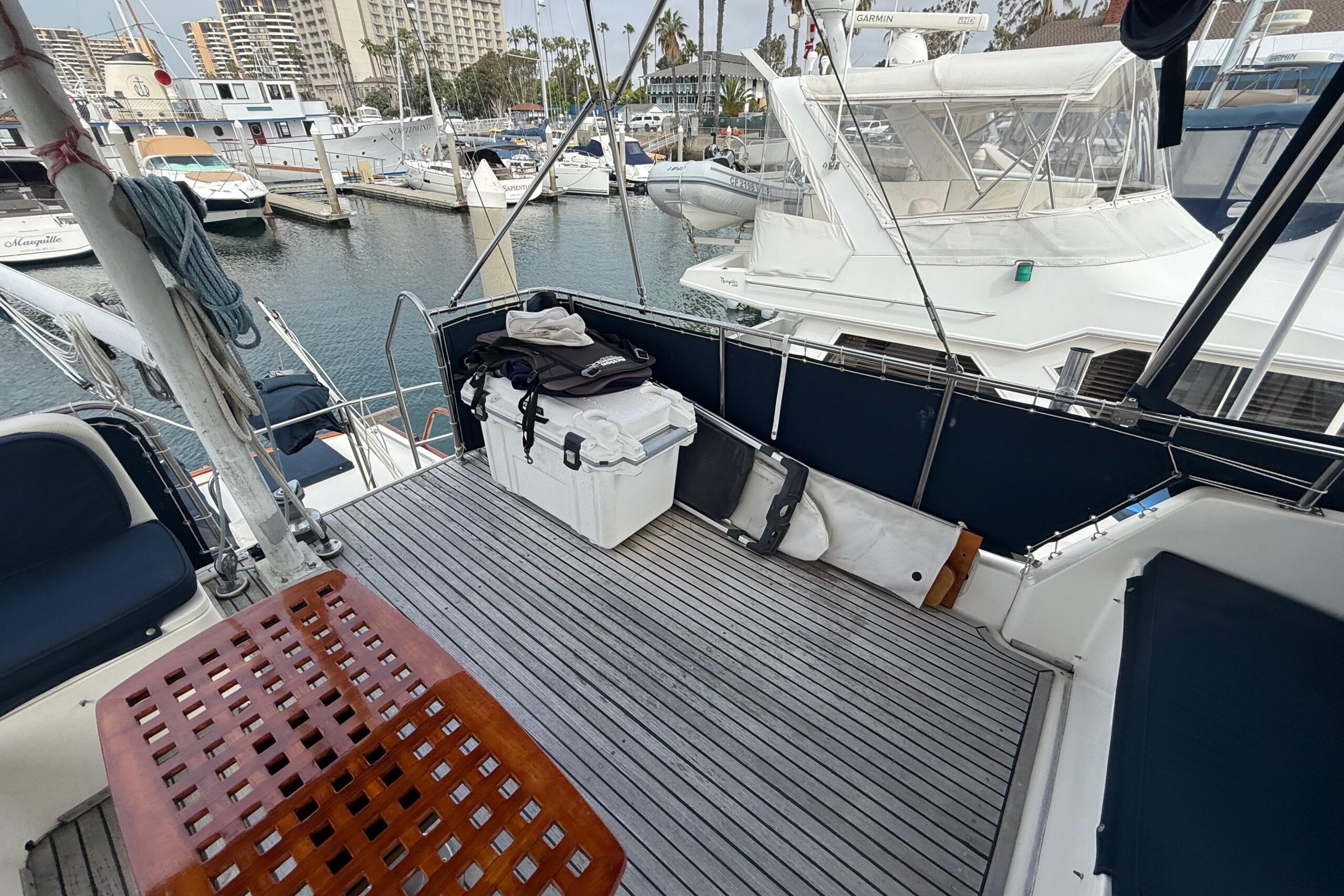
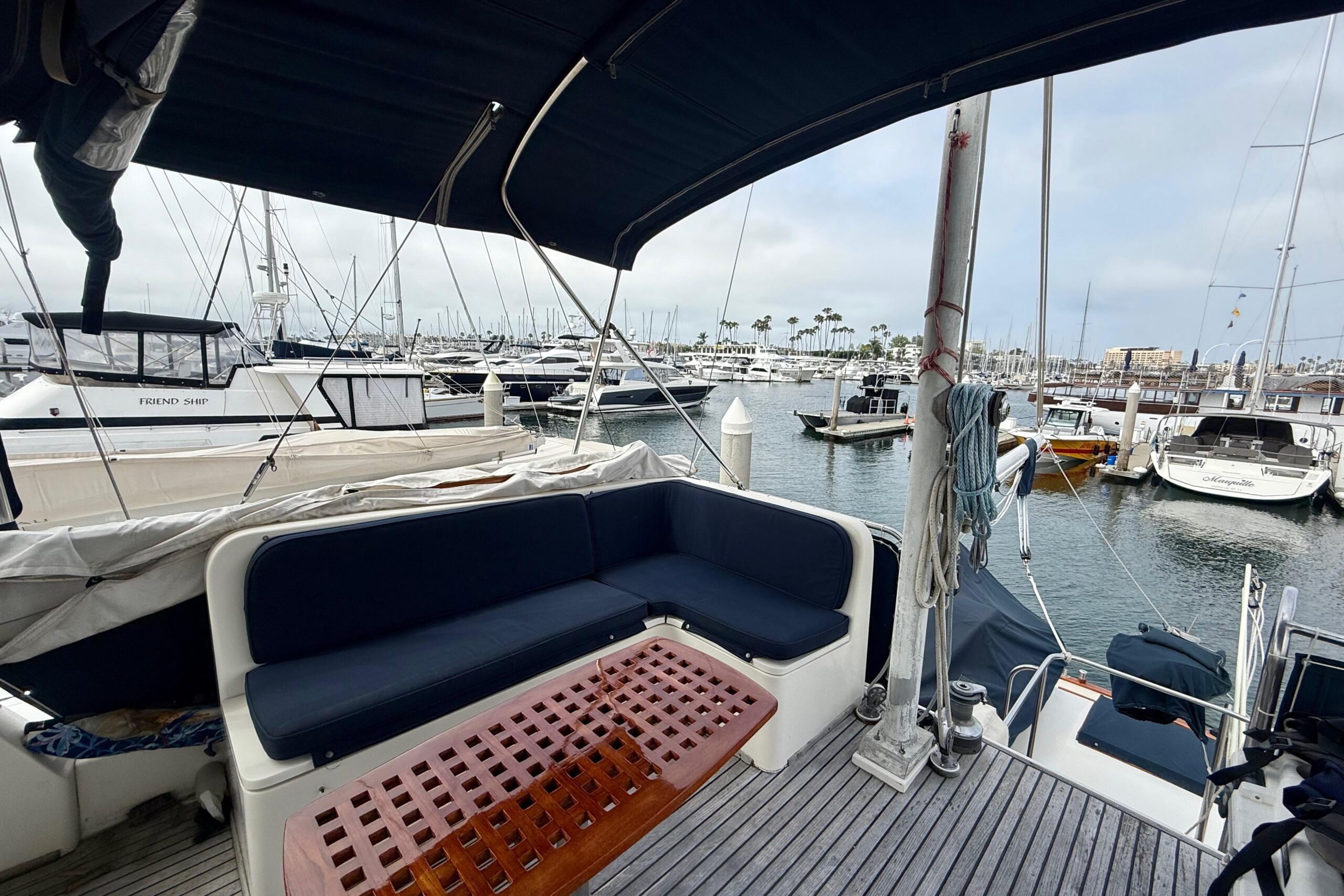
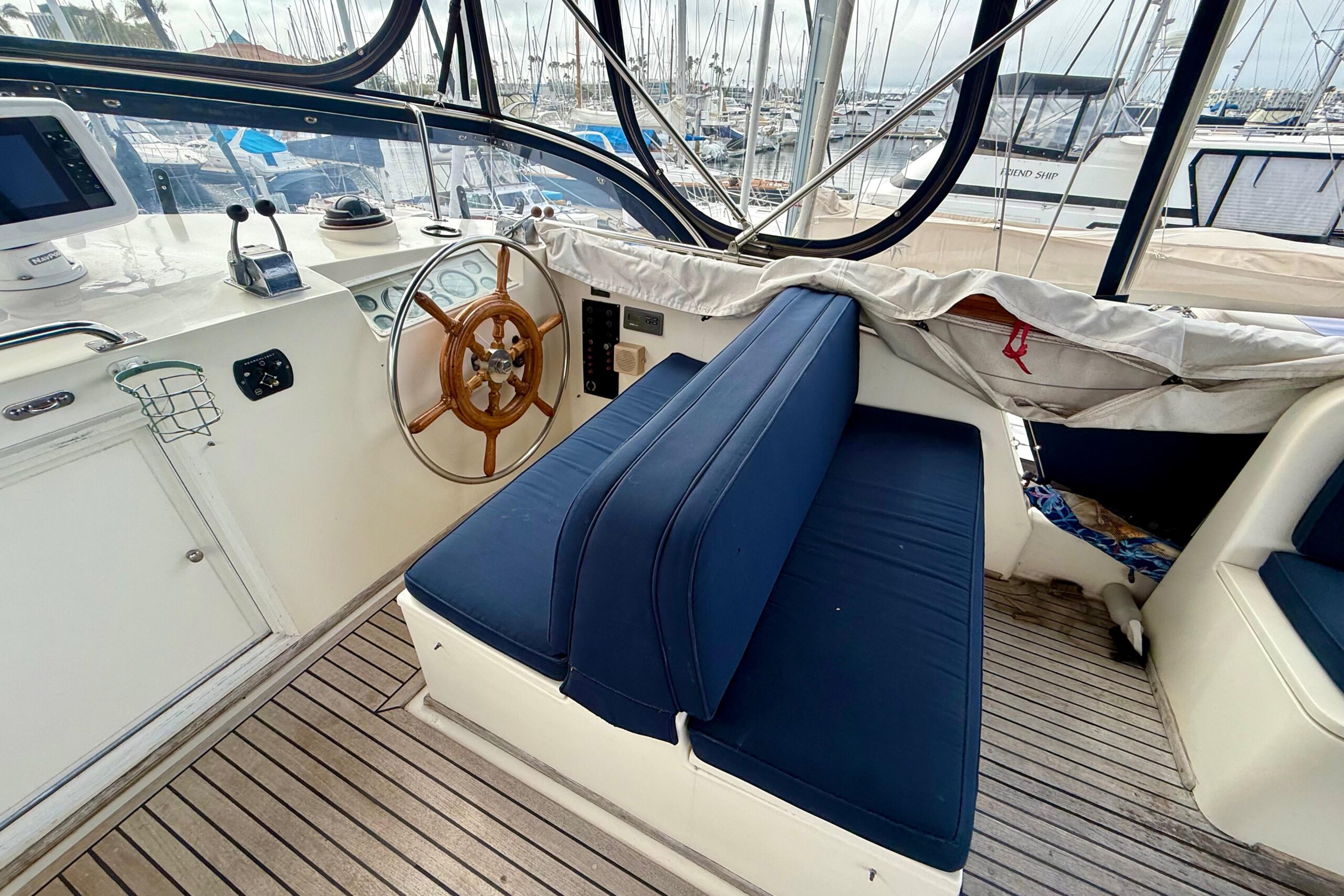
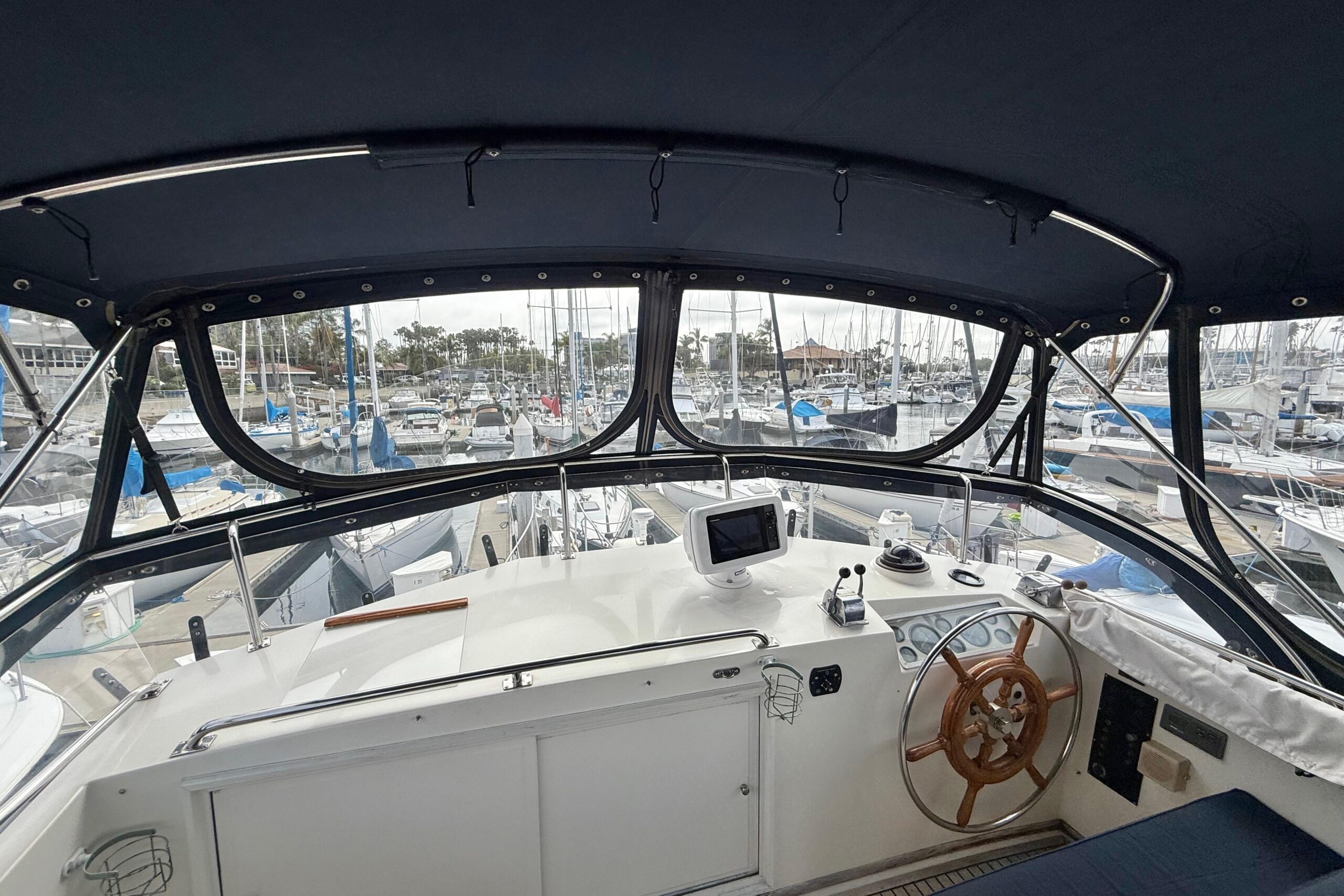
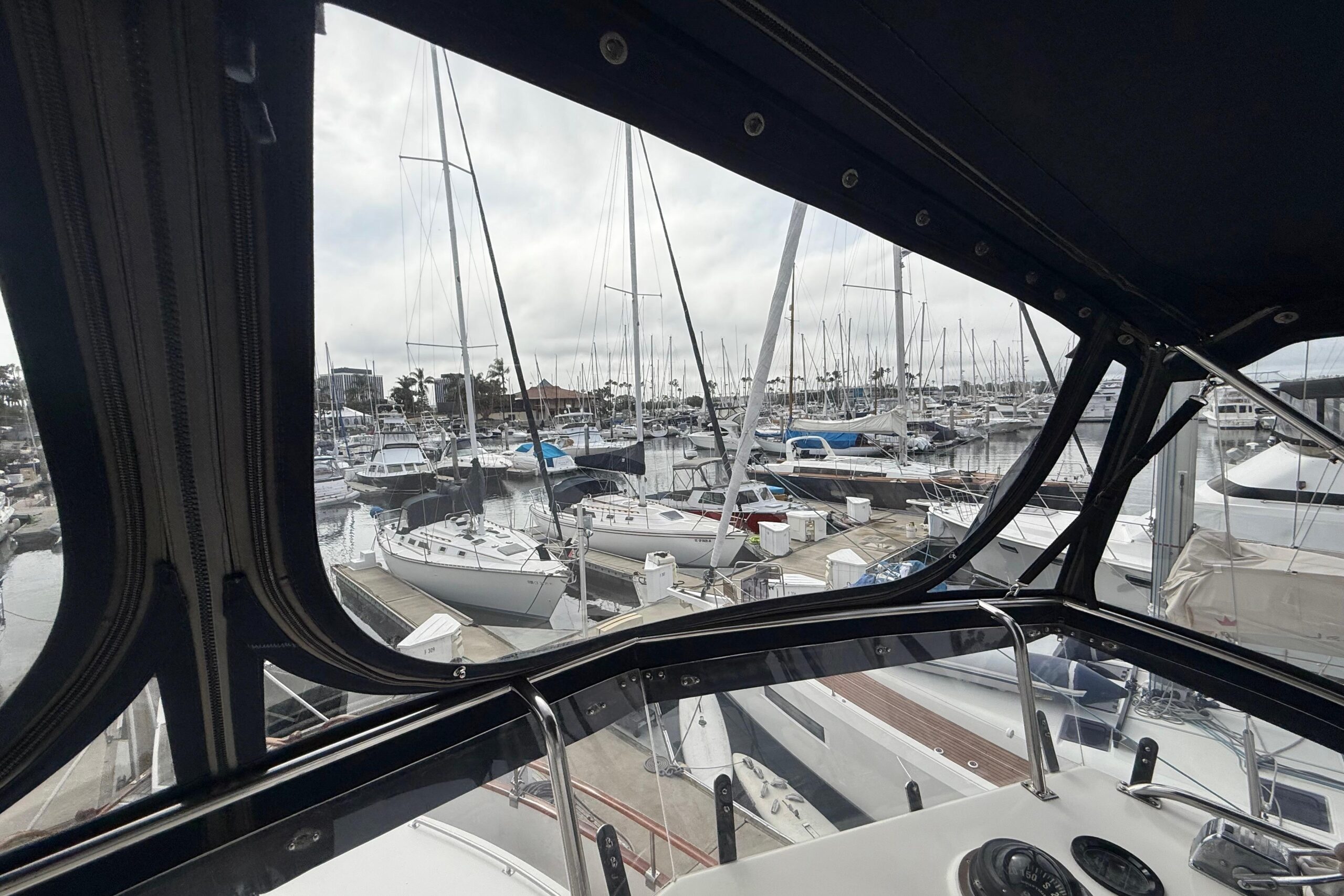
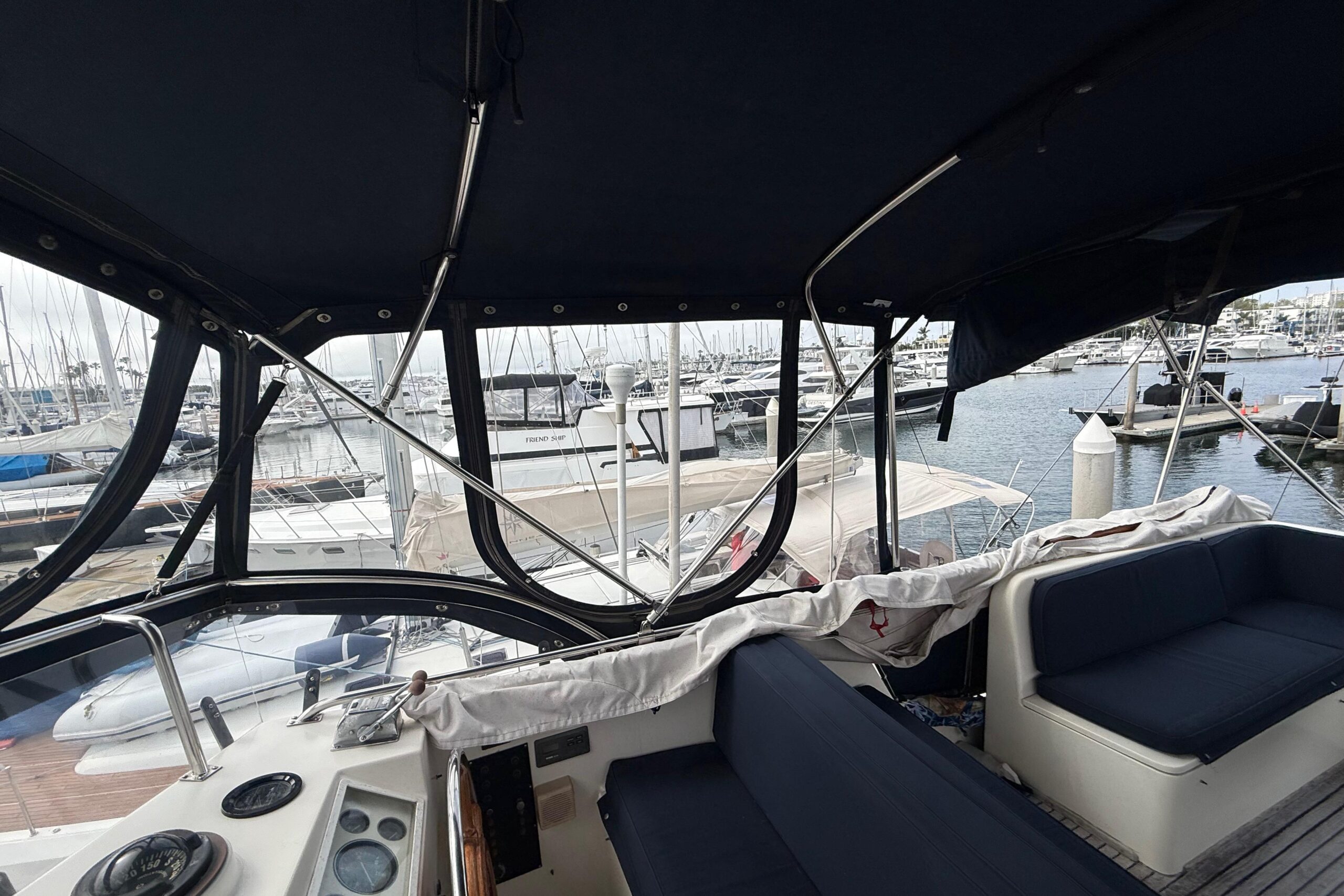
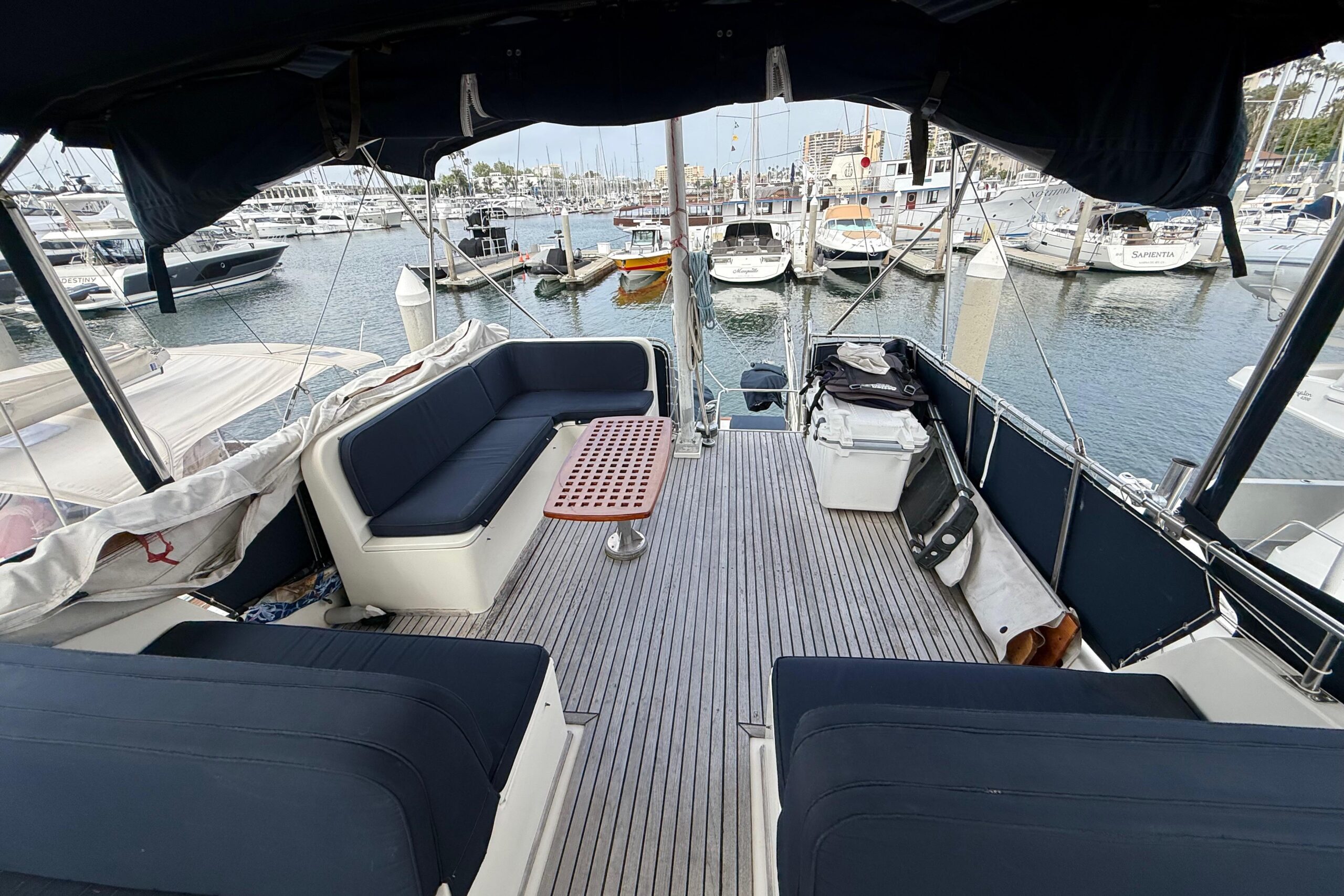
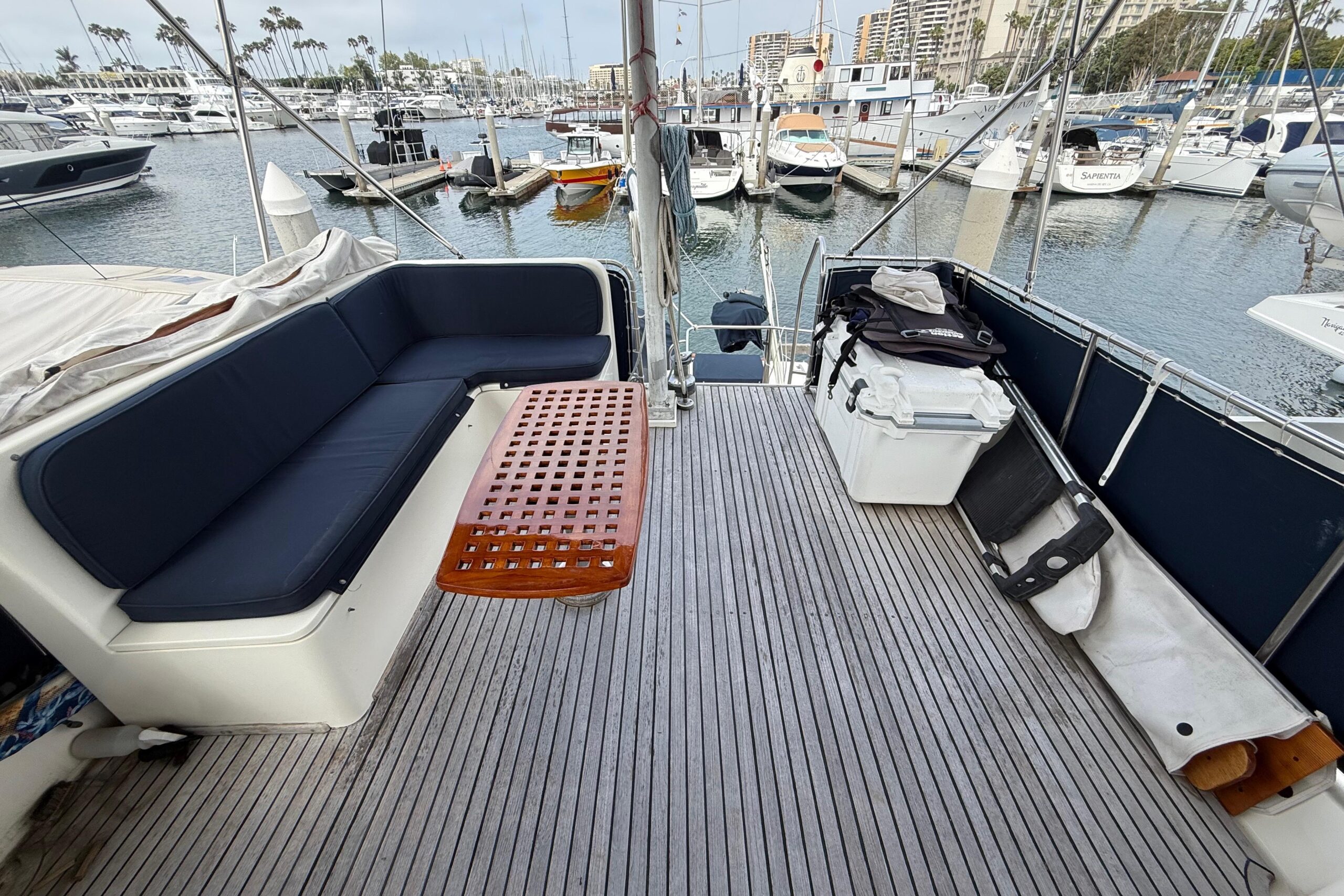
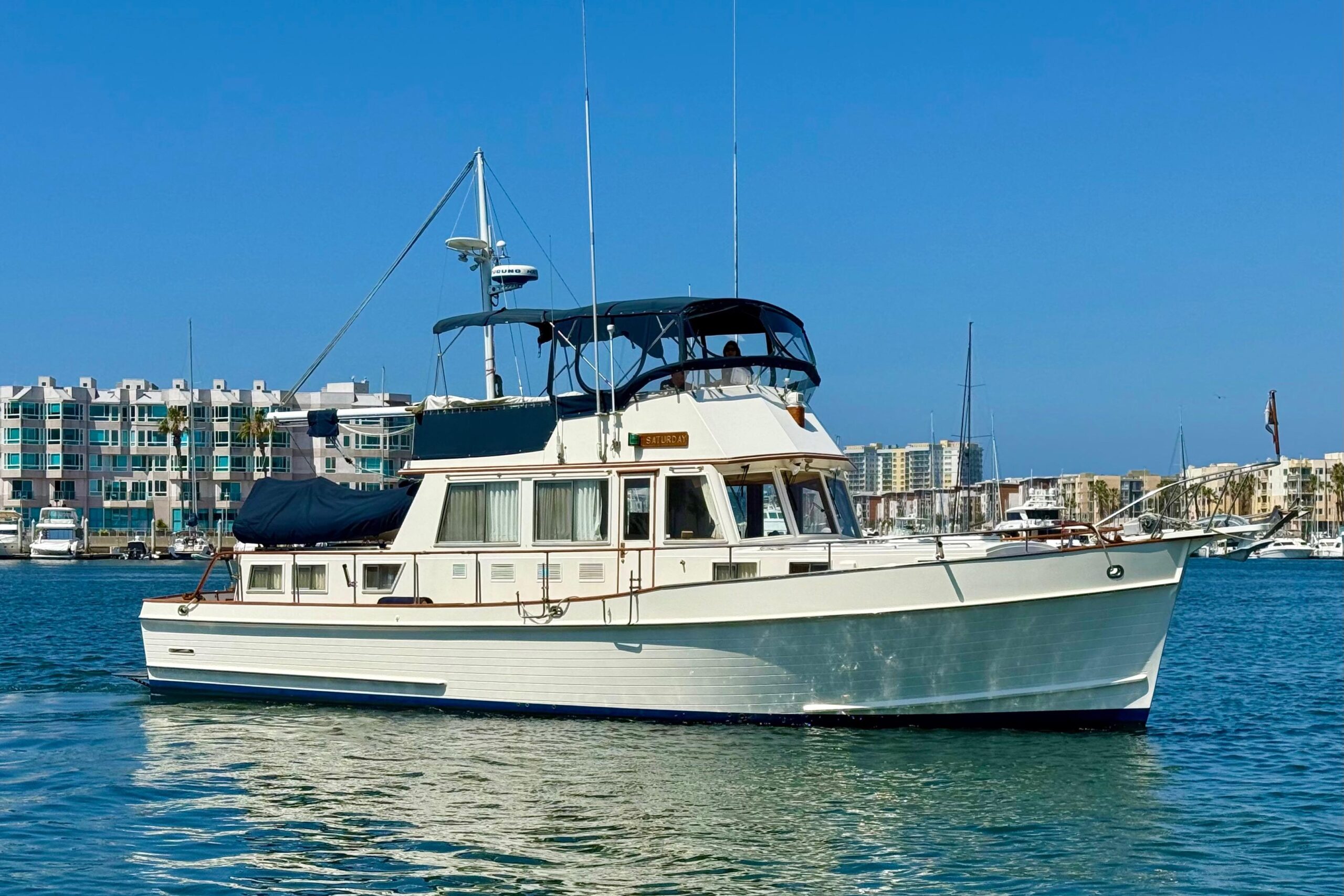
“Saturday” GB 46 #116 represents the peak in the Grand Banks “Classic” design.
By the 1990s, Grand Banks had already established itself as a global leader, delivering thousands of highly regarded yachts worldwide. Drawing on decades of owner feedback and evolving market demands, the brand continued to advance—introducing higher-horsepower propulsion, improved ergonomics, more robust onboard systems, and an unwavering commitment to the finest materials and craftsmanship.
During this period, the Grand Banks engineering team and skilled craftsmen made significant strides, incorporating computer-aided design and pioneering advancements in fiberglass construction techniques. While these innovations are often underappreciated today, they are evident in the yacht’s enduring quality—particularly in the rich gelcoat finish and beautifully aged old-growth teak, which continue to outperform and outshine many modern builds.
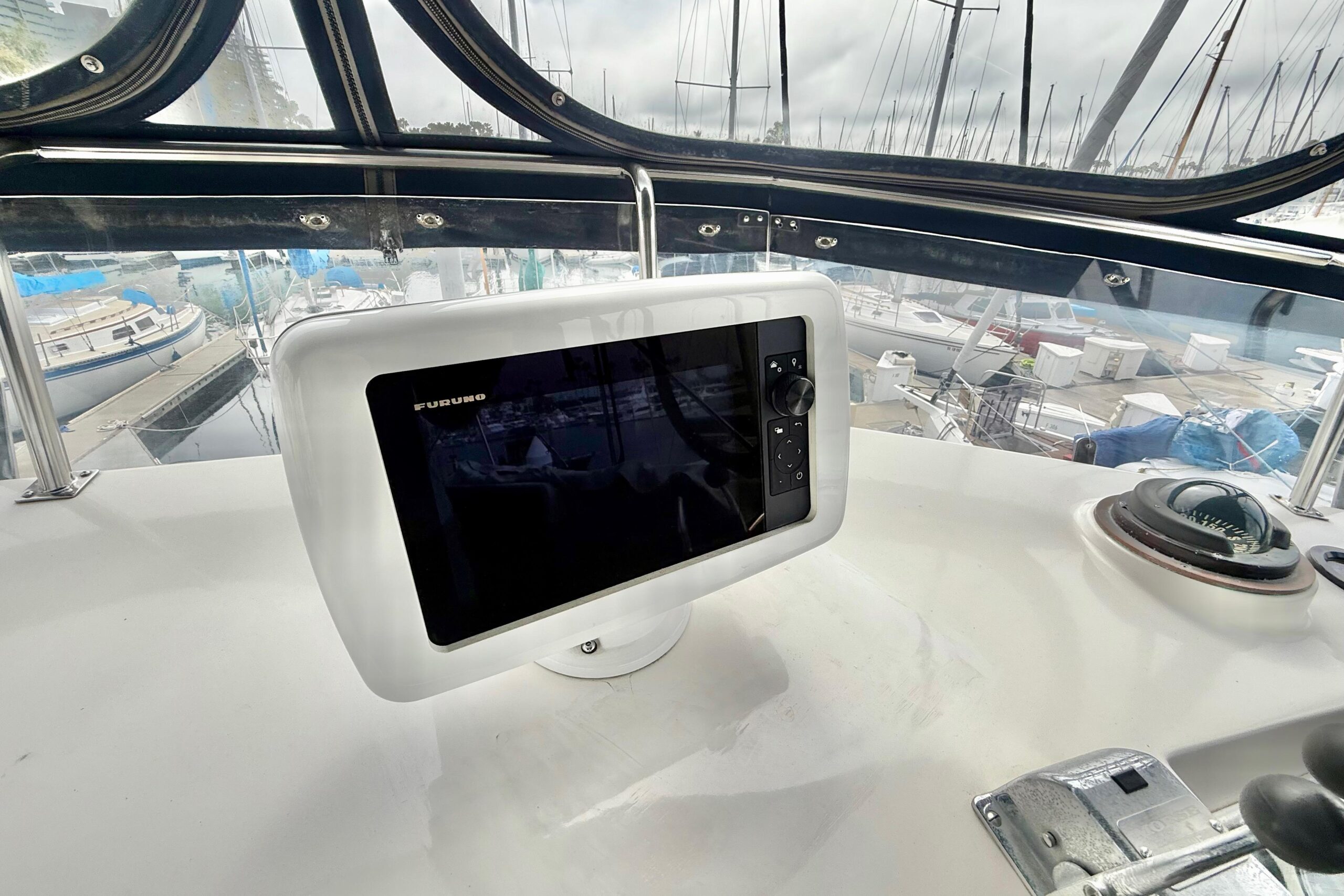
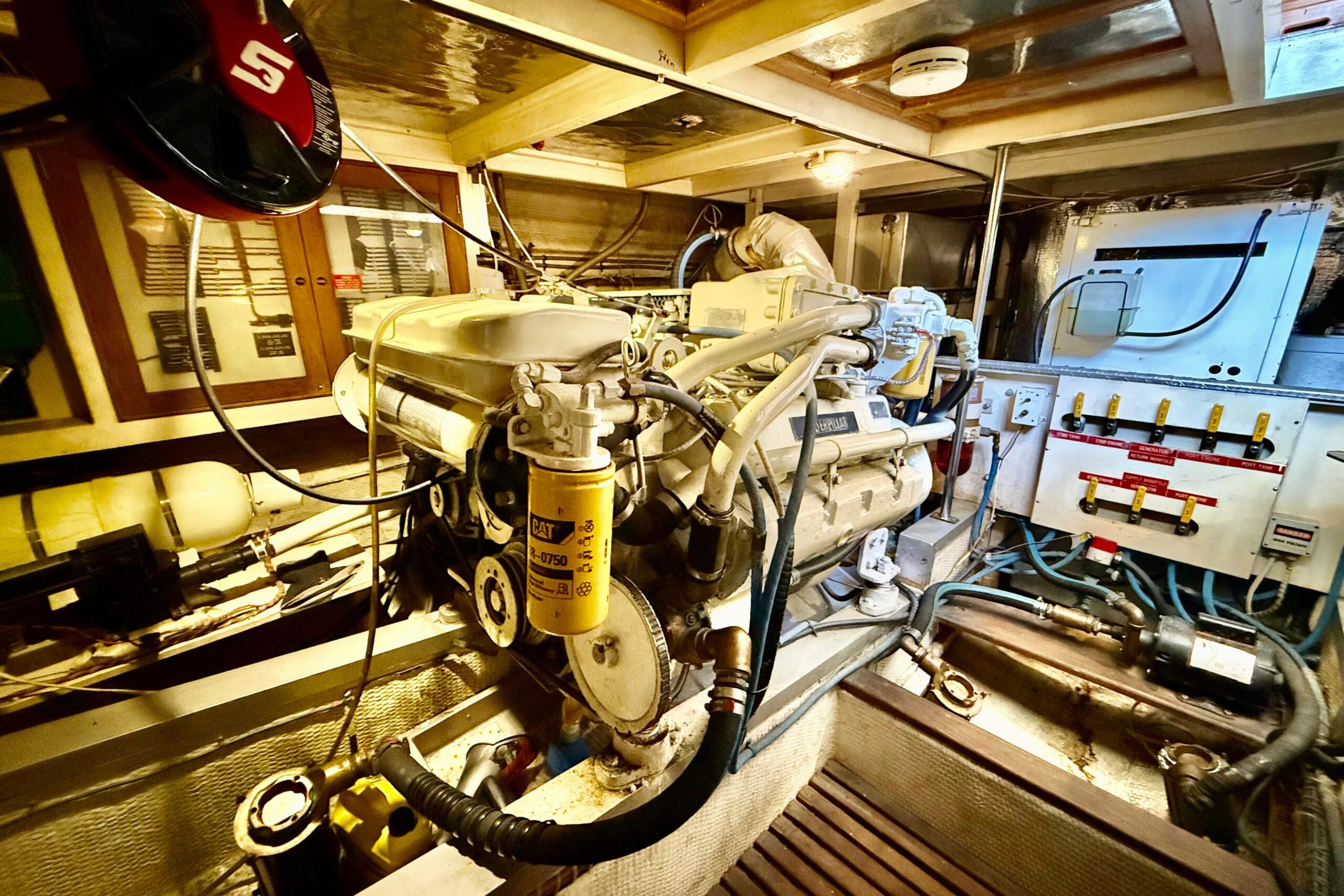
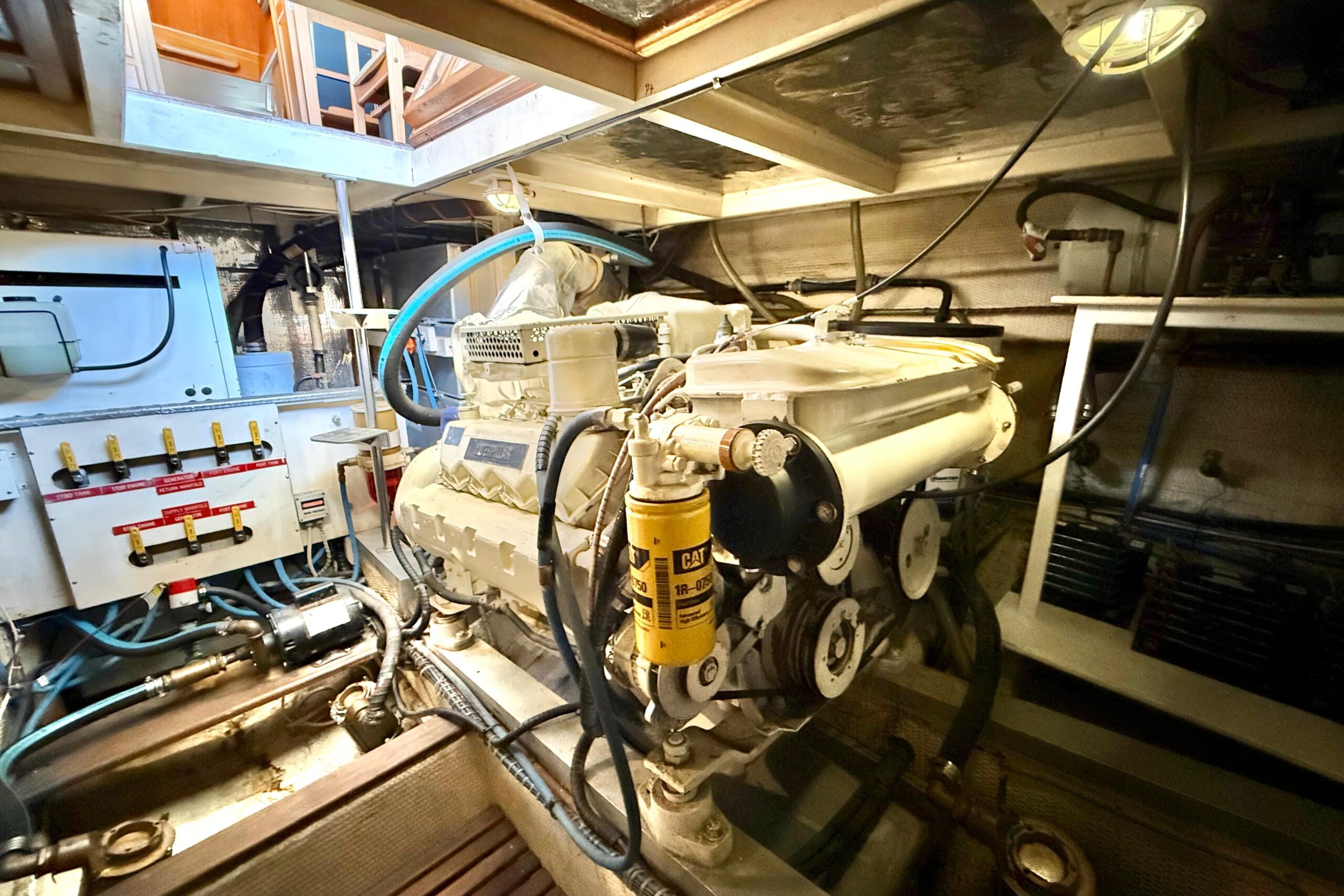
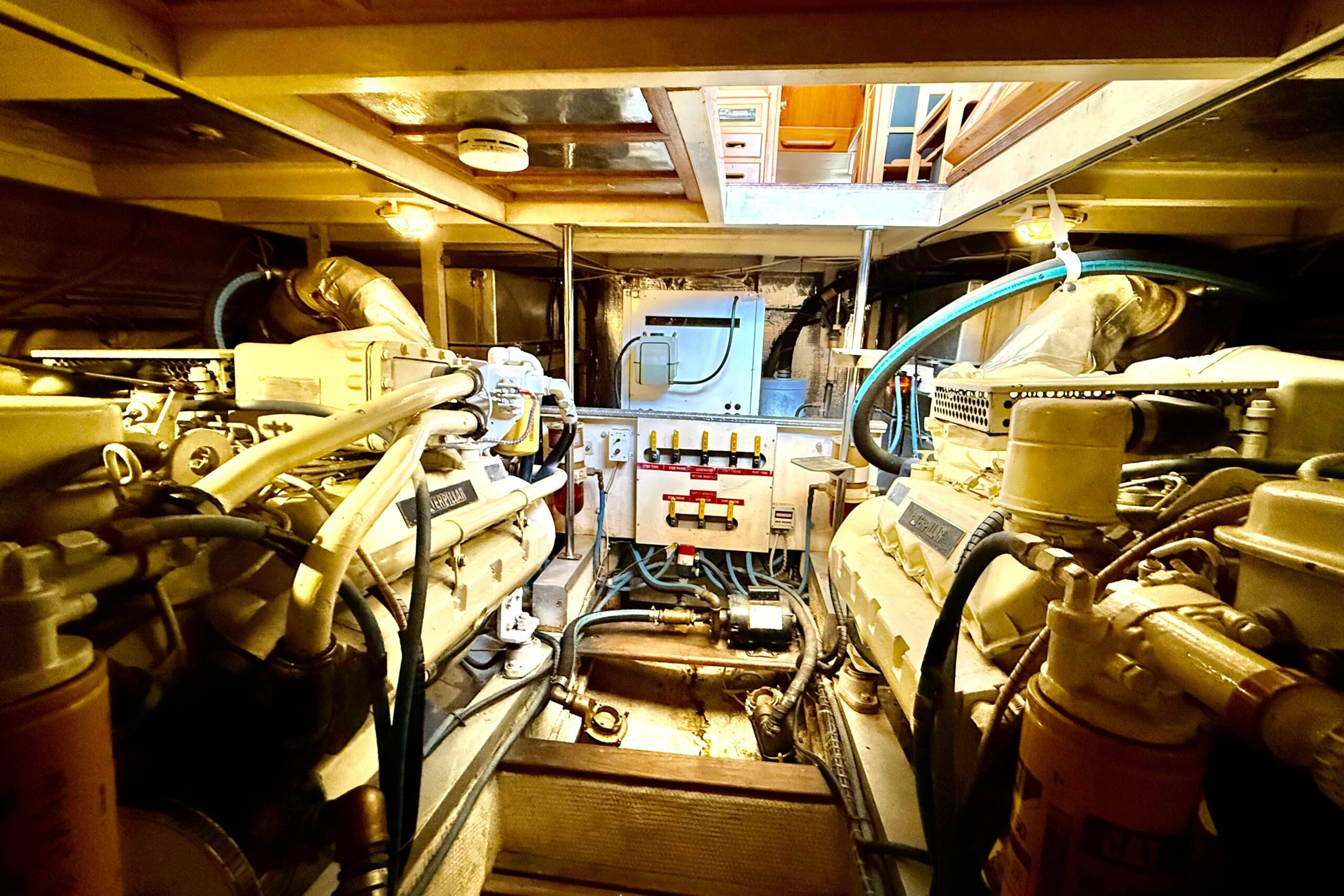
Importantly, this vessel has also benefited from key upgrades in critical areas. The original mild-steel fuel tanks have been replaced with six individual aluminum fuel cells by American Tanks, enhancing both safety and longevity. The Furuno electronics suite has been updated within the past few years, providing modern navigation capability. Power is delivered by dependable Caterpillar 3208TA engines, each producing 375 horsepower, with approximately 2,500 hours—well-regarded for their smooth, reliable performance.
For those seeking a timeless, capable, and beautifully crafted cruising yacht, “Saturday” presents a compelling opportunity. Schedule a private showing and discover firsthand the quality, upgrades, and cruising potential this exceptional Grand Banks 46 Classic has to offer.
Specifications
- Cruising Speed
- 10 kn
- Beam
- 14.75 ft
- Max Draft
- 4.42 ft
- Fuel Tank
- 1 x 600|gallon
- Fresh Water
- 1 x 284|gallon
- Holding
- 1 x 40|gallon
- Cabins
- 2
- Heads
- 1
- Engine 1
- Make
- Caterpillar
- Type
- Inboard
- Fuel
- diesel
- Hours
- 2532
- Engine 2
- Make
- Caterpillar
- Type
- Inboard
- Fuel
- diesel
- Hours
- 2517
Features
Overview
The Grand Banks 46 Classic, in her highly sought-after two-stateroom layout, represents one of the most thoughtfully balanced and enduring designs in the under-50-foot cruising classu2014offering an exceptional blend of traditional craftsmanship, livability, and confident underway performance.
Salon & Helm
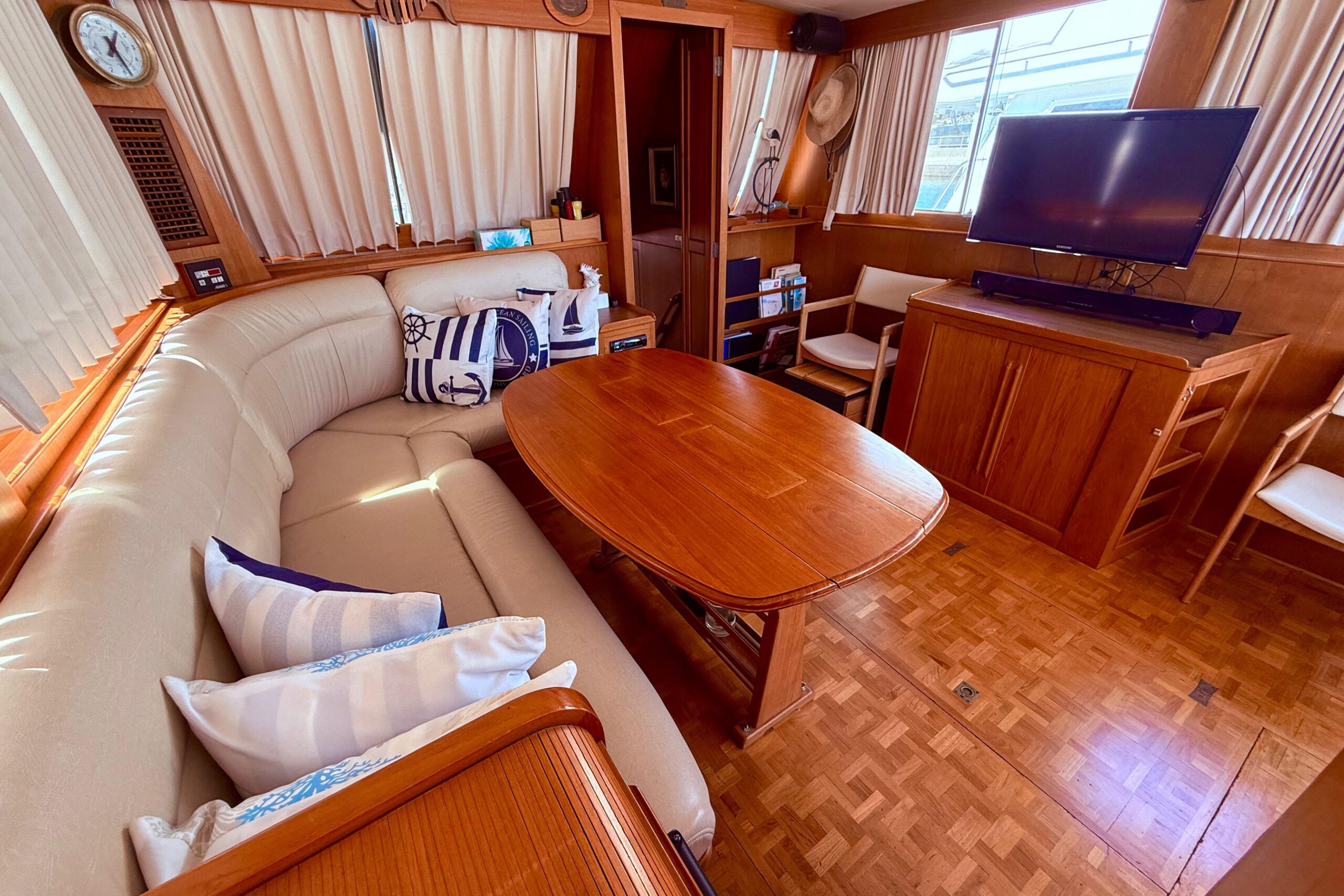
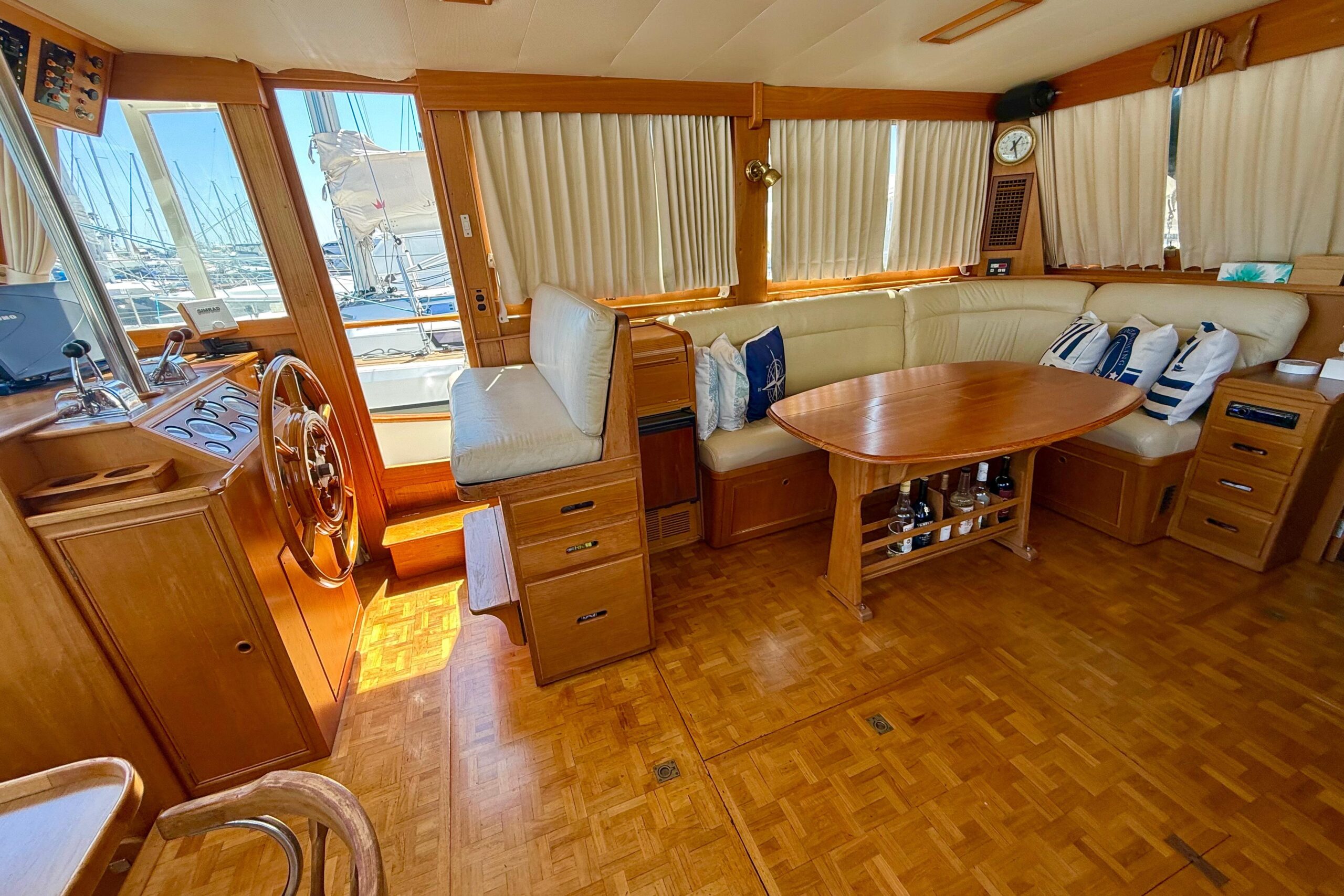
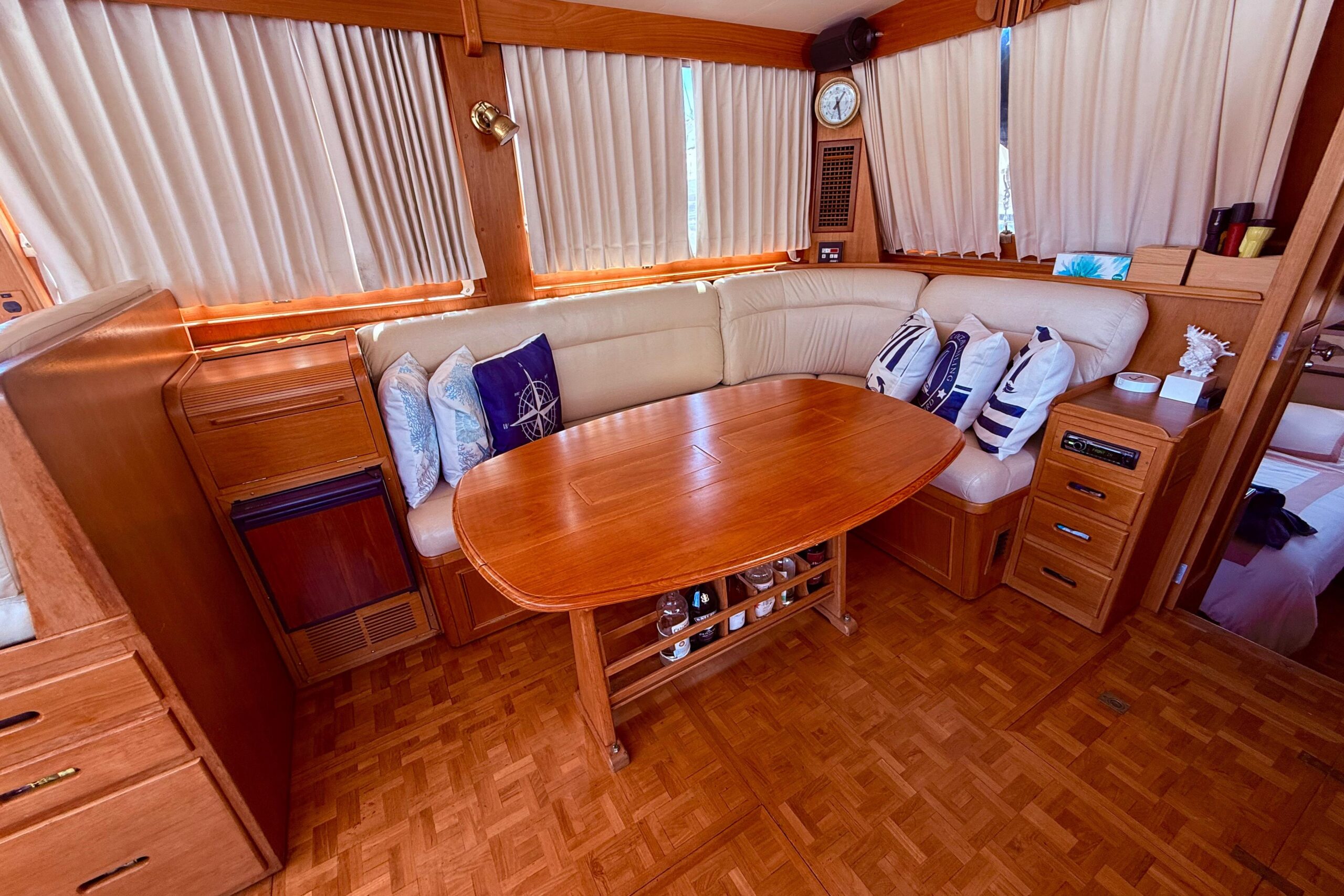
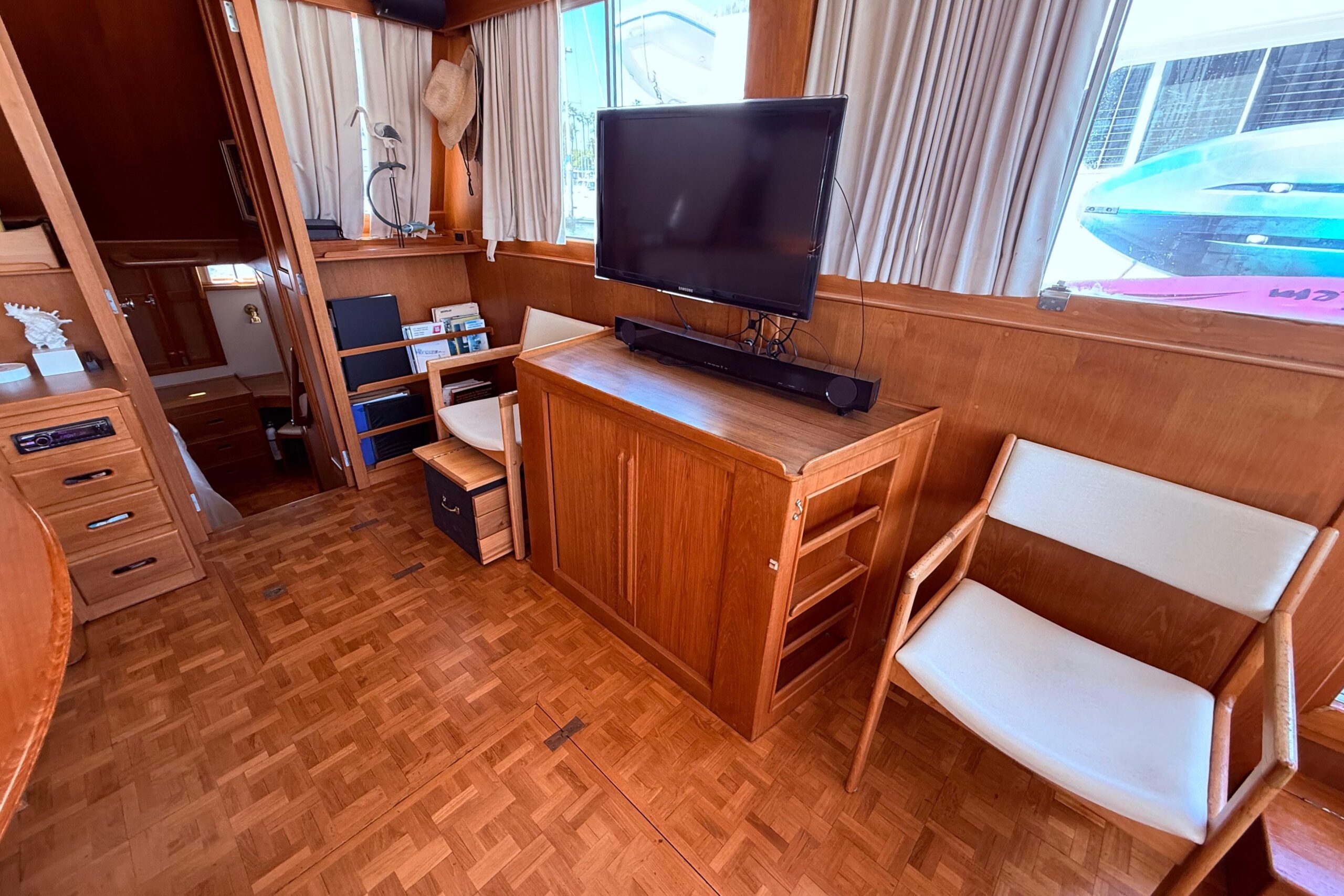
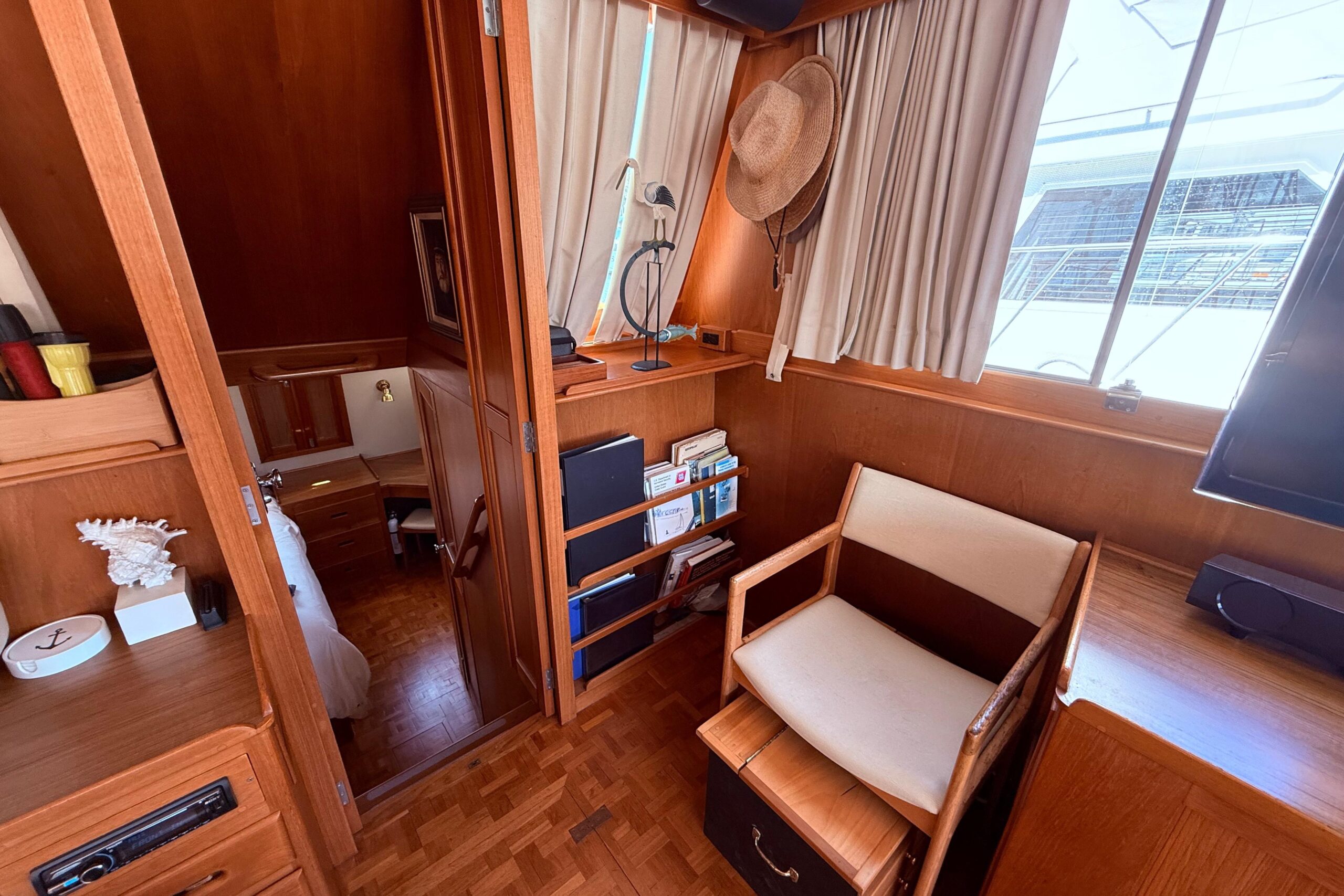
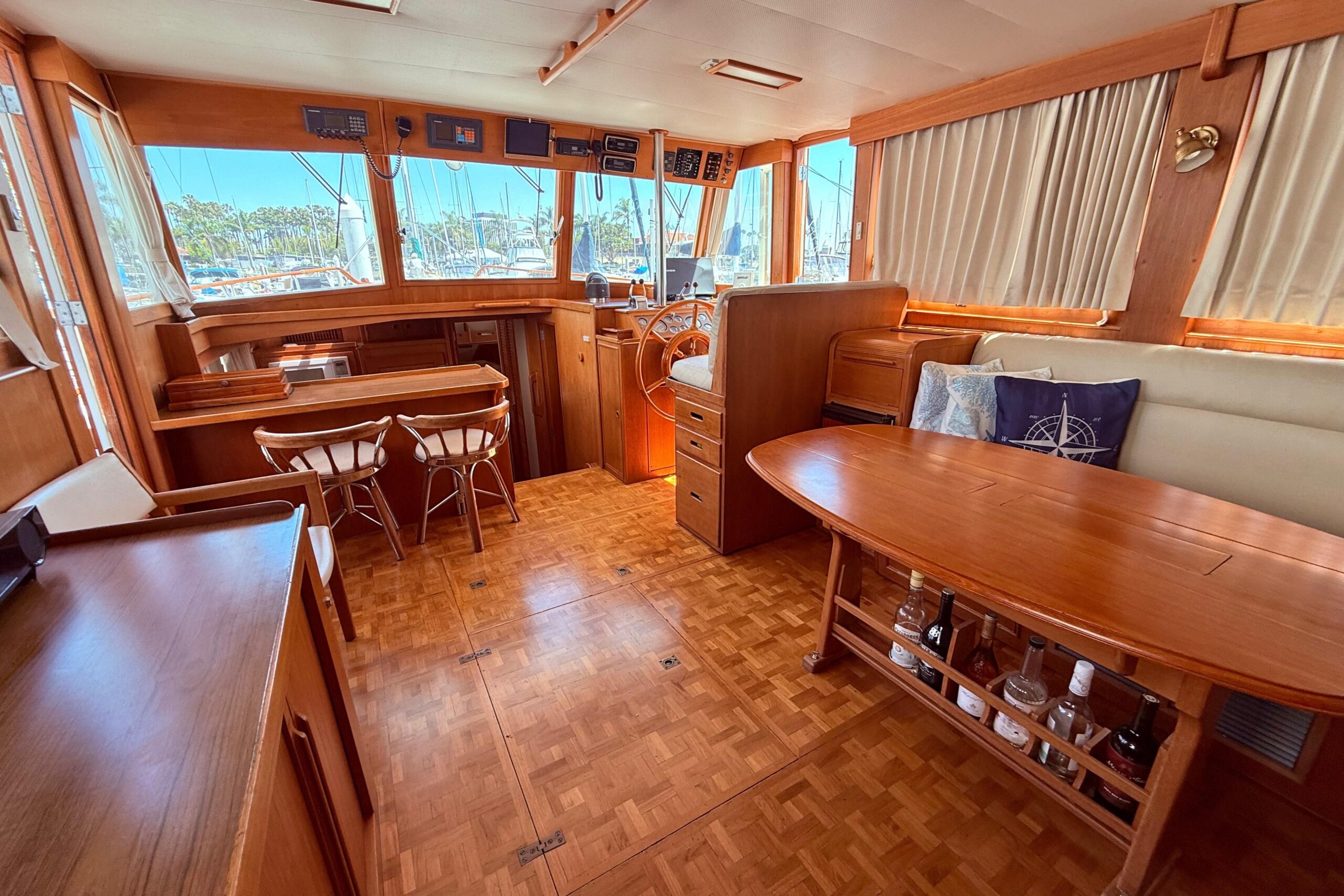
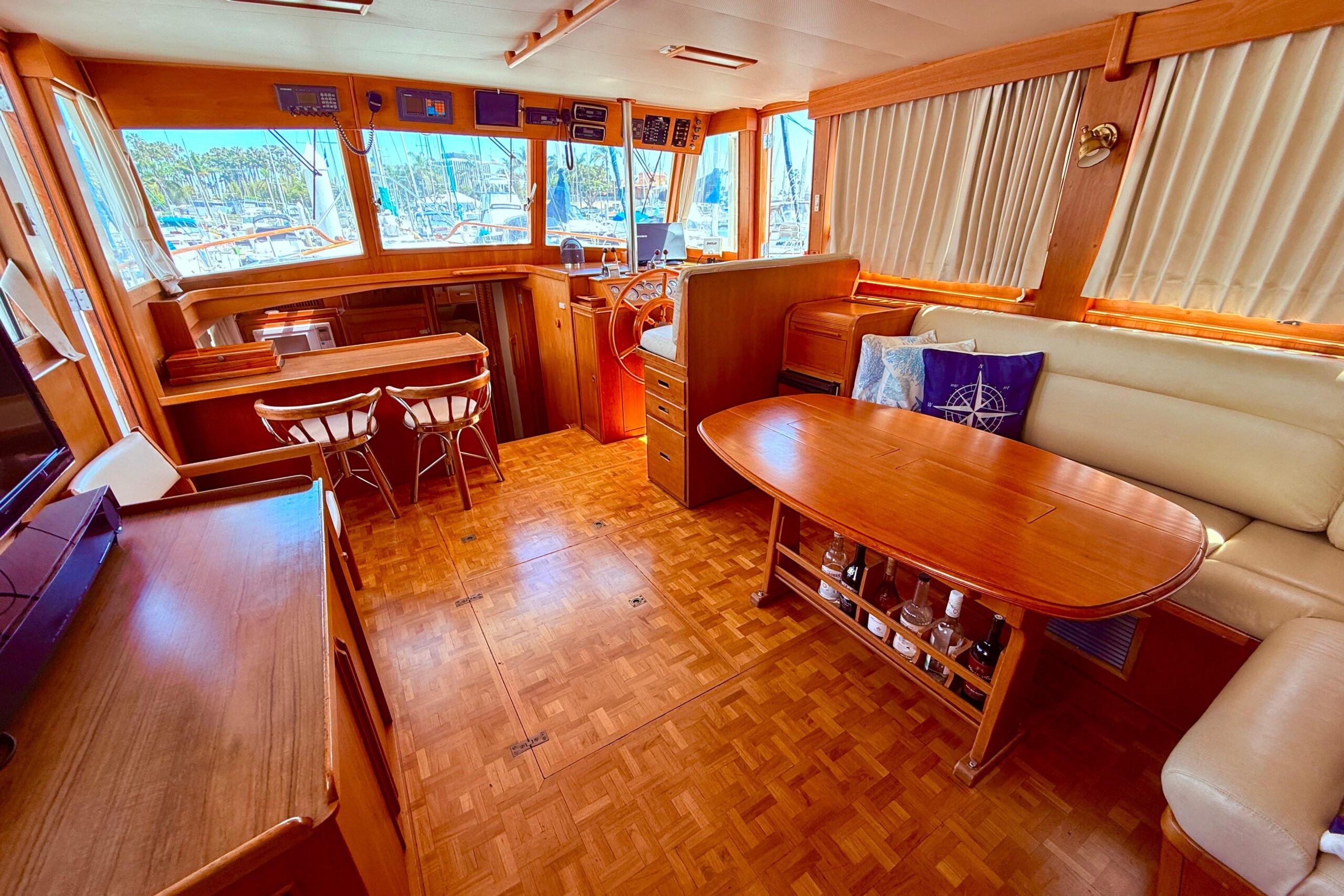
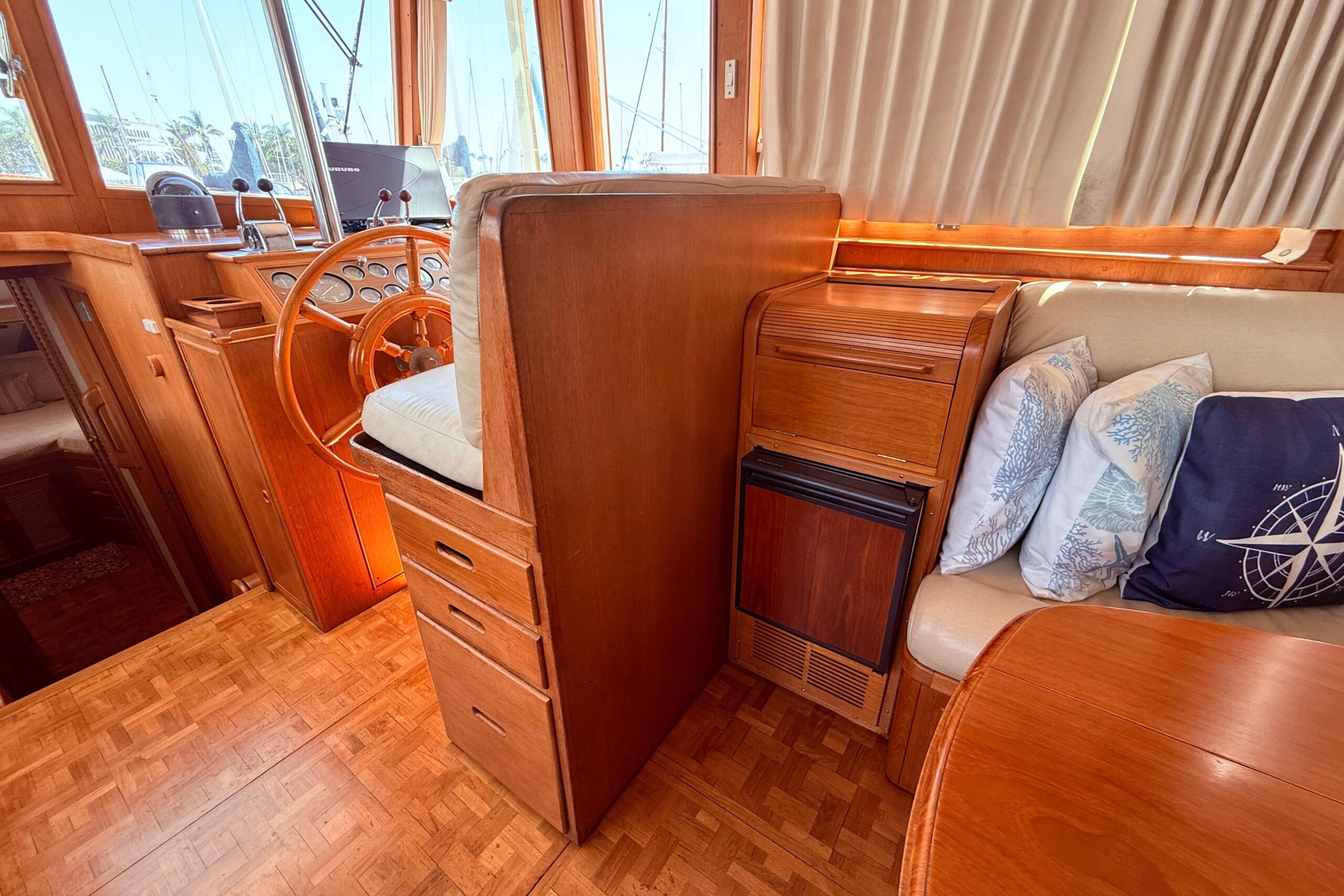
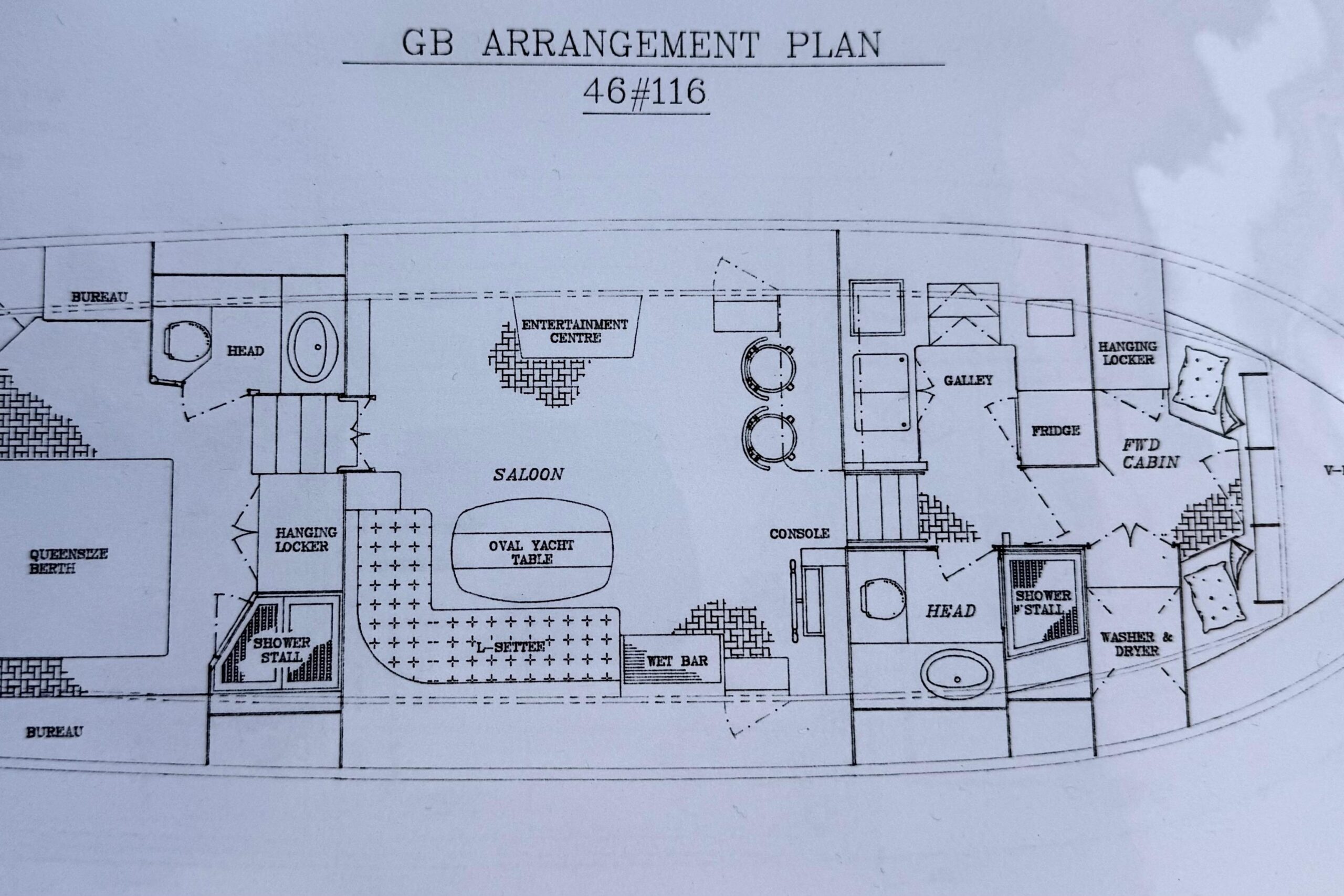
Boarding is convenient via port or starboard side deck doors, both leading into the forward section of the salon. Inside, the ambiance is warm and inviting, defined by satin-varnished golden Burmese teak joinery and a beautifully crafted parquet teak sole throughout. Updated neutral UltraLeather upholstery provides a clean, contemporary contrast while preserving the yachtu2019s timeless character.
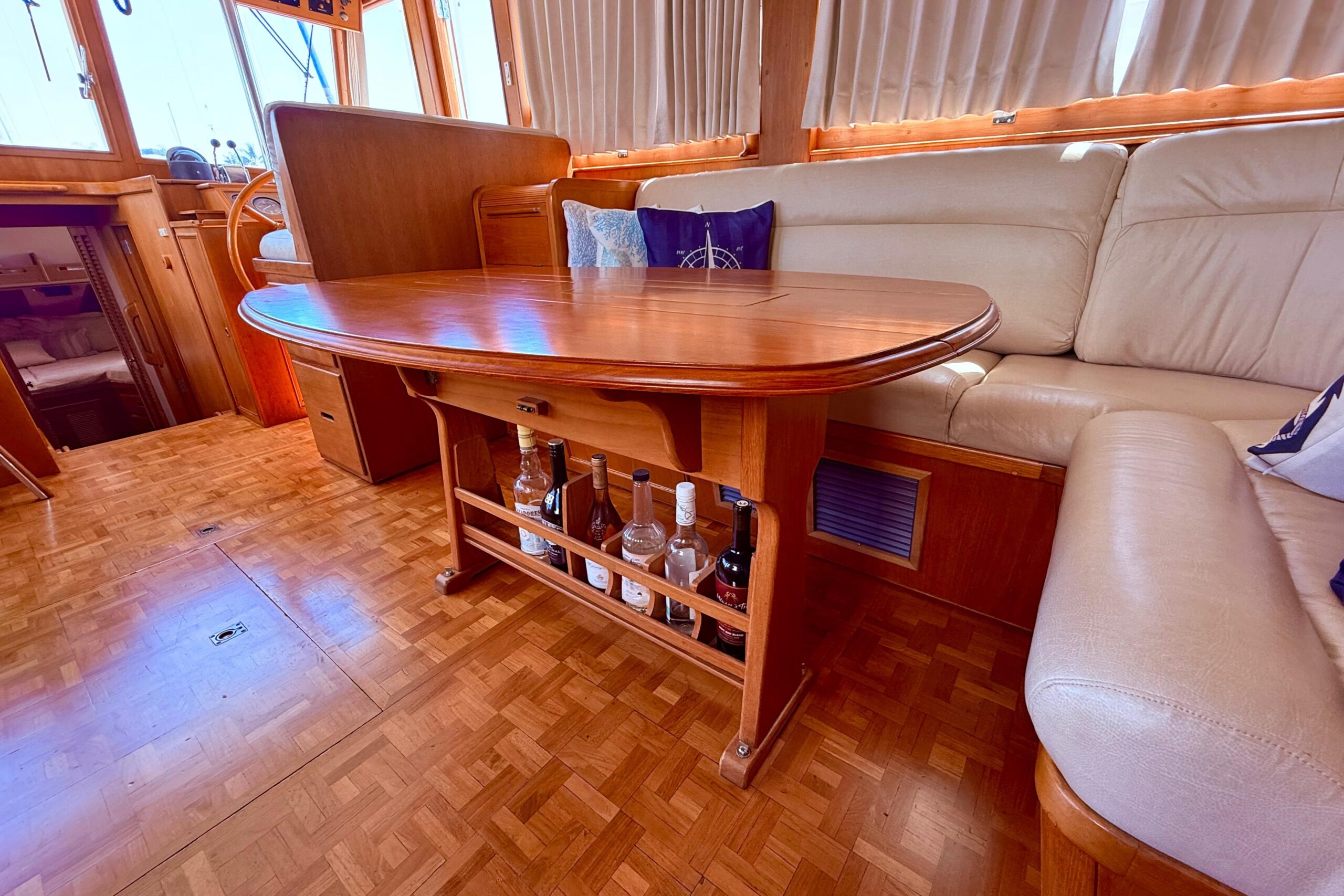
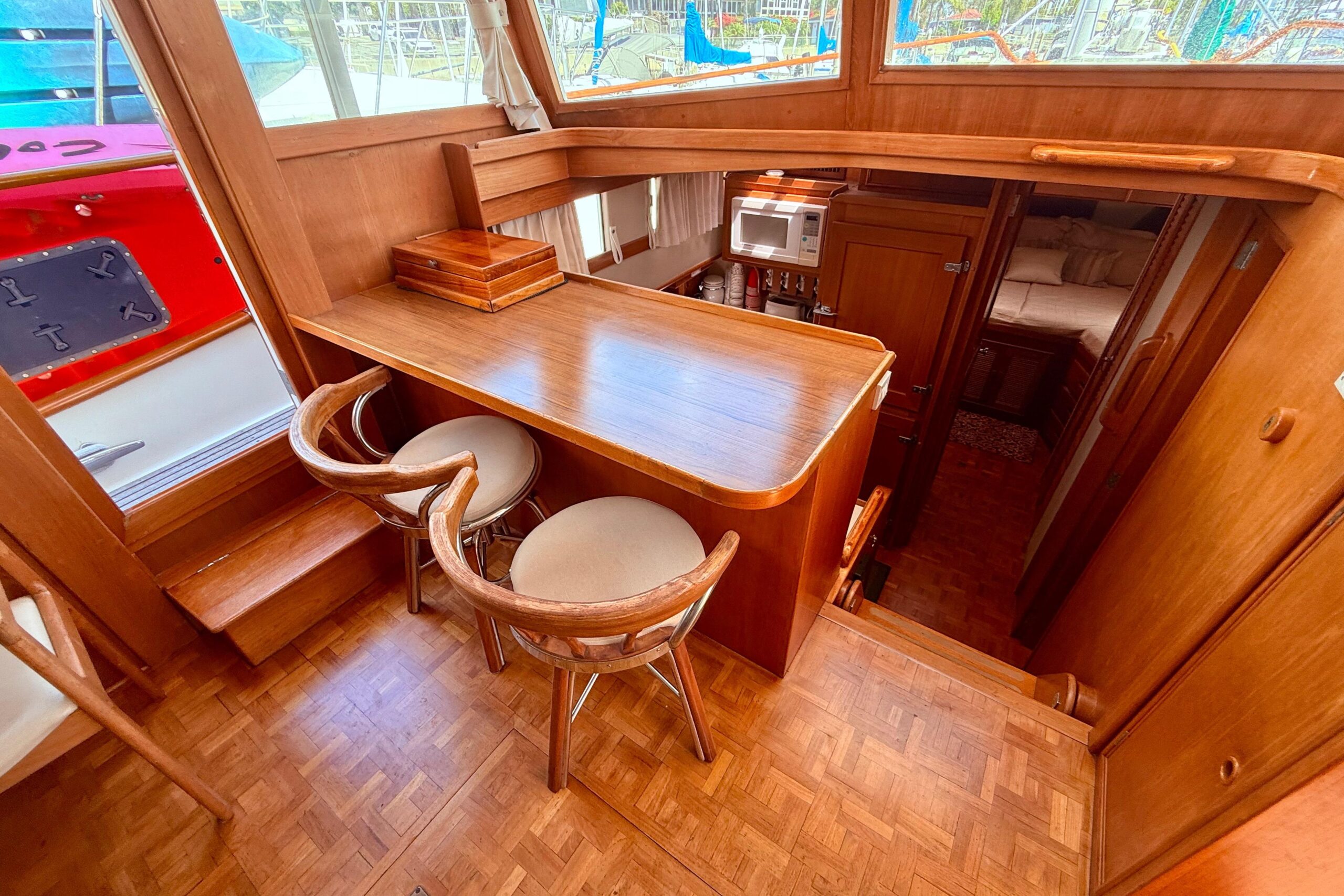
The lower helm station is positioned to starboard and features a custom double-wide helm seat, delivering excellent visibility and comfort for extended cruising. Immediately aft, an integrated icemaker and wet bar create a natural space for entertaining. The starboard-side L-shaped settee, paired with the iconic Grand Banks teak drop-leaf oval yacht table with bottle storage beneath, offers a comfortable area for dining or relaxing. To port, two classic teak chairs frame the entertainment center, while a forward portside counter with two stools provides a versatile space for casual dining, morning coffee, or chart work.
Galley
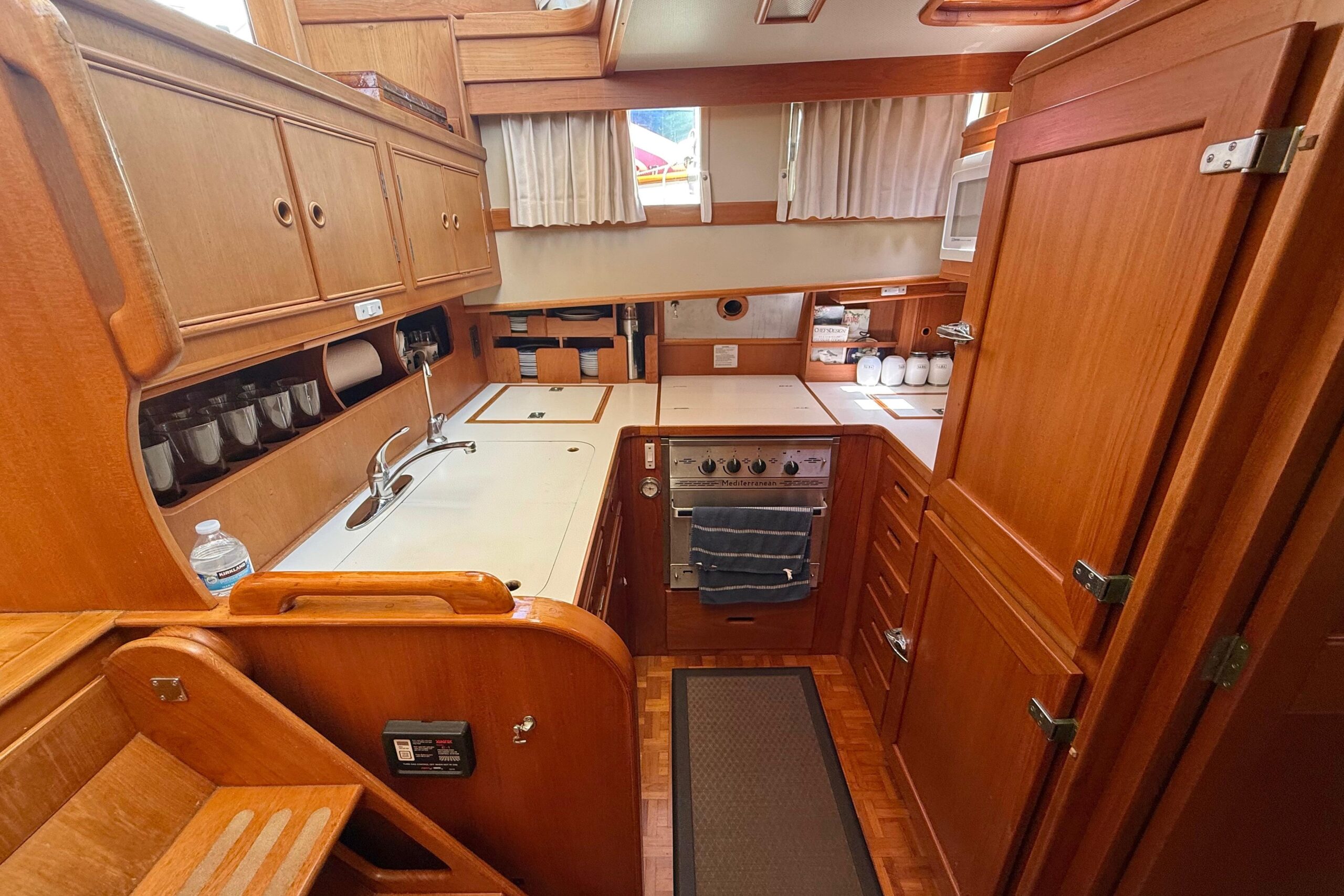
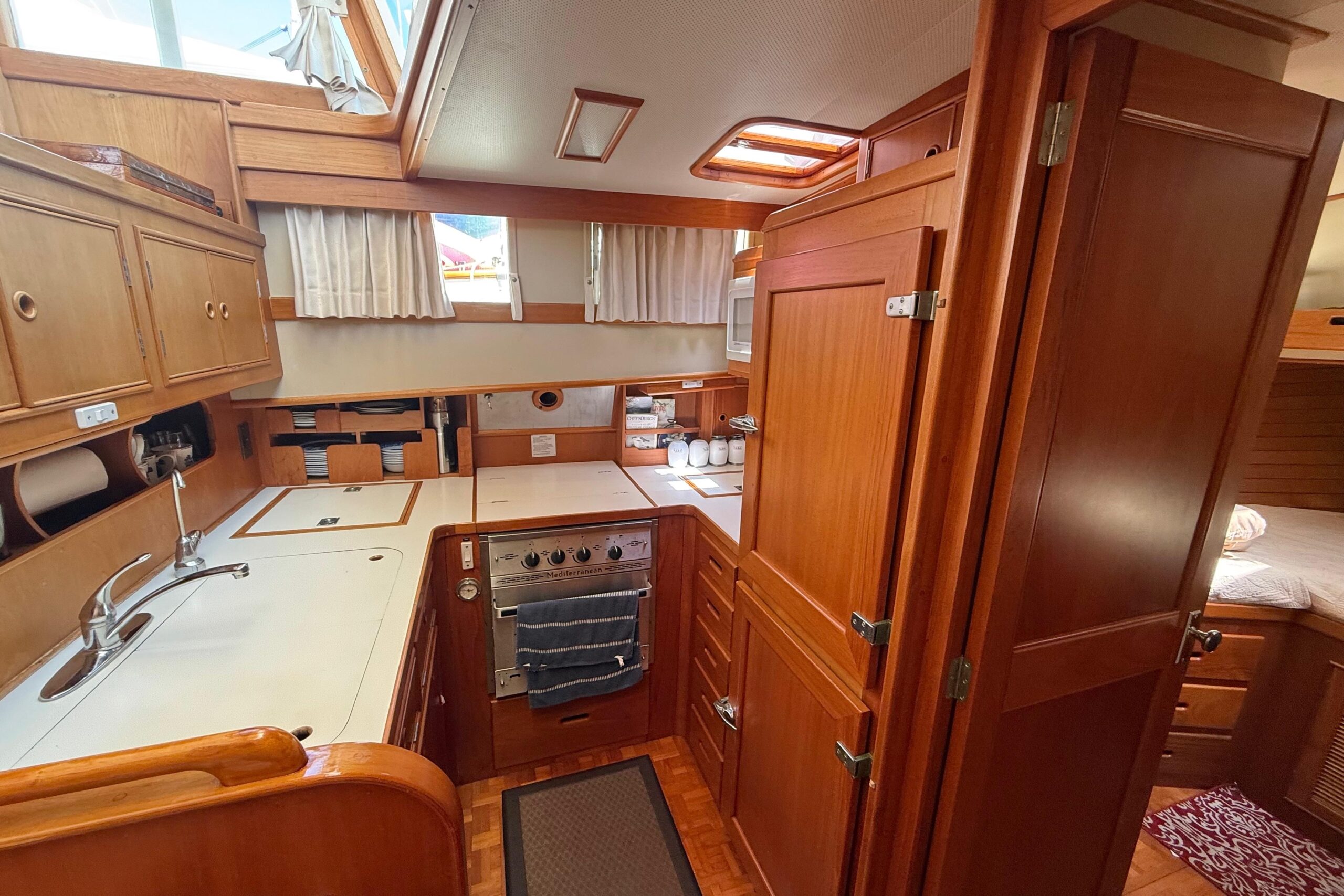
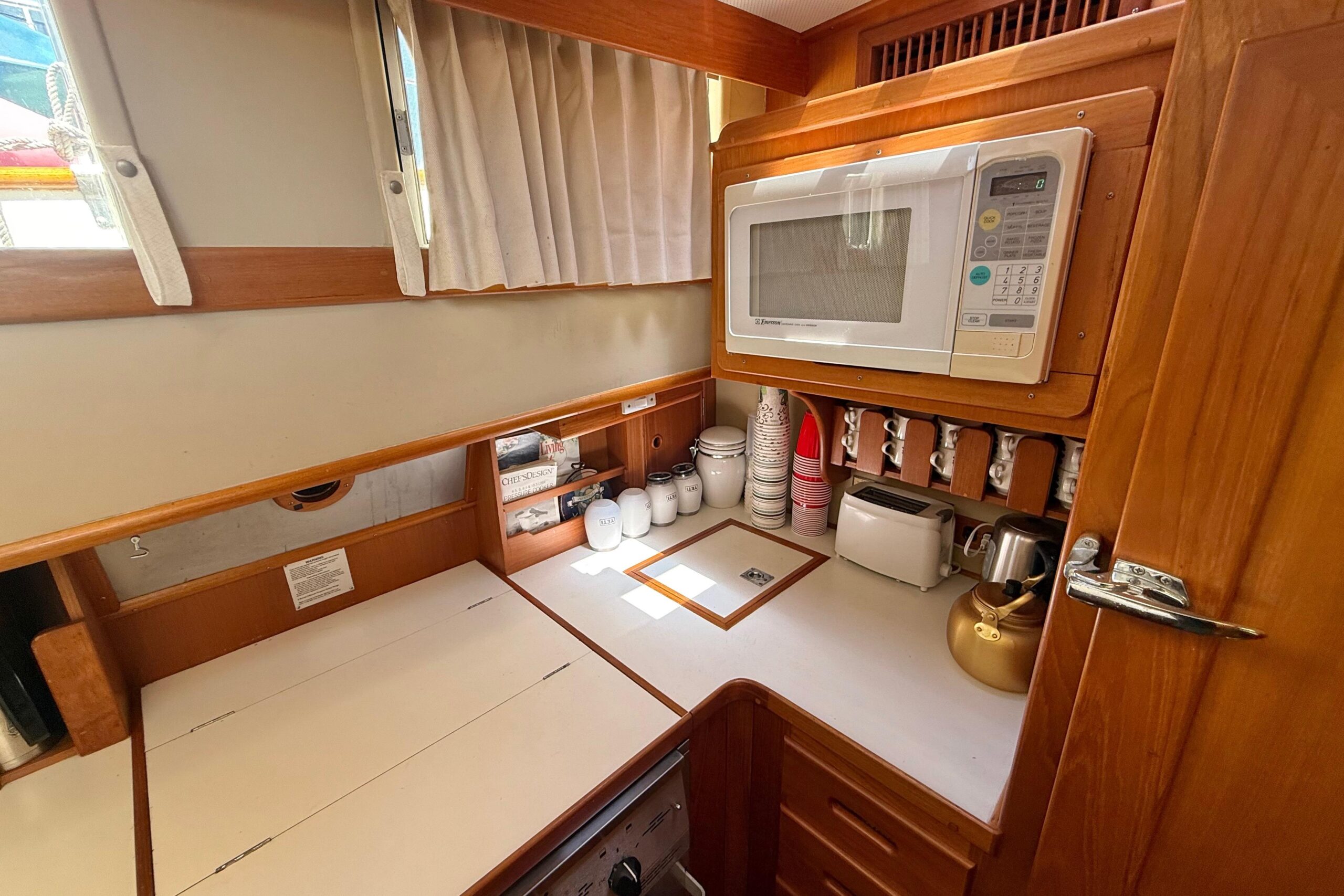
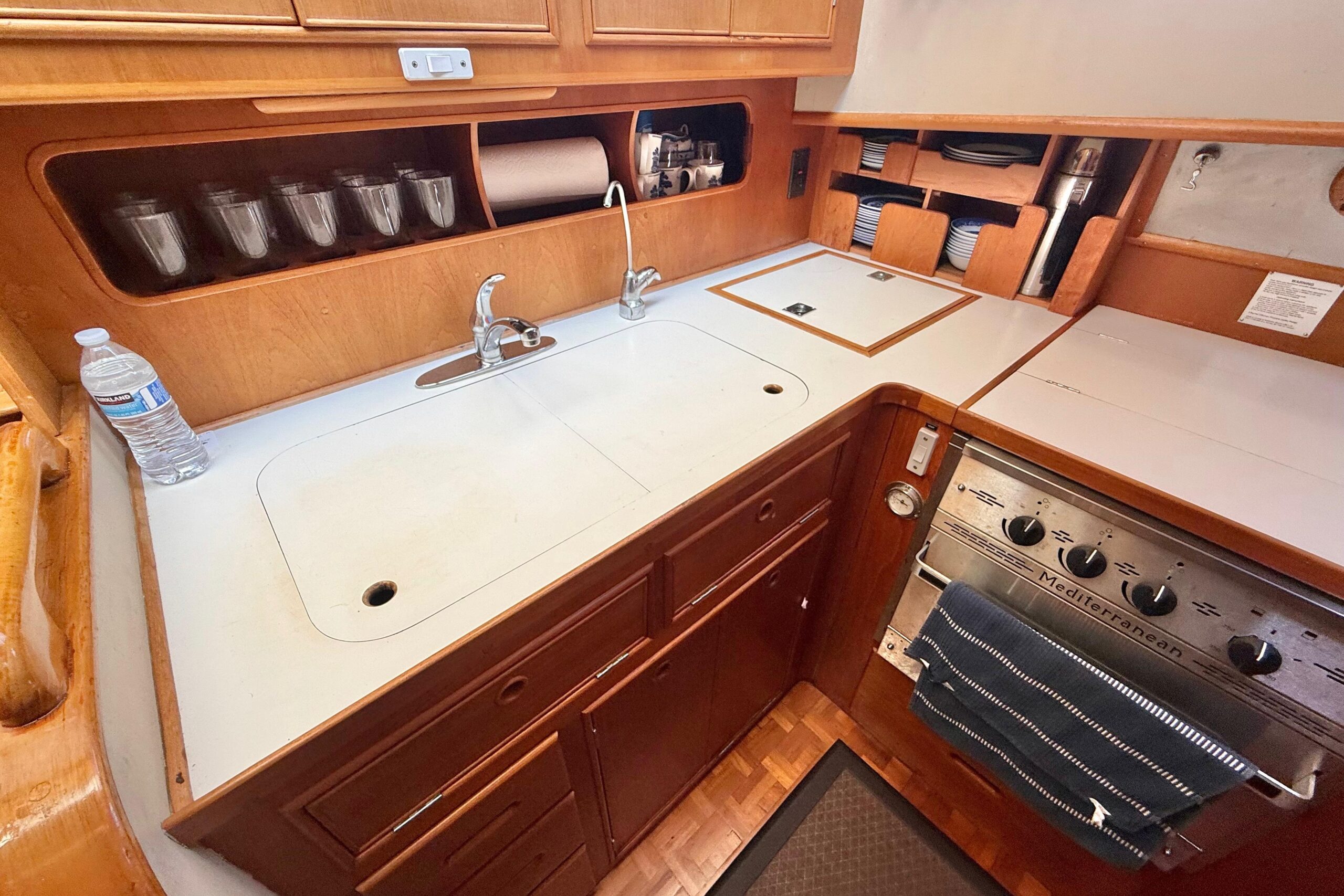
Three steps down and forward, the galley is located to port and is both practical and well-equipped for extended cruising. It features a double-stacked Grunert holdover refrigerator with a top-loading freezer, a three-burner propane cooktop with an oven, a microwave, a double stainless steel sink, and abundant storage throughout. Excellent natural light and ventilation enhance the space, making it both efficient and inviting.
Guest Accommodations
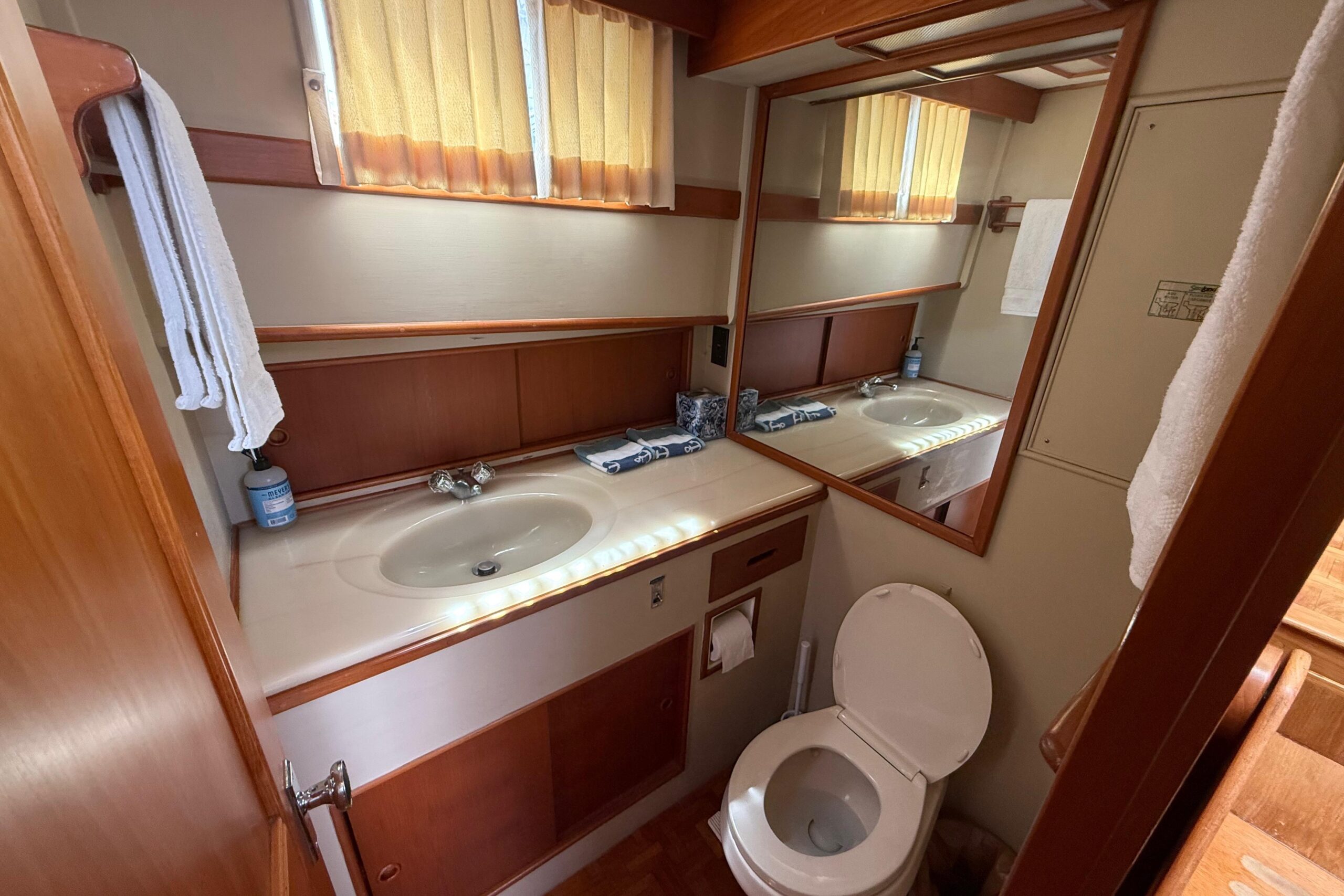
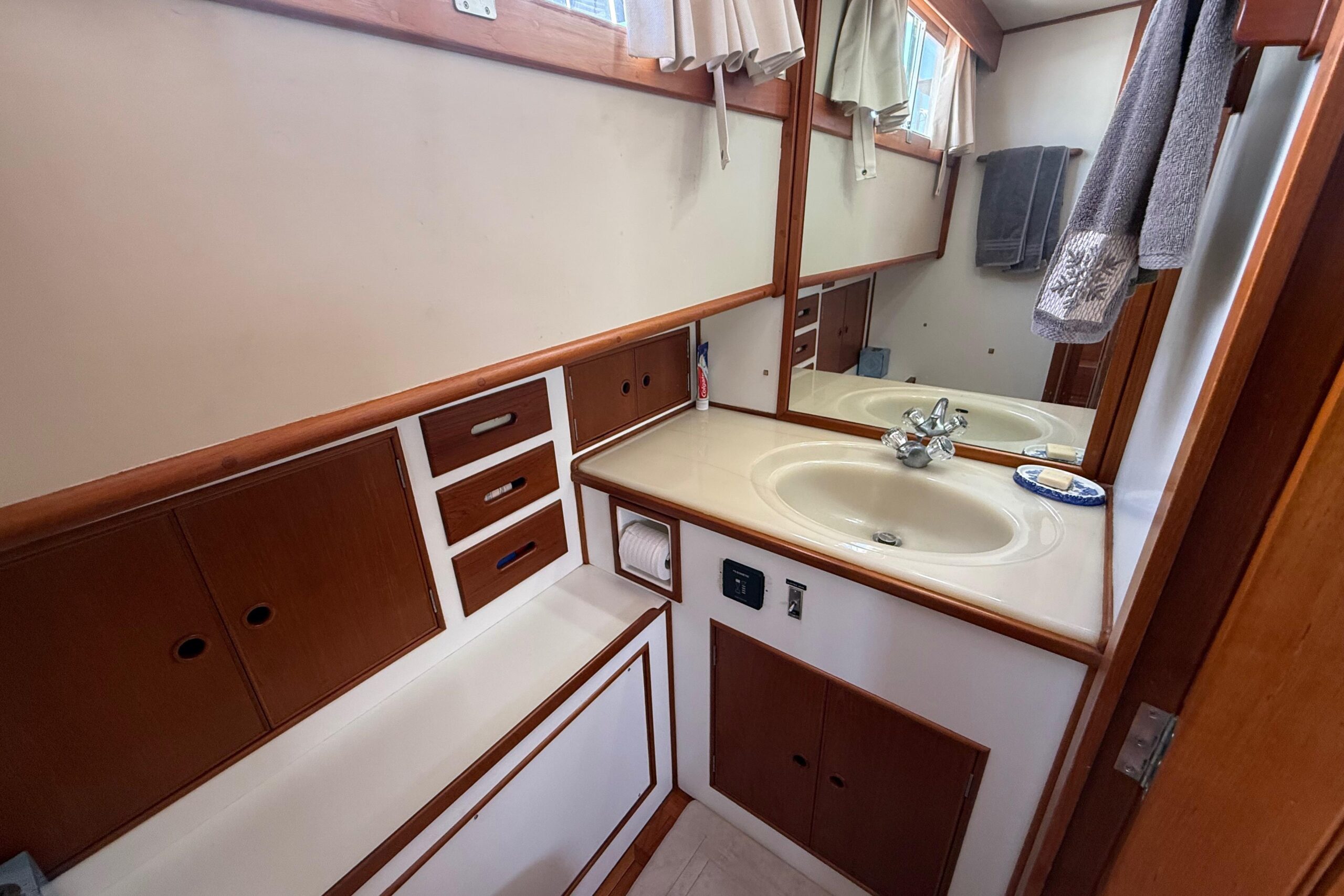
Opposite the galley to starboard is the guest head, equipped with a Sealand VacuFlush freshwater toilet and a separate stall shower.
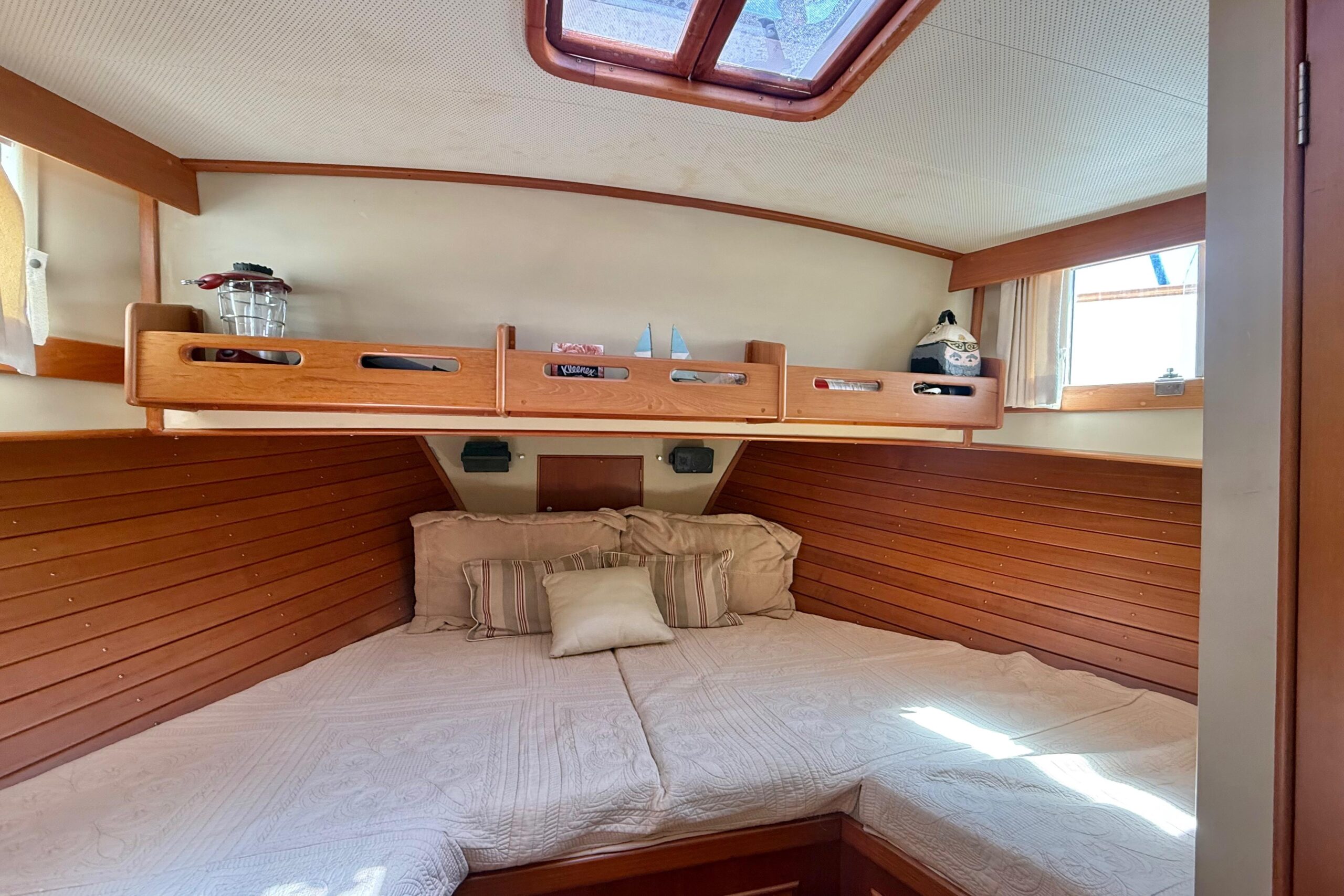
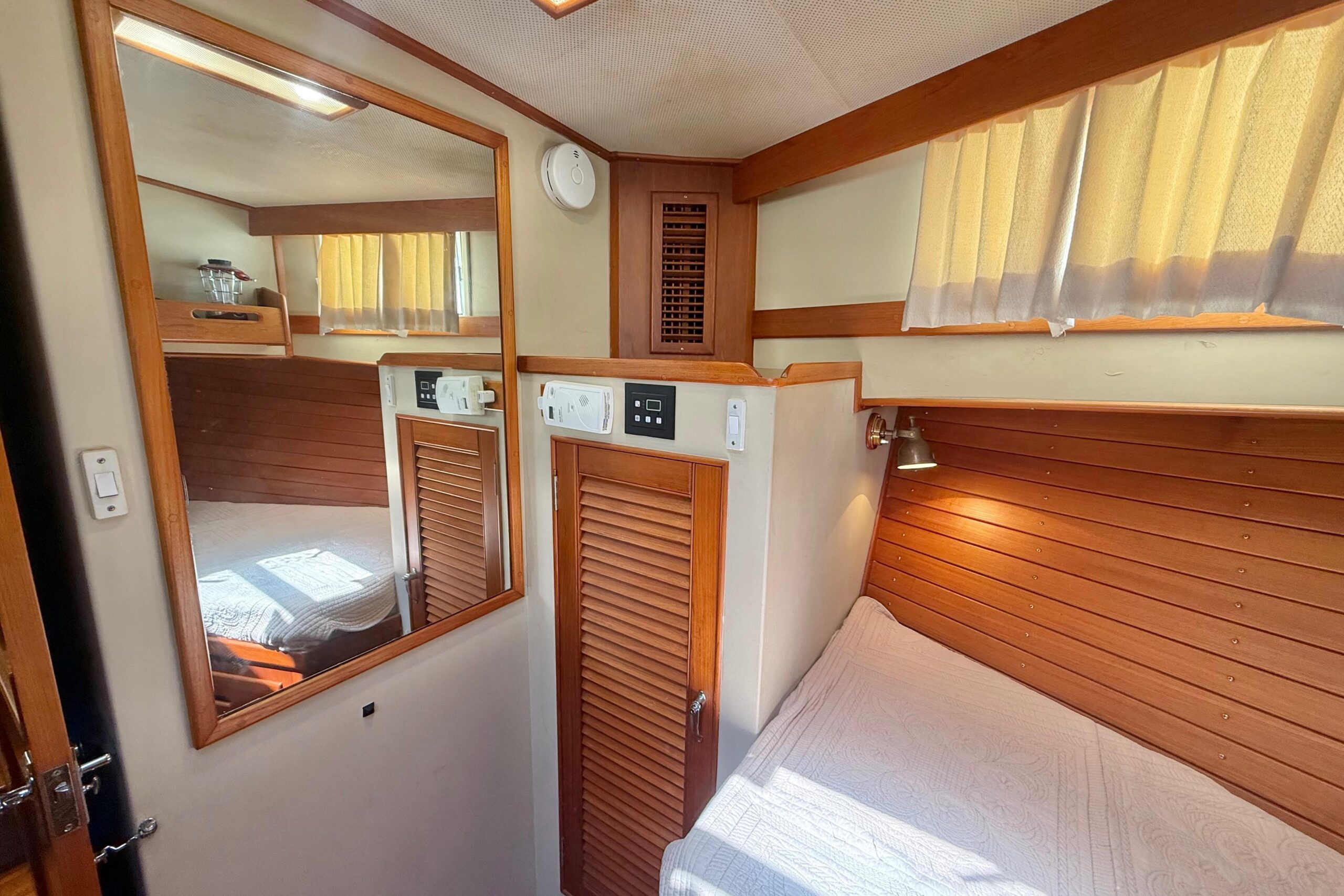
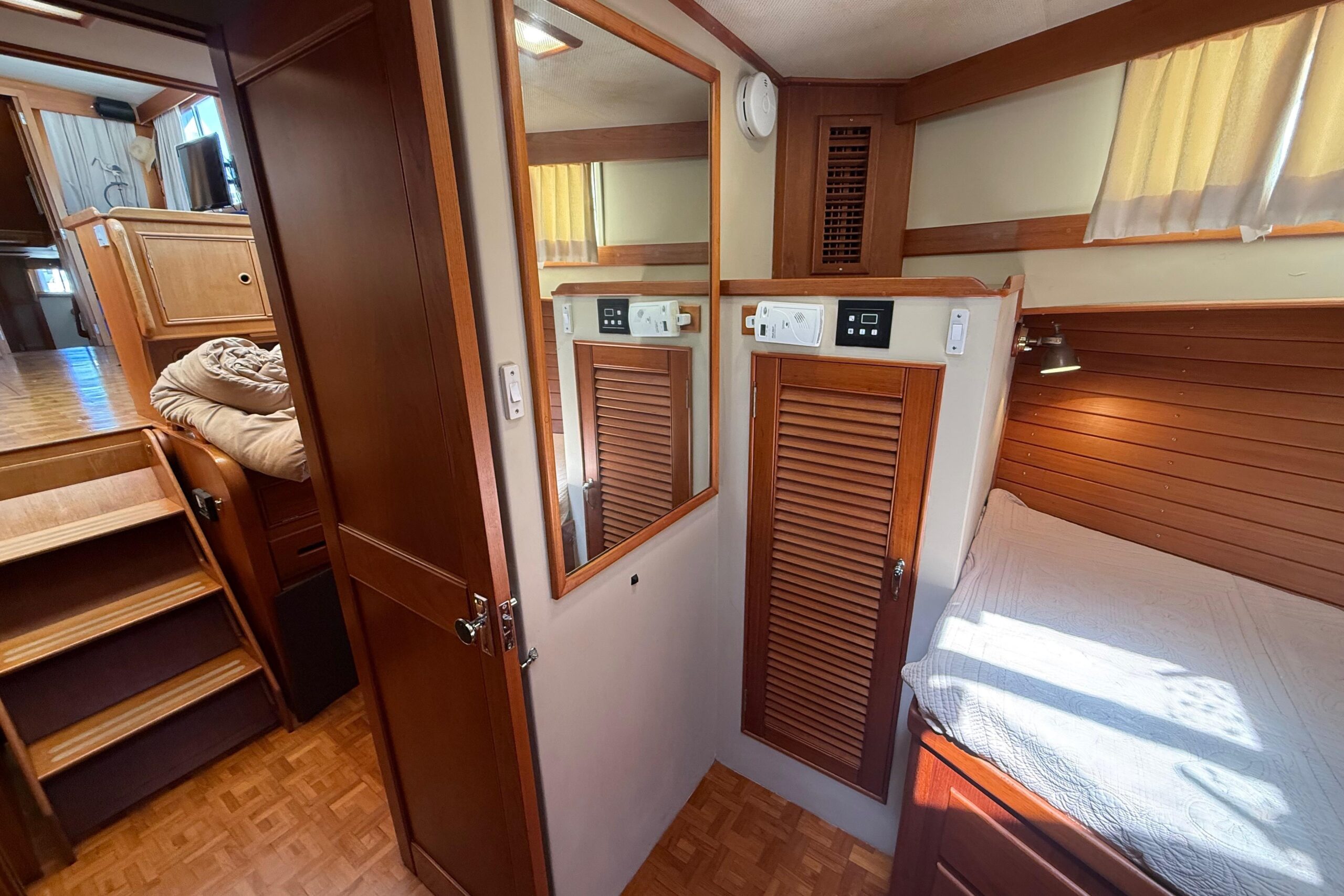
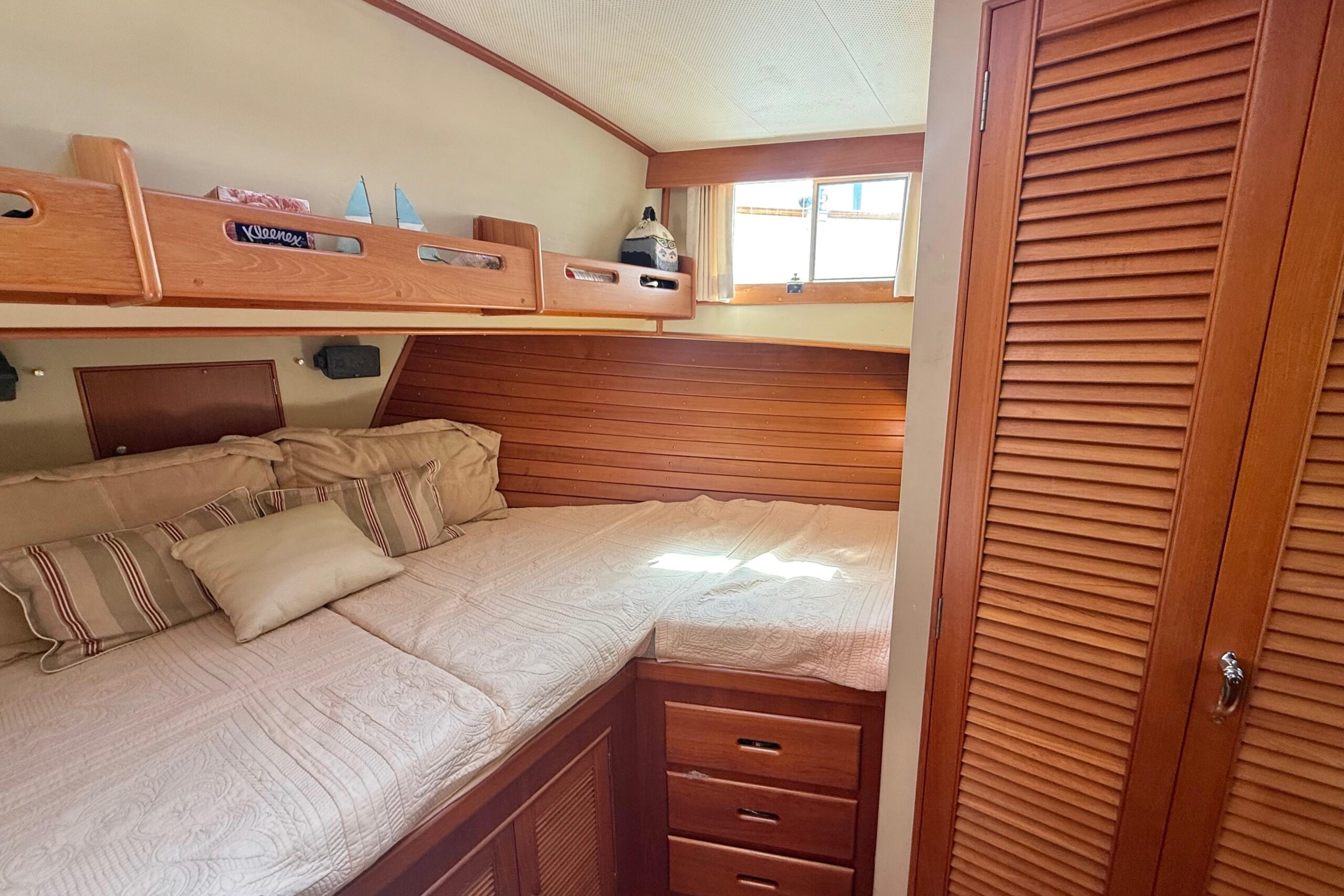
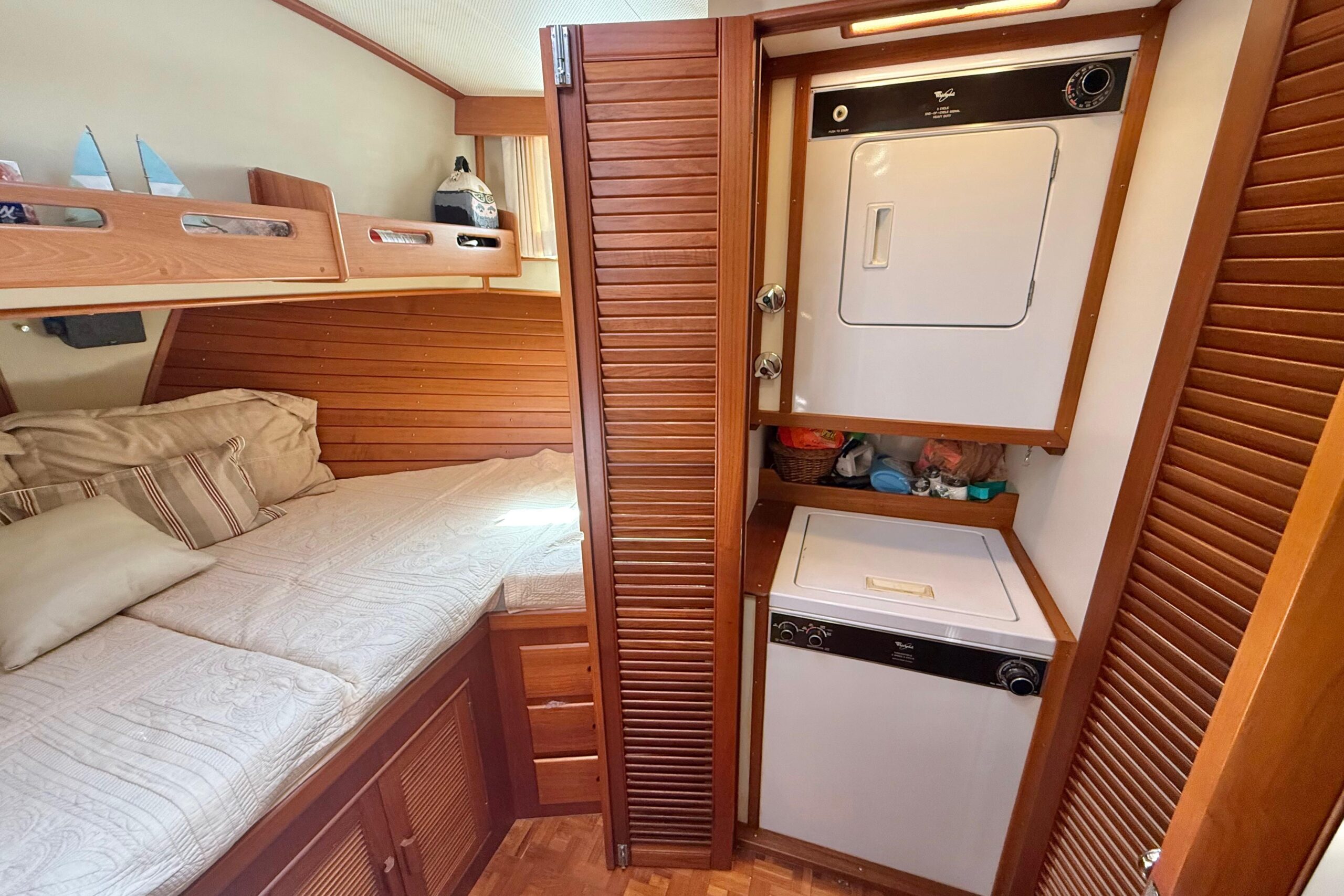
Forward in the forepeak, the guest stateroom offers a centerline V-berth, a generous hanging locker to port, and a Whirlpool washer-dryer to starboardu2014an uncommon and highly practical feature in this size range. Opening ports and overhead Lewmar hatches provide abundant natural light and airflow, creating a bright and comfortable retreat. Optional teak book shelf above V-berth, 6 drawers beneath v-berth, (2) brass Grand Banks reading lights.
Owneru2019s Stateroom
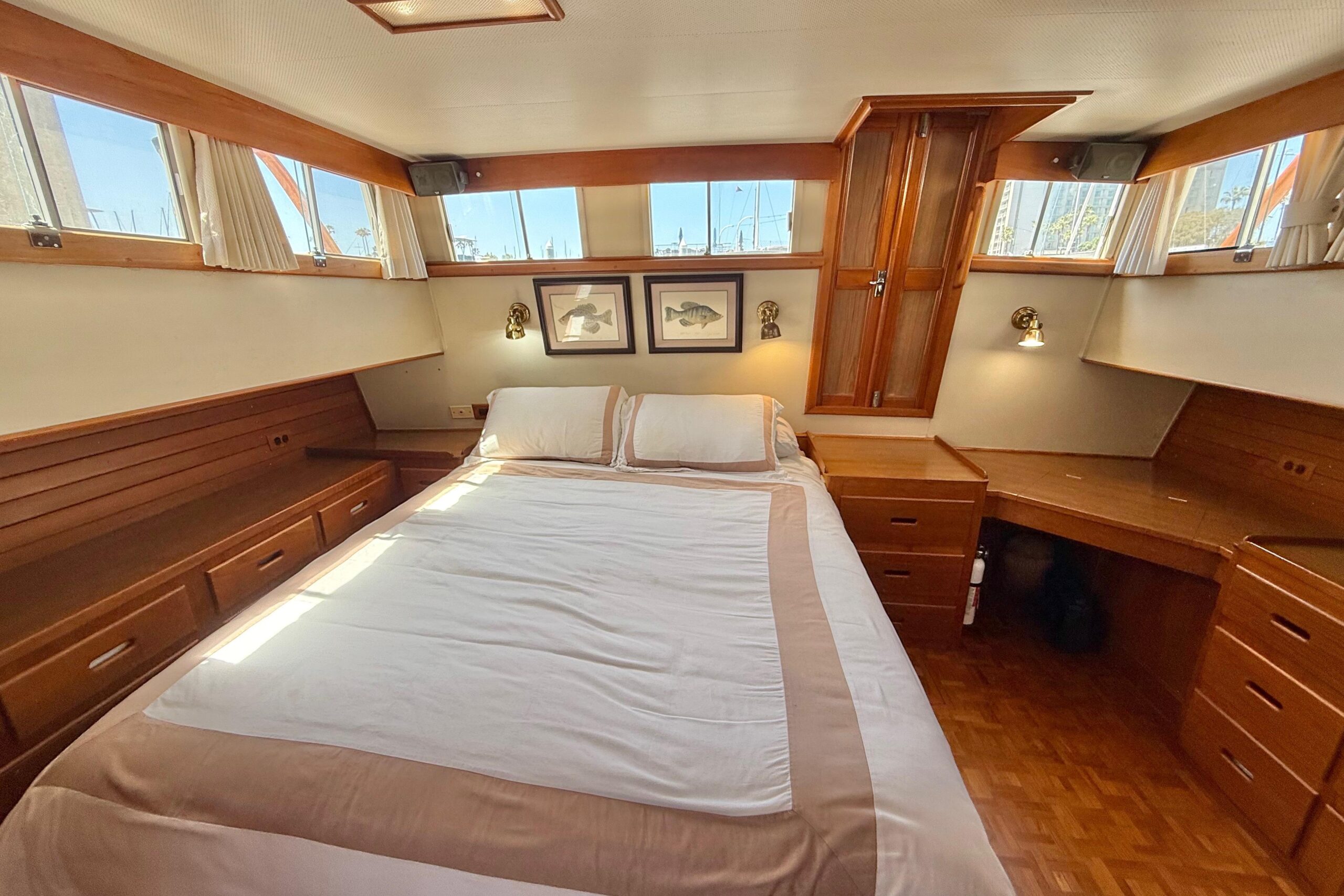
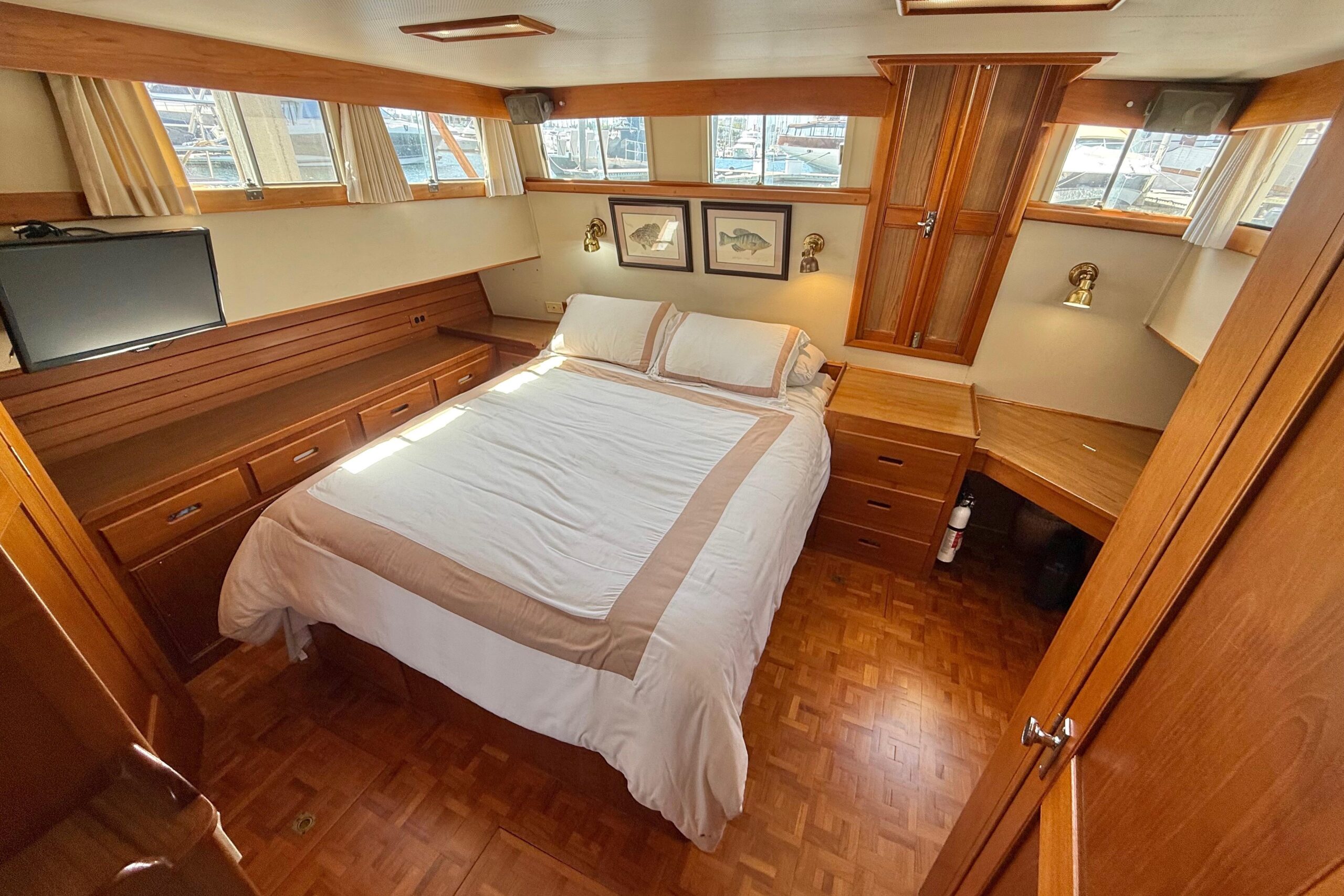
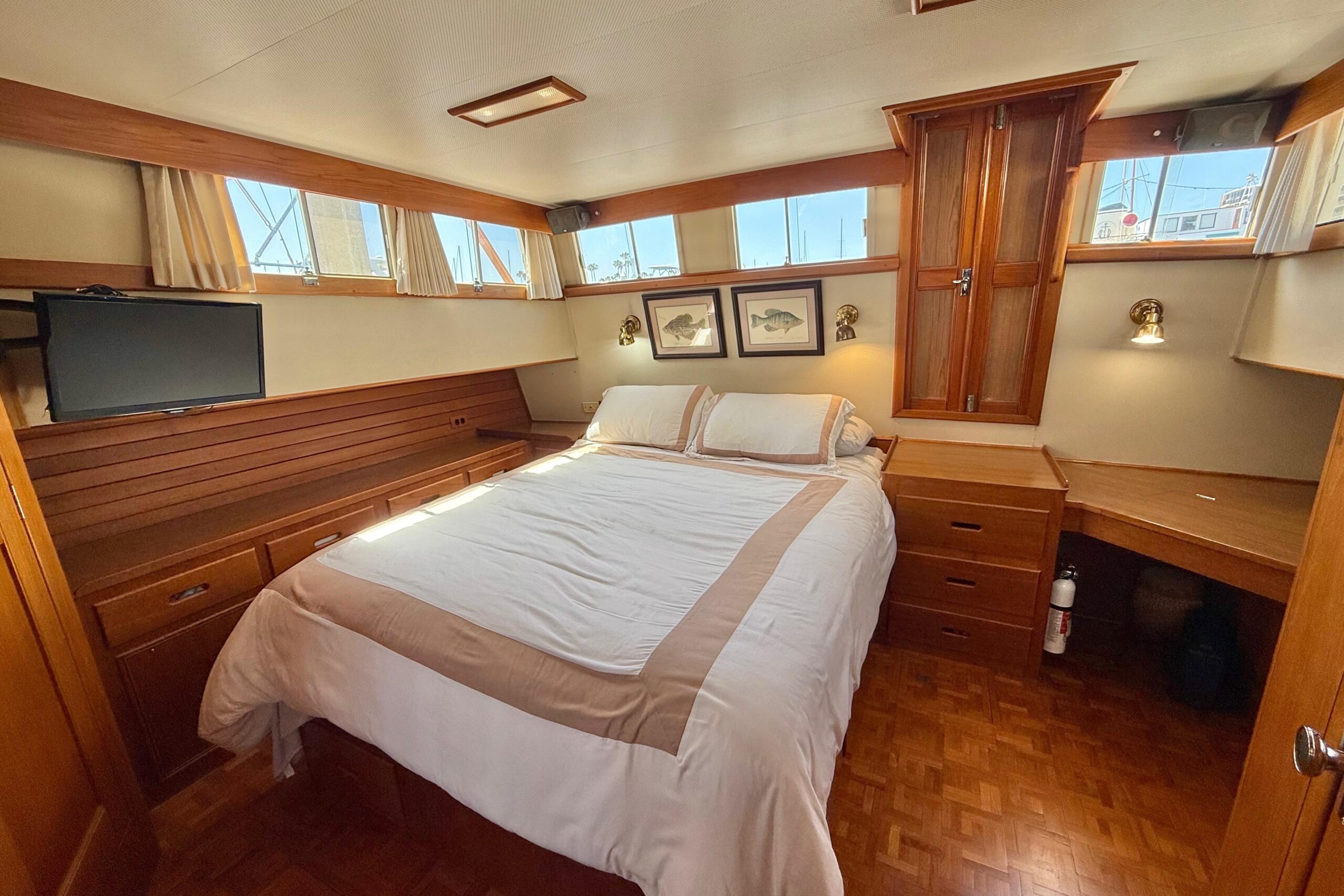
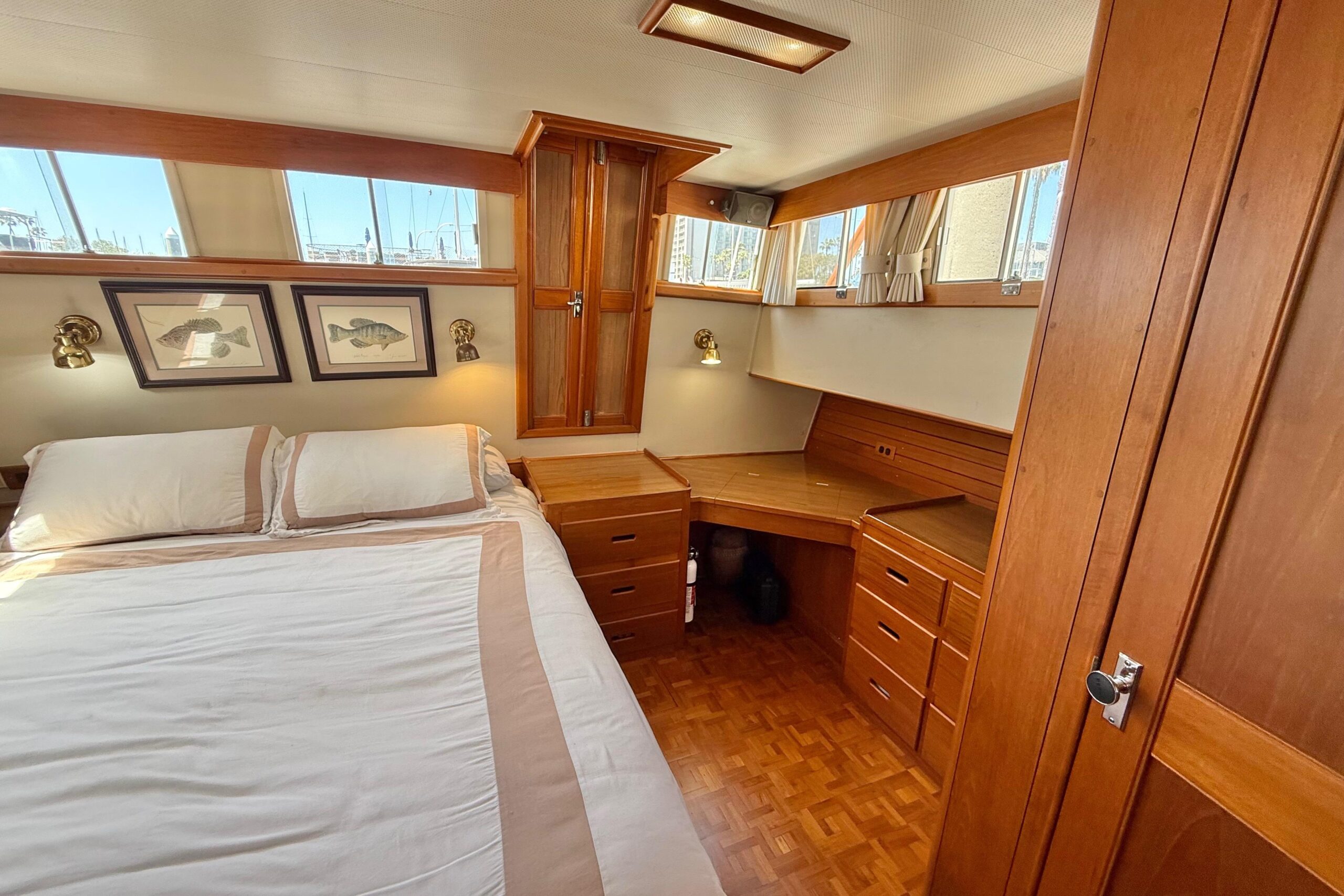
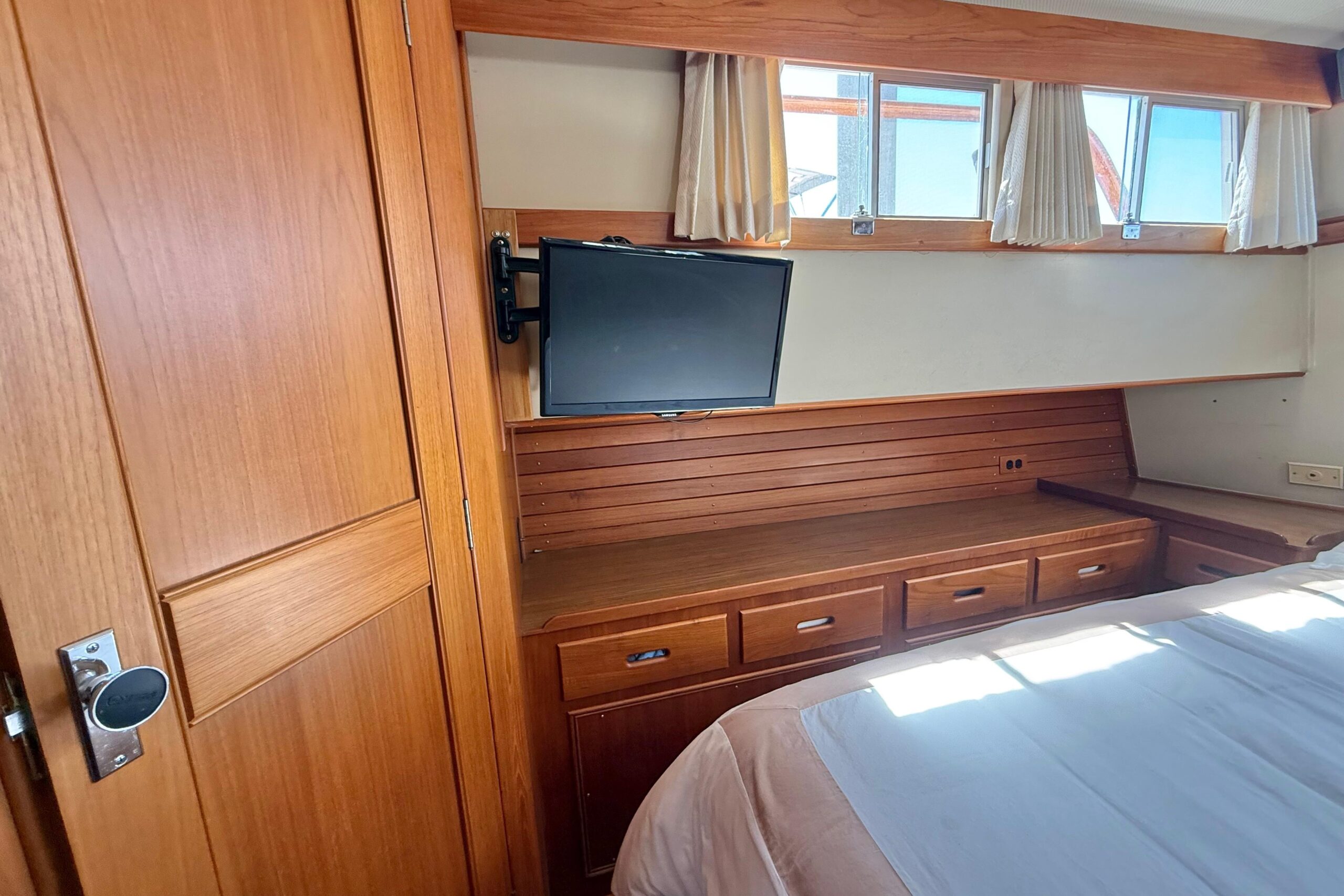
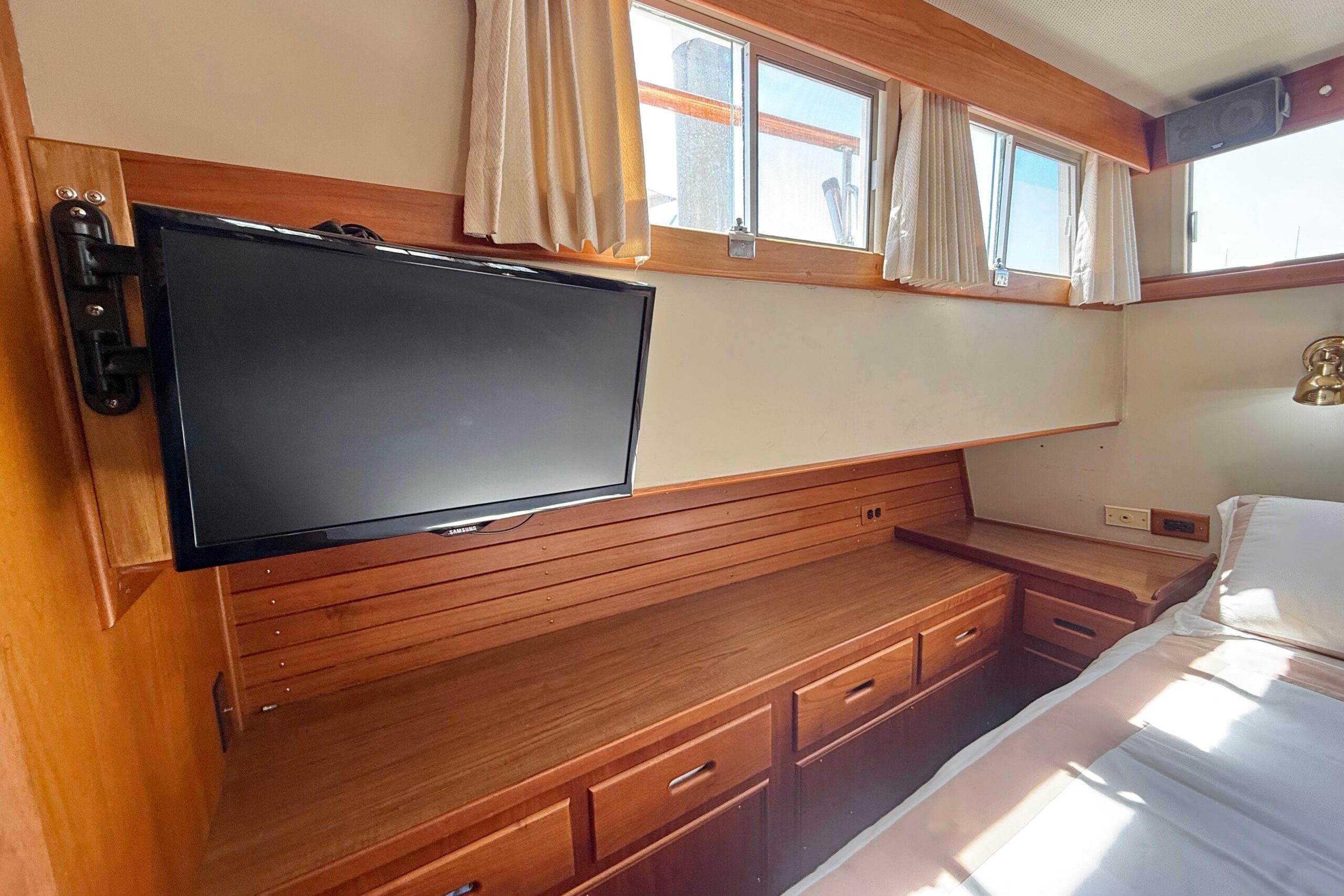
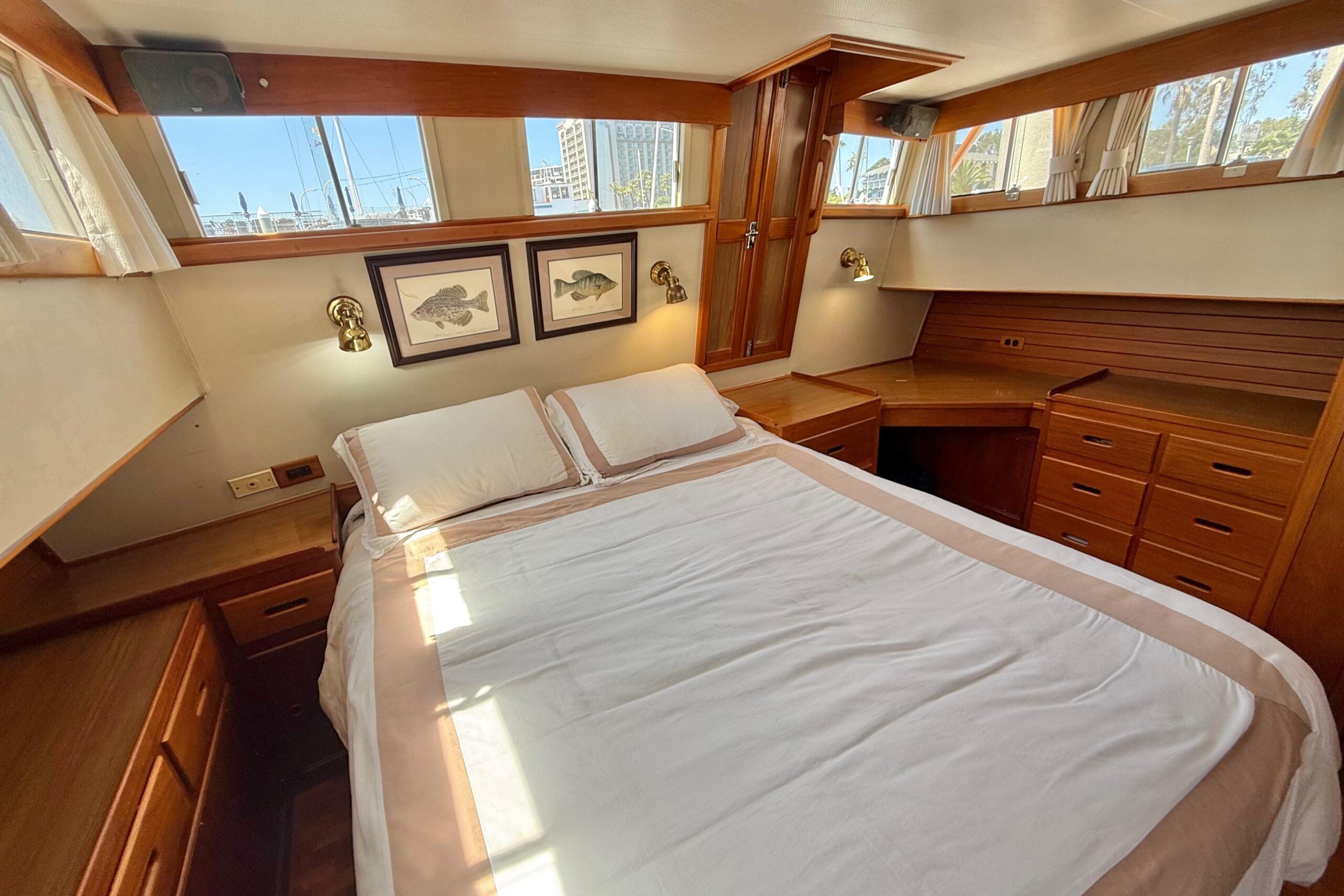
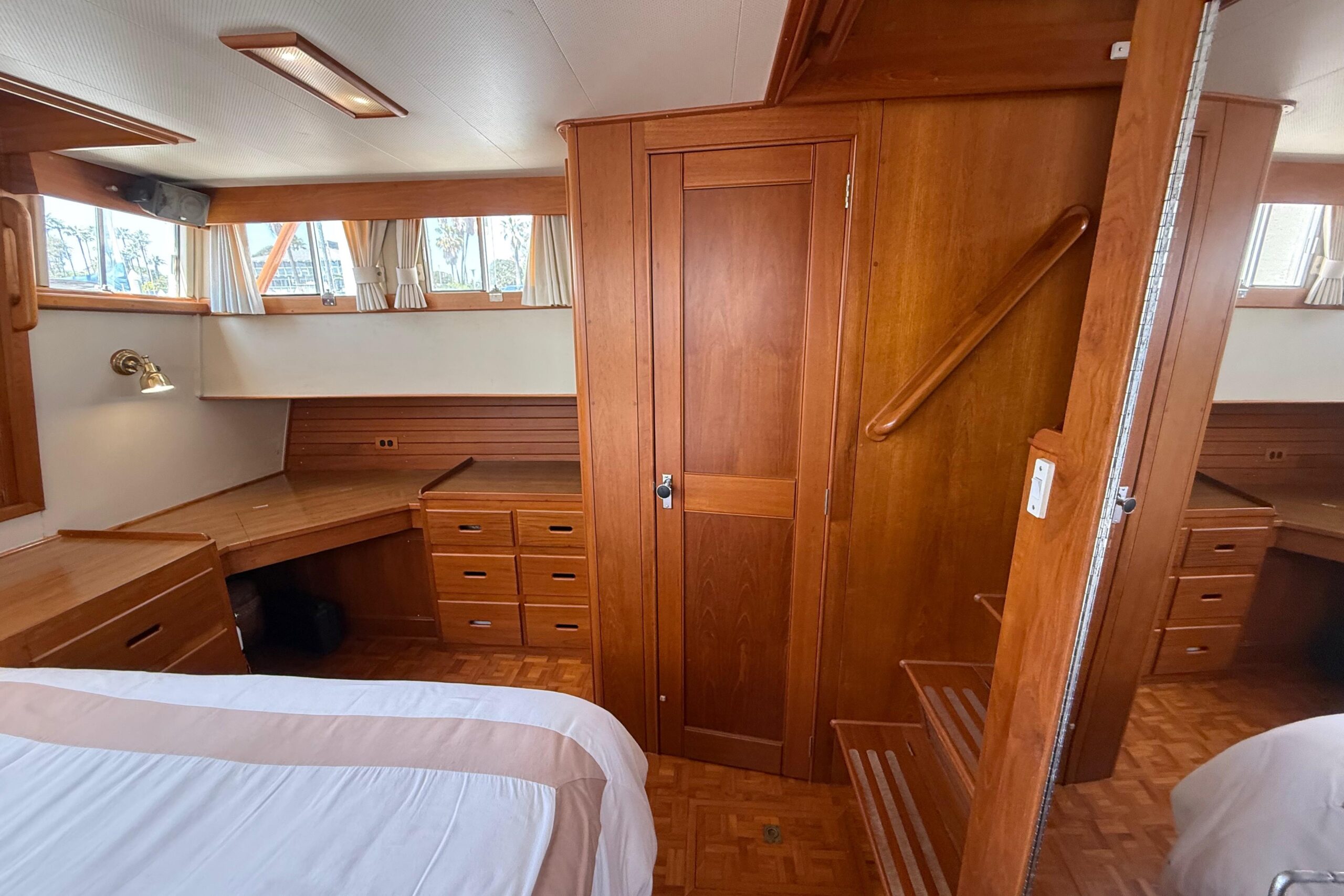
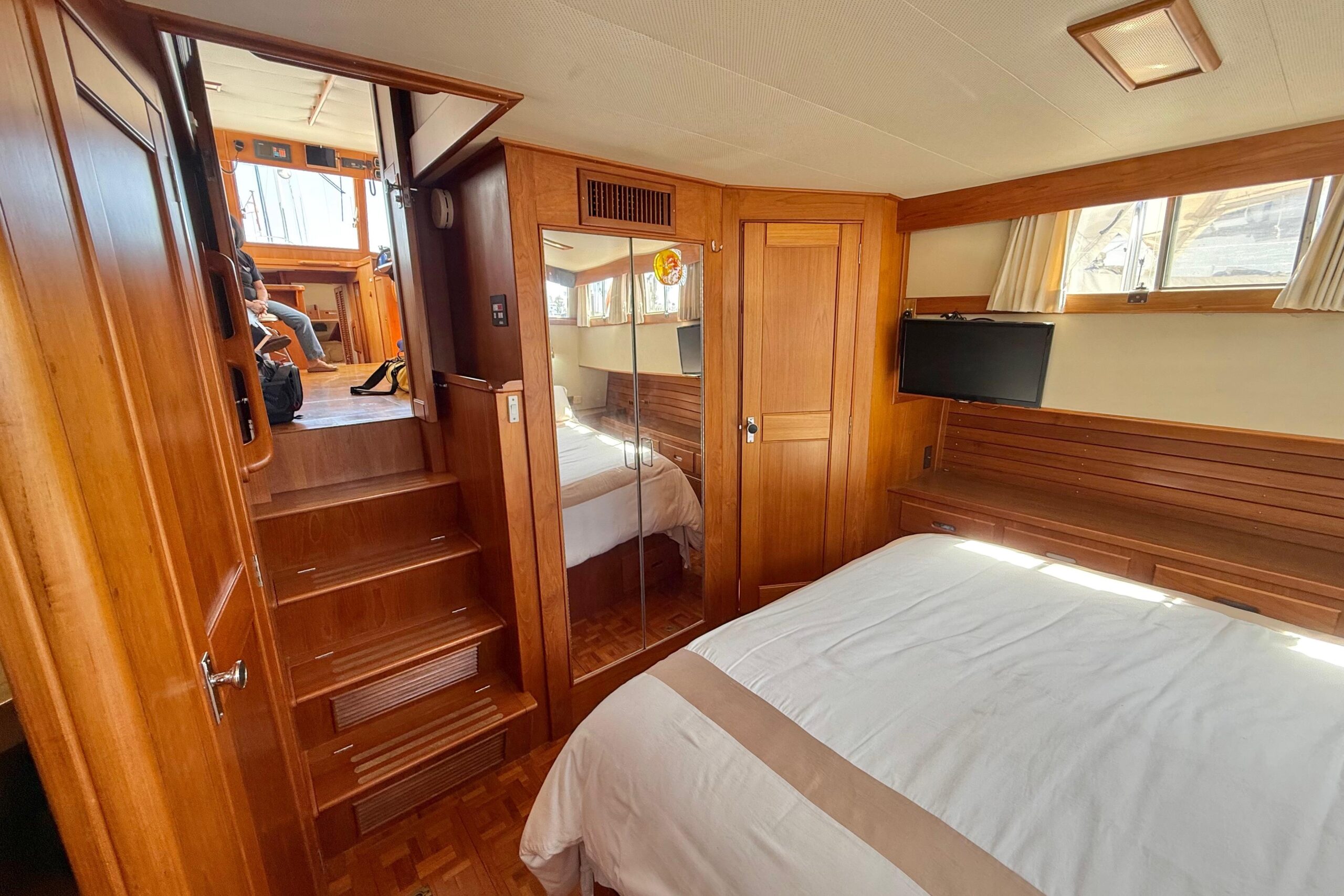
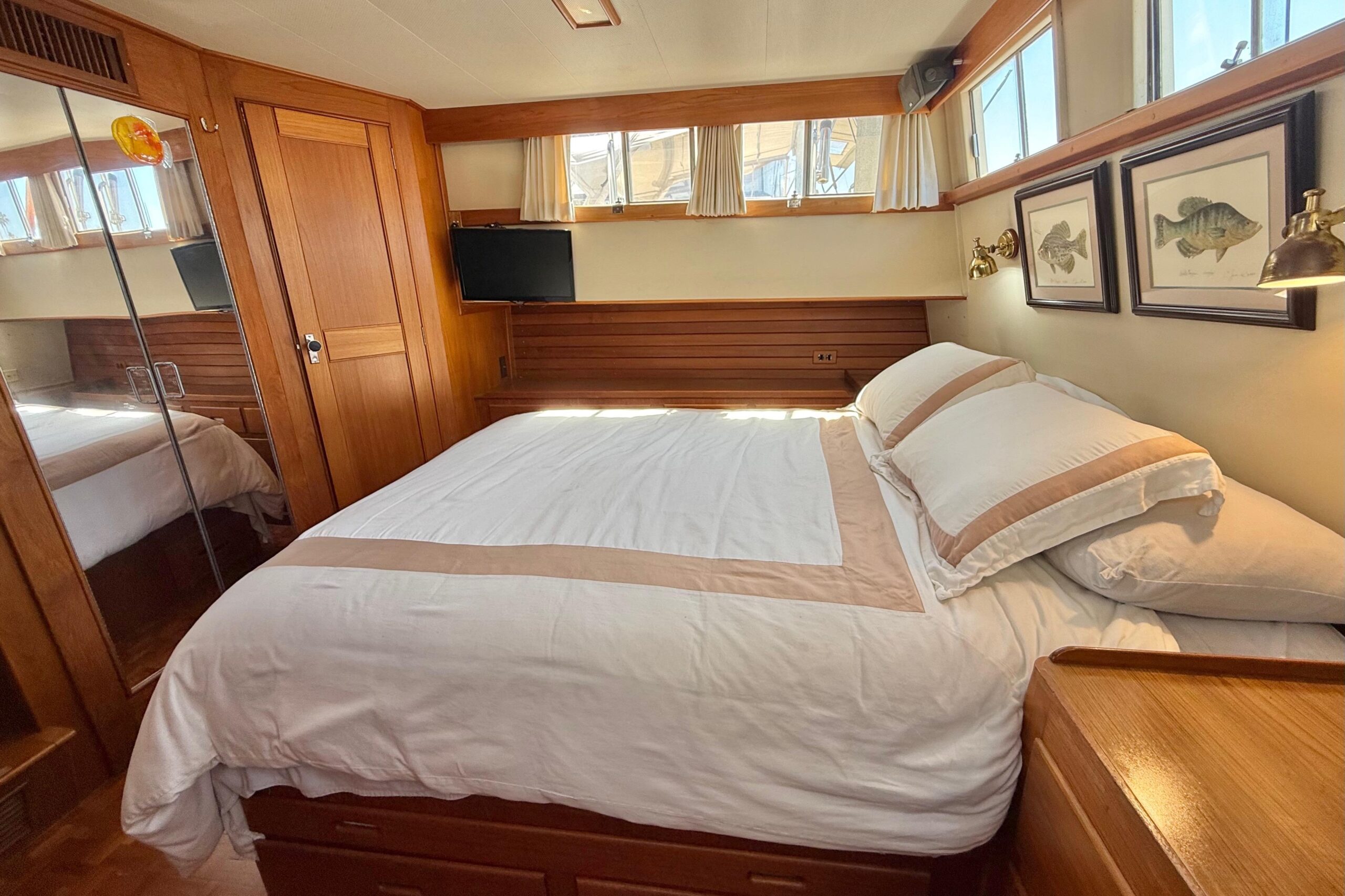
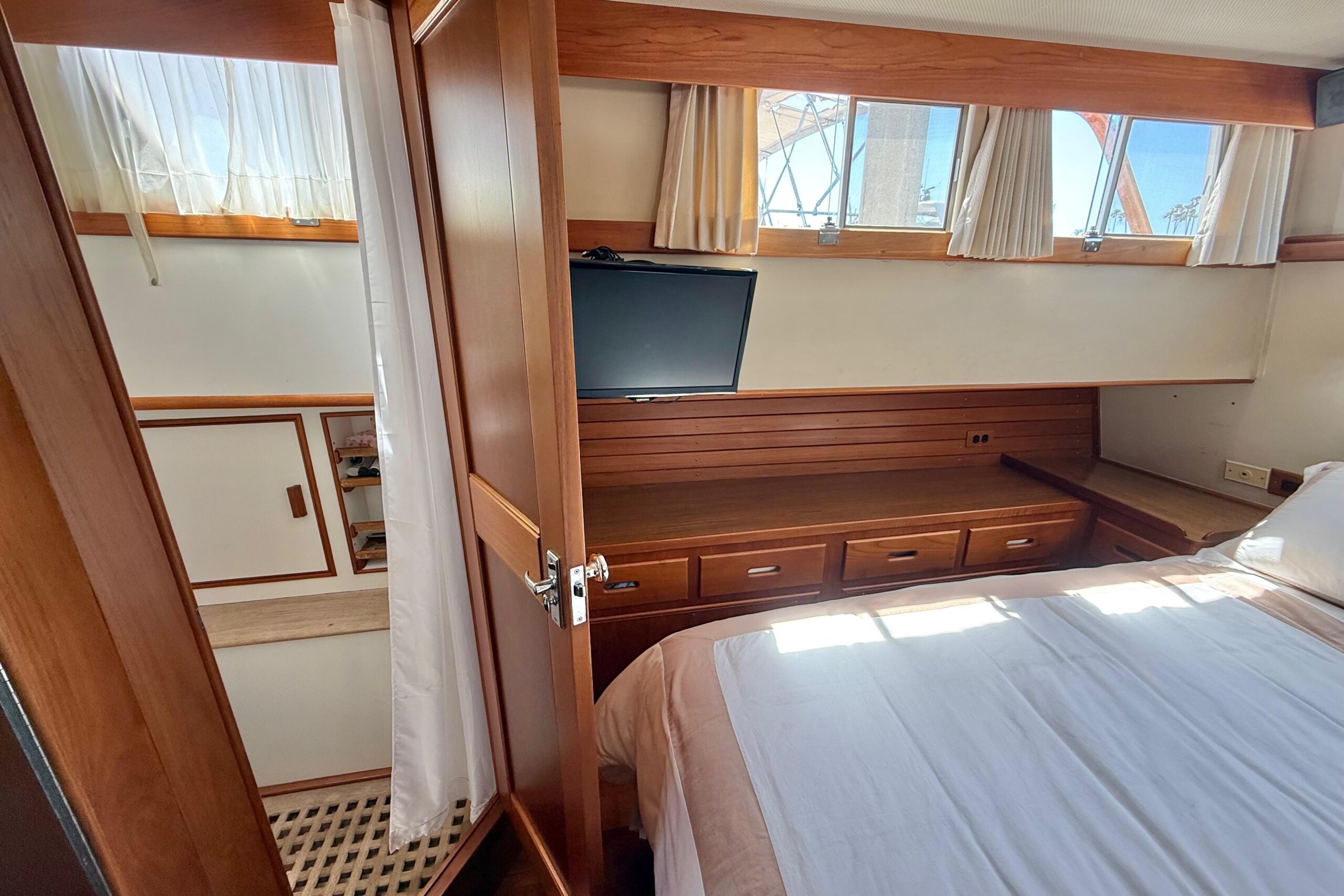
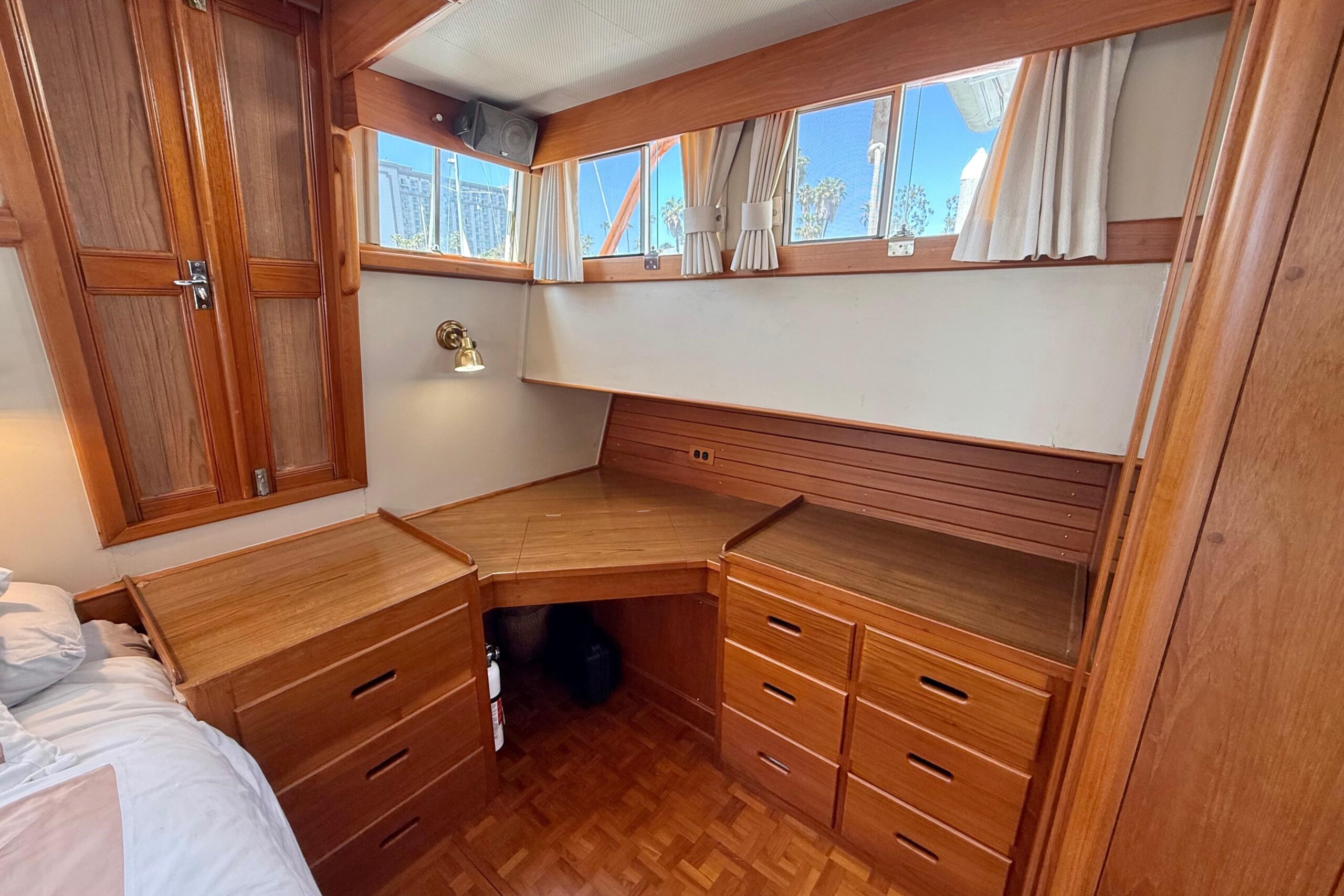
The full-beam owneru2019s cabin is located aft, accessed down three steps, and is designed for comfort and privacy. A queen-sized island berth is centered in the space, complemented by a full-size hanging locker on the forward bulkhead. A 22u0022 Samsung television is mounted on the starboard bulkhead.
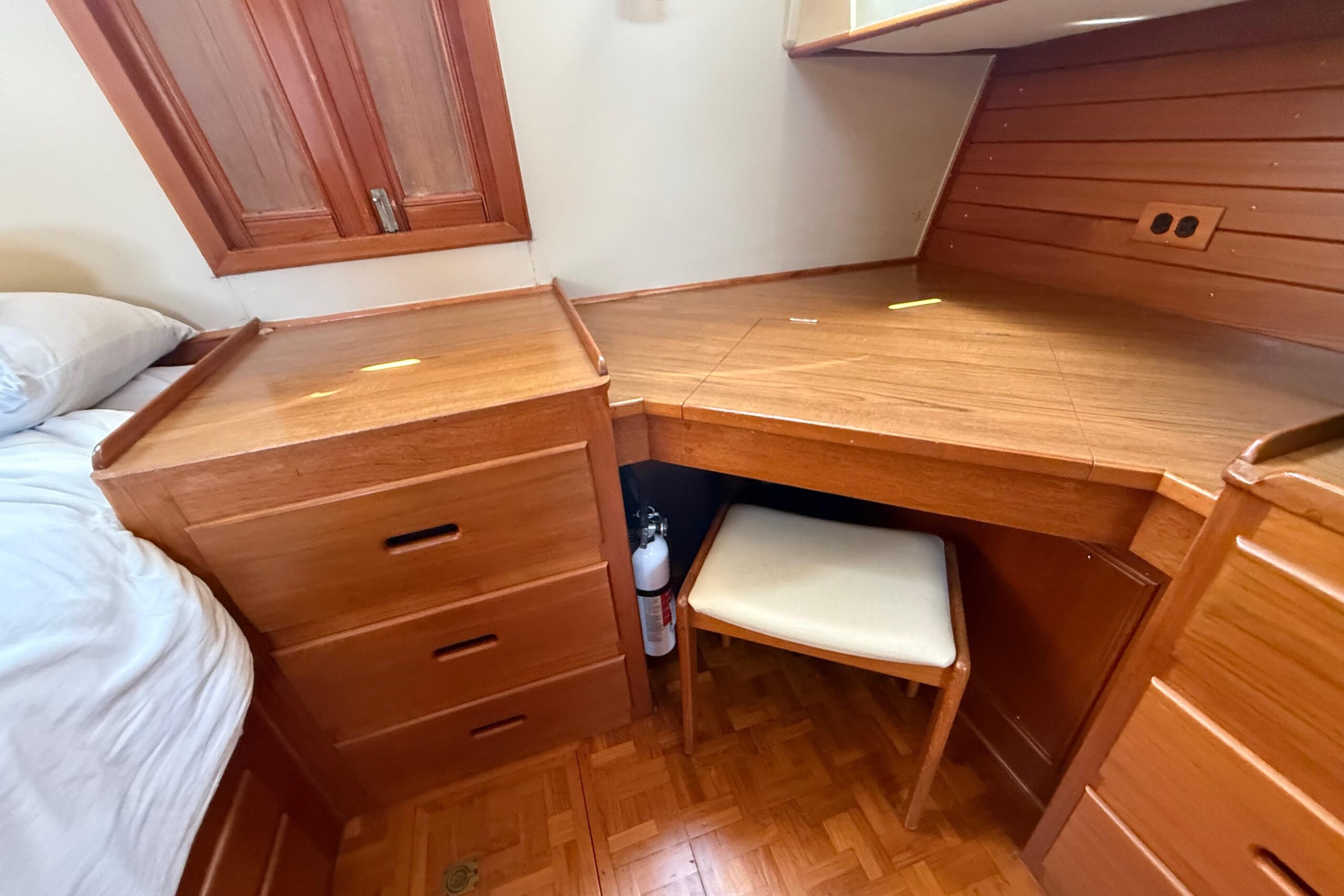
The ensuite arrangement includes a separate stall shower to starboard and a head to port with a Sealand VacuFlush toilet and cultured marble sink. Additional storage includes a bank of drawers and a vanity to port. Dual aft doors provide direct access to the cockpit, while numerous opening ports and rich teak cabinetry create a light-filled, well-ventilated, and inviting owneru2019s retreat.
Climate Control
Reverse-cycle heating and air conditioning by Marine Air Systems provides year-round comfort in a wide range of cruising environments.
Deck, Hull & Systems u2013 Built for Confidence
When it comes to offshore cruising, safety and reliability are paramountu2014and the Grand Banks 46 Classic delivers with a design and build quality that inspires confidence at every level.
She is equipped with dependable mechanical steering, backed by emergency steering capability for added security. Both helm stations feature comprehensive alarm panels monitoring critical systems, including engine oil pressure, water temperature, transmission temperature, bilge pump operation, and engine room lighting.
All electrical circuits are breaker-protected, while below the waterline, thru-hull fittings are secured with seacocks and double hose clamps for maximum reliability. Two automatic bilge pumps provide rapid response and are easily accessible from the salon. Engine room ventilation is managed by electric blowers, promoting efficient and reliable operation.
Safety extends throughout the vessel, with three-ply laminated safety glass windows and well-placed life rails and grab rails ensuring secure movement on deck in all conditions. Fiberglass pans beneath the engines help keep the bilge clean by containing any oil drips.
With approximately 600 gallons of fuel capacity and 284 gallons of fresh water, the GB 46 is well-suited for extended cruising. A centralized fuel manifold system simplifies tank management and includes sight gauges, safety shutoff valves, and accessible Racor filtration.
Additionally, underwater gear, thru-hulls, tanks, and deck fills are copper-bonded to a common grounding point, enhancing system integrity and safety.
Anchoring is effortless with a Lofrans electric windlass featuring three-station controls, allowing full operation from the helm, deck, or flybridge. Rocna Vulcan 33 anchor with approximately 300' chain
This Grand Banks 46 Classic is a vessel designed not only to cruise in comfort, but to deliver confidence, capability, and timeless appeal with every mile.
Electronics- (2) Furuno TZ16F multi-function displays
- Furuno radaru00a0
- Furuno GPS Plotter
- Furuno depth sounder
- Simrad Autopilot AP 44 NAC-3 autopilot computer
- Kenwood TKM 407 VHF radio lower helm
- Datamarine depth Fathometeru00a0
- Datamarine Navigator trip log
- ACR remote spotlight VRC100
- Standard Horizon Quantum GX5000S flybridge
- Standard Horizon Ram Mic lower helm
- Mastervolt Combimaster
- Victron Energy BMV-6025 battery monitor
- GXElectronics low battery alarm
- Furuno FS-1502 Single Side Band Radio
- Furuno LC90 Mark II Loran (inop)
- (2) Caterpillar 3208TA's 375hp Serial Numbers Port: O1Z 22134 Starboard:O1Z 22142
- (2) Twin Disc MG507-1 2.54:1 Port: 5BD 804 Starboard: 5BD 805
- (2) Aquamet 22 stainless steel propeller shafts 210u0022 x 2u0022 diameter
- (2) Stone Marine four-bladed bronze propellers 30x 27 x 4
- Glendinning Marine engine synchronizer
- Vetus exhaust temperature alarm
- Morse Red Jacket cable transmission and throttle controls
- VDO engine instrumentation
- Lofrans Tigres Windlass 3 station controls
- Primary anchor: Rocna Vulcan 33 galvanized anchor with approximately 300' chainu00a0
- Secondary anchor: Fortress 20 lb 60' chain 300' rode
- Bennett hydraulic trim tabs
- Onan 8MDKDJ26501C diesel generator serial A910366095 (approximate hours 1526)
The Grand Banks 46 enjoyed a long and successful production run from 1985 through 2007, with a total of 299 hulls built. Over those two decades, the model evolved significantly, reflecting both advancing technology and the changing preferences of experienced cruising owners.
The 46 was offered in three distinct configurationsu2014the Classic, Europa, and Motoryachtu2014each appealing to different cruising styles. Of these, the Classic layout, as seen in this example, is estimated to account for roughly two-thirds of production, with approximately 200 vessels built. The Europa version was introduced later, in 1993 (beginning with hull #124), and while initially less popular than the Classic, it gained traction toward the late 1990s around hull #200.
Positioned between the highly successful 42 Classic and the larger 49 Classic, the 46 carved out a unique niche in the Grand Banks lineup. Production figures underscore this balance: from 1985 to 2007, approximately 660 of the 42s were built, 299 of the 46s, and 76 of the 49su2014an impressive combined total of 1,036 semi-custom yachts that helped define the brandu2019s legacy as builders of u201cDependable Diesel Cruisers.u201d
One of the most notable design advancements in the 46 Classic is the introduction of the recessed cockpit with a transom door, first appearing in 1993 on hull #125. Thisu00a0practical feature improves boarding and line handlingu00a0and makes the 46 more usable than the 42 or the 49 Classic, which didn't include it.
Caterpillar 3208 HistoryThe Caterpillar (Thirty-Two O Eight) 3208 engine was introduced in the 1970s as part of the companyu2019s strategy to produce a more compact, efficient, and powerful engine designed for a range of industrial and marine applications. It was Caterpillaru2019s first significant entry into the mid-range V8 diesel engine market and was intended to compete with other manufacturersu2019 engines in sectors such as commercial vehicles, agricultural machinery, and marine vessels.
At the time,u00a0demand for a reliable engine that could deliver solid poweru00a0without the complexity and size of larger engines was growing. The 3208 was designed as a robust V8 engine that could perform in rugged environments, withstand long hours of operation, and offer versatility across a variety of industries.
The engineu2019s versatility stemmed from its efficient, compact V8 design, which allowed it to deliver sufficient horsepower without taking upu00a0much space. With a displacement of 10.4 liters (636 cubic inches), the 3208 was well-suited for equipment requiring high torque and poweru00a0in a smaller, more compact package.
The Caterpillar 3208 engine was a revolutionary design in its time, offering a combination of durability, power, and efficiency in a compact package. Over the years, this engine has earned a reputation for its rugged reliability, particularly in heavy-duty applications such as industrial machinery, marine vessels, and agricultural equipment. Its design and features contributed significantly to its widespread success, making it a preferred choice in numerous industries for decades. Below are the key features and design elements that set the 3208 engine apart from its competition:
1. V8 Configuration
One of the most prominent features of the Caterpillar 3208 is its V8 configuration. This design balanced power and compactness, making it well-suited for a variety of applications where space and weight were considerations, without compromising on performance. A V8 configuration enabledu00a0the engine tou00a0deliveru00a0smooth power and high torque at low RPMs, which is essential for heavy-duty machinery.
The V8 configuration also contributed to the engineu2019s ability to deliver a wide range of horsepower, making it flexible for both light- and heavy-duty applications. Whether used in construction, marine, or agricultural equipment, the engineu2019s V8 design enabled it to deliver efficient, consistent performance.
Additionally, the V8 design gave the 3208 engine a unique sound and characteristic operation that was beloved by its operators, adding to its market appeal.
2. Displacement and Power Output
The Caterpillar 3208 engine features a 10.4 (636 cubic inches) displacement, which strikes a balance between power and fuel efficiency. This mid-range engine offered between 210 and 375 horsepower, depending on the specific variant and configuration, with turbocharged versions producing higher outputs.
This range of power outputs made the 3208 an excellent choice for diverse industries. In construction and industrial machinery, where heavy torque and long hours of operation are common, the 3208 could provide ample power while remaining fuel-efficient. In marine applications, the engineu2019s power output was sufficient to propel medium to large vessels reliably over long distances. Furthermore, the engineu2019s power could be adjusted based on different operational requirements, making it a flexible choice for a wide range of uses.
3. Turbocharged and Naturally Aspirated Options
One of the Caterpillar 3208's versatile design features was its availability in both turbocharged and naturally aspirated versions. The turbocharged version of the engine used a turbocharger to force additional air into the combustion chamber, allowing for a more efficient burn of the fuel and generating more power. This version was particularly beneficial in applications requiring higher power output and performance, such as larger industrial machines and marine vessels that needed an extra power boost under heavy load.
4. Robust Durability and Heavy-Duty Construction
The Caterpillar 3208 engine was built with durability in mind. The engine was constructed from high-quality, heavy-duty cast iron, which provided excellent strength andu00a0wear resistance. This durability was crucial for industries that required their engines to operate in harsh conditions, such as construction sites, mining operations, and marine environments.
Cast iron components allowed the 3208 to withstand the extreme stress and high operating temperatures often encountered in heavy-duty applications. Additionally, the engineu2019s block, cylinder head, and crankcase were designed to withstand high-impact forces and vibrations, ensuring the engine's longevity even after years of demanding use.
Caterpillaru2019s focus on heavy-duty construction also meant that the 3208 was less prone to failures such as cracks and warping under stress. This durability made the 3208 a go-to choice for those seeking a reliable, long-lasting engine.
5. Direct Fuel Injectionu00a0Systemu00a0The Caterpillar 3208 incorporated a direct fuel injection system, a critical feature that improved its overall fuel efficiency and performance. Direct injection allowed fuel to be injected directly into the combustion chamber, ensuring a more precise and controlled burn than older, less efficient fuel-delivery methods. This system contributed to higher power output per unit of fuel, allowing the engine to operate more efficiently and consume less fuel, thereby reducing operational costs over the long term.
Direct fuel injection also helped reduce emissions by ensuring that the combustion process was as clean as possible. This feature made the 3208 engine not only more powerful but also more environmentally friendly, meeting the growing demand for fuel-efficient, low-emission engines acrossu00a0sectorsu00a0such as marine and agricultural applications.
6. Water-Cooled System for Thermal Management
The 3208 engine was equipped with a water-cooled cooling system, designed to maintain an optimal operating temperature. Cooling is critical for any internal combustion engine, especially in marine and industrial applications, where long operating hours and heat buildup are common.
The water-cooled system circulated coolant through the engine block and cylinder head, ensuring that heat was effectively dissipated and preventing the engine from overheating. Overheating can lead to engine damage, reduced lifespan, and compromised performance, so the water-cooled system played a vital role in extending the 3208u2019s service life and ensuring reliability in high-temperature environments.
The 3208u2019s cooling system also contributed to its high performance in marine applications, where engines are exposed to fluctuating temperatures in saltwater. Proper cooling kept the engine fromu00a0heat-related issues such as corrosion or excessive wear,u00a0allowing it to perform optimally over the long term.
7. Easy Maintenance and Serviceability
Another standout feature of the 3208 engine was its ease of maintenance. Caterpillar designed the engine to be simple and straightforward to maintain, with many of its components easily accessible for servicing. This was especially important in industries where repair downtime could lead to significant losses, such as marine vessels or agricultural equipment.
Routine maintenance tasks such as oil changes, air filter replacements, and valve adjustments could be performed with minimal effort, reducing service times and ensuring that the engine remained in optimal condition. Additionally, Caterpillaru2019s extensive network of authorized dealers and service centers made it easy for owners to find parts and qualified mechanics to perform repairs or overhauls.
This focus on ease of maintenance helped extend theu00a03208 engine's lifespan, allowing it to run reliably for thousands of hours before requiring a significant overhaul or replacement. It also meant that operators could keep operating costs low by minimizingu00a0costly repairs and downtime.
8. Versatility Across Multiple Applications
One of the defining features of the Caterpillar 3208 engine was its versatility. It was designed to be adaptable to a wide range of applications, including industrial, marine, and agricultural uses, as well as some light-truck applications. The engineu2019s ability to offer a combination of power, reliability, and compact size allowed it to power machinery and equipment in several sectors, from construction and mining to commercial fishing and pleasure boating.
The engineu2019s power range, from 210 horsepower in the naturally aspirated versions to 375 horsepower in the turbocharged versions, made it ideal for both light-duty and heavy-duty applications. Whether powering a bulldozer, a tugboat, an irrigation pump, or a generator, the 3208u2019s design ensured it could meet the diverse needs of its users. Its adaptability contributed to its widespread use, making it one of the most popular engines of its time.
- 1600 RPM 9 knots 7 gallons per hour
- 1800 RPM 10 knots 10 gallons per hour
- 2000 RPM 11.75 knots 18 gallons per hour
- 2200 RPM 13.25 knots 26 gallons per hour
- 2400 RPM 14.5 knots 33 gallons per hour
- 2600 RPM 16.8 knots 38 gallons per hour
- 2800 RPM 18.75 knots 42 gallons per hour
- Speed and consumption estimates cannot be guaranteed due to load factors and sea conditions
The Company offers the details of this vessel in good faith but cannot guarantee or warrant the accuracy of this information nor warrant the condition of the vessel. A buyer should instruct his agents, or his surveyors, to investigate such details as the buyer desires validated. This vessel is offered subject to prior sale, price change, or withdrawal without notice.